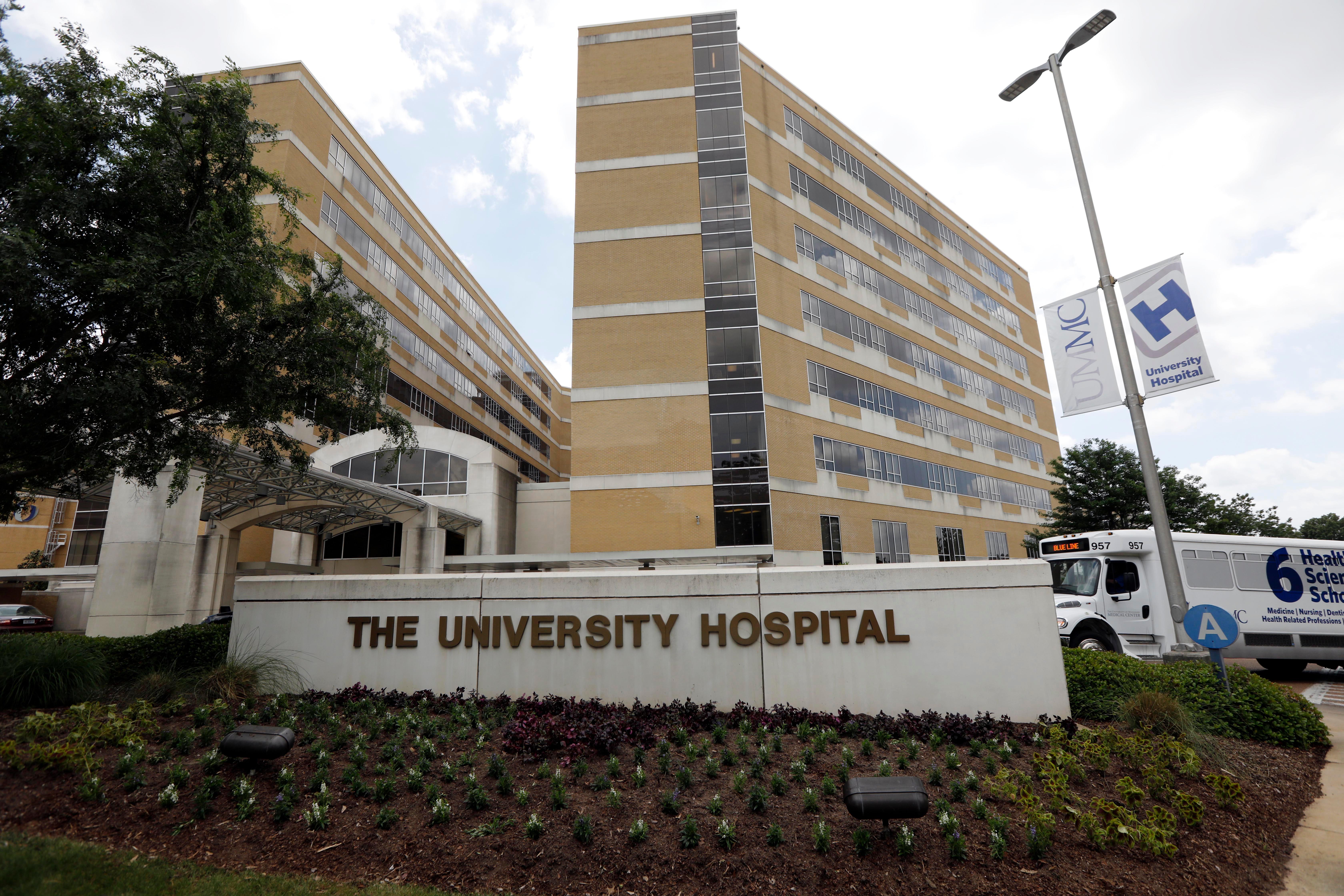
The UMMC Center for Telehealth and Emerging Technologies is one of only two centers in the entire country with that designation. The center provides in-state patient services as well as research, data and other information for medical professionals to use in serving patients across the country.
"We don't want the knowledge we're generating through our research and patient care programs to stay within UMMC: we want to get all the information into the hands of the providers, hospitals, and the communities that can use it," said Hollie Thomas, the center's program manager.
Dr. Saurabh Chandra, the center's chief telehealth officer, said continued research and outreach are big priorities for them. Especially with this grant, though, they have several other goals looking foward.
"Chronic disease is a big problem for not only Mississippi, but many other states around the country, and it is a high priority for HHS," said Chandra. "One of the biggest focus areas for the next five years would be to develop new models of care for chronic disease prevention and management, that would incorporate both lifestyle medicine, healthy nutrition, but also looking at how technology platforms can enable providers to take better care of the patient."
Another goal is to develop better integrated systems to combine telehealth with other technologies.
"Prior to COVID, telehealth existed in silos: the standalone programs did not integrate well with in-person care," said Chandra. "Since COVID, hybrid models were developed but now, in the last few years, a lot of technologies including AI, wearable devices...have all contributed to taking care of the patients."
Chandra says telehealth has been a particular boost for rural Mississippi, where hospital closures, distance, transportation and myriad other factors create gaps in healthcare. He said that it's not just a service for patients, but for hospitals as well.
"We have created a tele-critical care program that is supporting three rural hospitals right now and providing expertise that is not available to them at the bedside," Chandra said. "Our data shows that patients are retained within the local community, within the local hospital, as a result of this expertise available through telehealth."
Congressman Michael Guest, representing Mississippi's third district, echoed Chandra's emphasis on serving the state's rural populations.
"As we look in parts of Mississippi, particularly the Mississippi Delta, where we have fewer and fewer healthcare facilities, being able to expand this out, again, to those counties that lack regional healthcare facilities I think is extremely important," said Guest. "That's going to require us to train more individuals and we also need to make sure that we're monitoring the outcomes."
Guest and Chandra both highlighted the Rural Health Transformation Program as a boost for telehealth in the state, with states receving block grants from a $50 billion federal fund.
"We've made a pledge that at the end of that five-year program, if there is still a need, that we would look at refilling that fund to try to take care of rural hospitals," said Guest. "I think that by Congress stepping up, making that $50 billion investment in the rural healthcare stabilization fund, I think that is going to go a long way in helping rural hospitals, but particularly rural hospitals in Mississippi."
But, funding for that program comes at the expense of health insurance and Medicaid access, as part of the One Big Beautiful Bill Act, with hospitals expressing concerns that the funding won't make up for the losses from Medicaid.