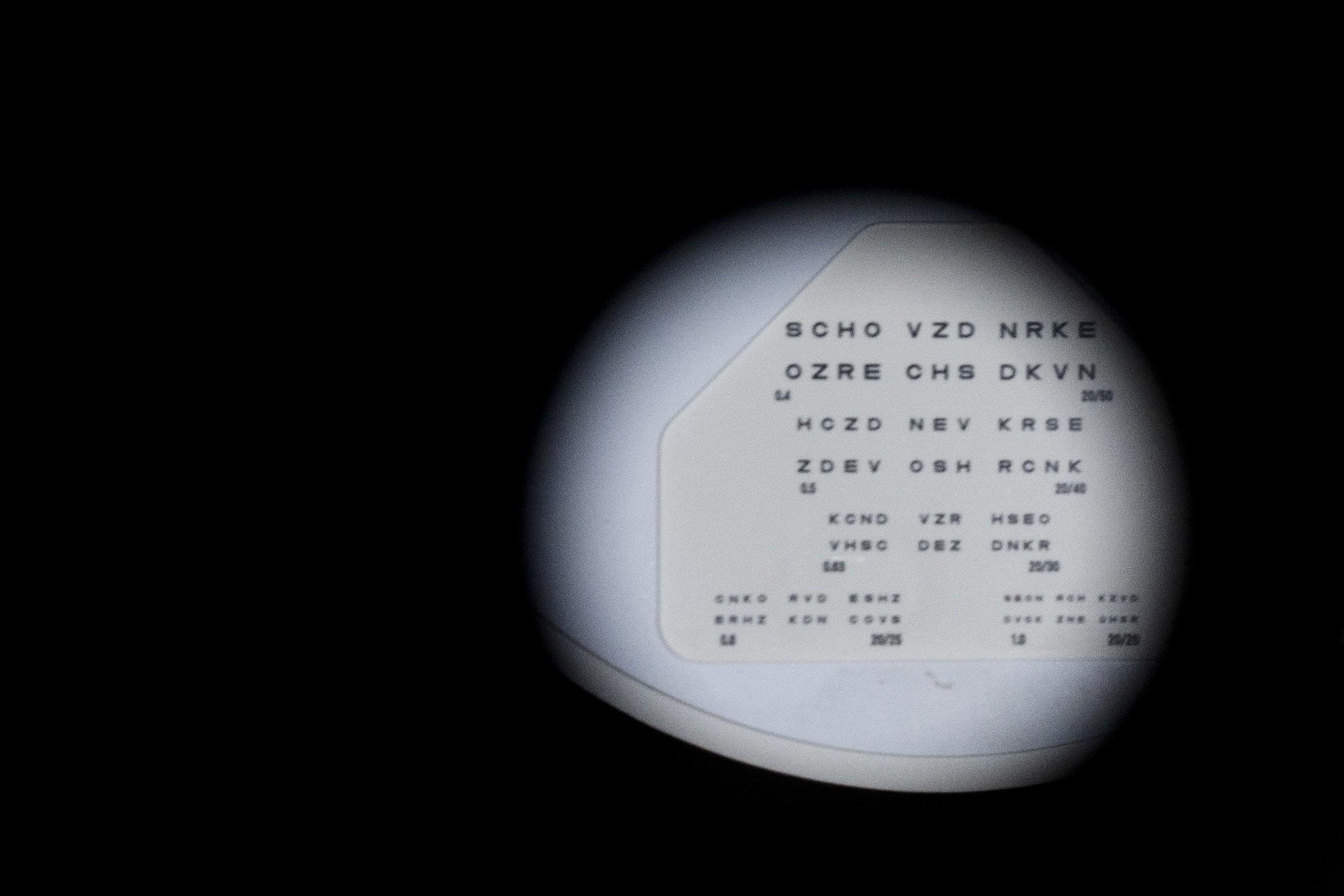
Students must master several visual skills to succeed, including tracking words across a page, focusing on near material and using both eyes in tandem. Lott noted that a child might pass a basic 20/20 vision screening yet still struggle with these essential functions.
“20/20 is the biggest myth in eye care,” Lott said. “20/20 just tells you that you can see a small letter on an eye chart.”
Standard school screenings are not a substitute for comprehensive eye examinations, Lott added. While screenings often test one eye at a time for distance, classroom activities require binocular vision and close-range focus.
Warning signs of visual strain include children losing their place while reading, skipping lines, using a finger to track text, developing headaches or having difficulty shifting focus between a book and the whiteboard.
In Greenville, St. Joseph Catholic School interim principal Betty Martinek said persistent headaches are a primary indicator of trouble.
“Maybe the kids have struggled all day to see the screen or to see what's being written up on the white board,” Martinek said.
To assist, educators often adjust classroom environments. Martinek said technology allows teachers to enlarge text or alter fonts to improve readability, while others provide printed assignments in larger formats or deliver information orally.
“Oftentimes when a child's struggling to read, we immediately jump into, oh, it must be some type of a learning disorder. Not always,” Lott said.
Deficiencies in visual skills can often be corrected with prescription glasses, vision therapy or medical treatment.
Kelly Hart, head of school at New Hope Christian School in Jackson, said younger students frequently lack the vocabulary to explain they cannot see clearly.
Instead, teachers must look for behavioral cues, such as a child appearing distracted, avoiding questions or behaving out of character during group activities.
Hart emphasized the importance of regular checkups, noting that parents and teachers may overlook subtle symptoms.
“When they have their glasses on and they're able to see further away it's automatically going to be a confidence booster,” Hart said.
The impact extends beyond the report card. Lott said approximately 80% of classroom learning is processed through the visual system, meaning students with undetected issues miss critical information daily.
Untreated vision problems can also lead to chronic stress and cause children to doubt their academic abilities.
The American Academy of Optometry recommends a child's first eye exam occur between 6 and 12 months of age, followed by exams at ages 3 and 5. Lott suggests continued evaluations as visual demands increase in higher grades.
Lott said the objective is not just reaching the 20/20 benchmark, but ensuring the eyes are healthy and working in unison.
“If a pair of glasses will help a child see better, more clearly, and feel better about themselves and feel more confident about their ability,” Hart said, “it's absolutely worth it.”