Your Page Title

A free tech class in Jackson is helping older adults bridge gaps and make connections

Email share
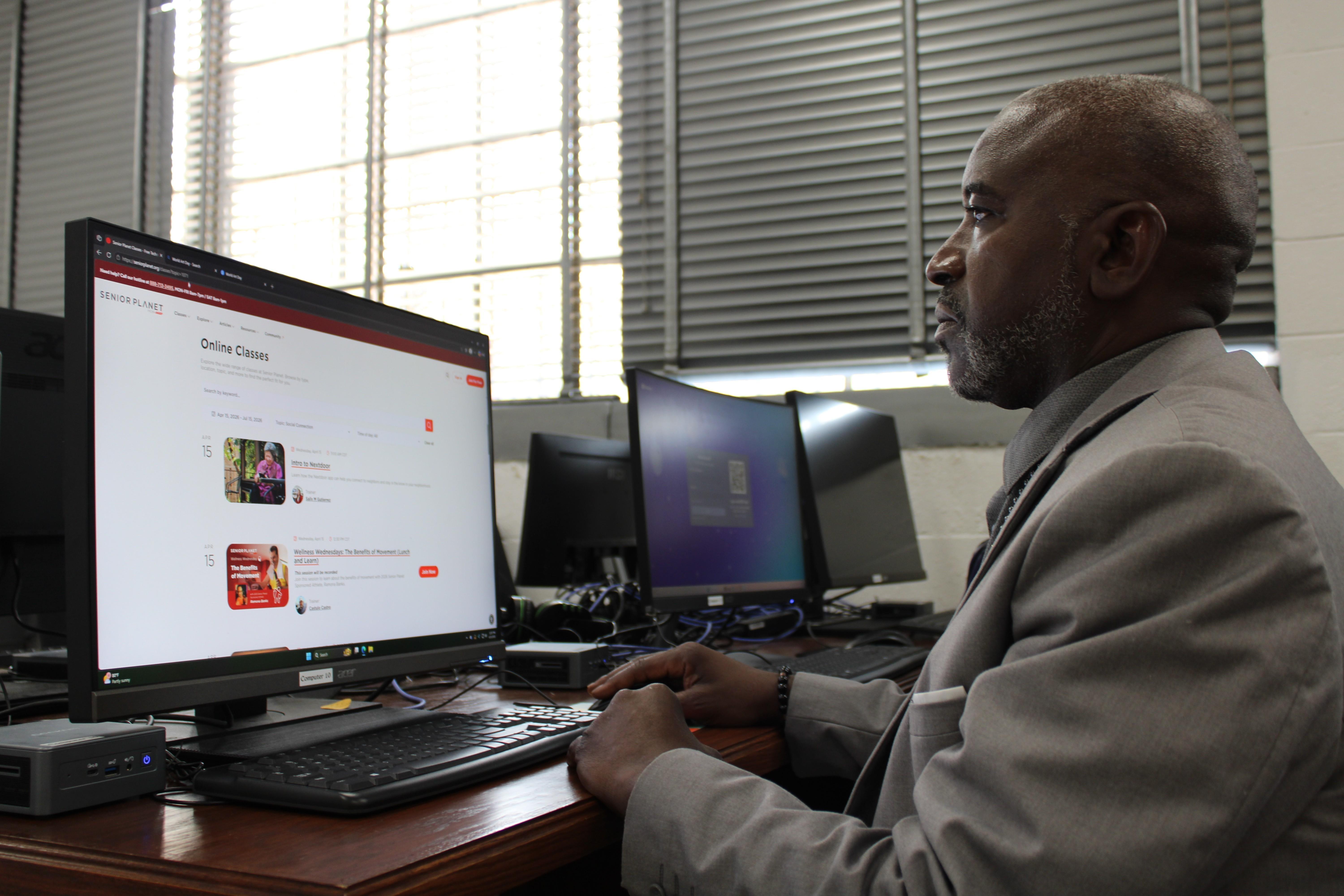
J.C. Johnson looks over the webpage for Senior Planet, a tech curriculum designed for older adults by the AARP.
J.C. Johnson, Jr. looks over the webpage for Senior Planet, a tech curriculum designed for older adults by the AARP.
(Shamira Muhammad, MPB News)

Community organization The Bean Path has just begun its ninth cohort of the Older Adults Technology Services program, or OATS. 

Experts on aging believe the lessons are an essential tool for modern older adults. 

“Roughly about 140,000 Mississippi households do not have access to the internet,” said Kimberly Campbell, Mississippi AARP state director. “About 89,000 Mississippi households also do not have computers.”

Campbell said that especially impacts seniors in rural communities where “the issues of isolation come up. Affordability concerns, limited digital literacy. All of those things impact how well people can stay connected, how well they age.”

Shamira Muhammad

OATS senior adults class aims to expand tech literacy

00:0000:00

She recalled seniors who told her they wished to be able to speak with loved ones more often, especially out of state grandchildren. But navigating devices is something many older adults struggle with. Campbell said it’s important to provide seniors with the technical training and tools that make it happen, like “grandpads.”

“They're similar to an iPad, but it's specifically designed for older adults,” she said. “It makes things a little bit easier for them to manage.”

That’s where OATS, which meets once a week for the next nine weeks at The Bean Path’s Gallatin street headquarters, comes in.

“This program was instituted so that we could help senior adults feel more comfortable with technology and navigate in this technology based world,” said OATS instructor Erica Archie. 

Beginner and advanced courses will feature curriculum models from Senior Planet, a self-guided technology study series offered by AARP.

“With the beginner's classes, we start at the very beginning, like mouse, keyboard, how to turn the computer on, how to turn it off,” said Archie. “You will know every step of the way. We talk about hardware, software, what it is, what is the internet. How to send an email. We help you set up an email address if you don't have one.”

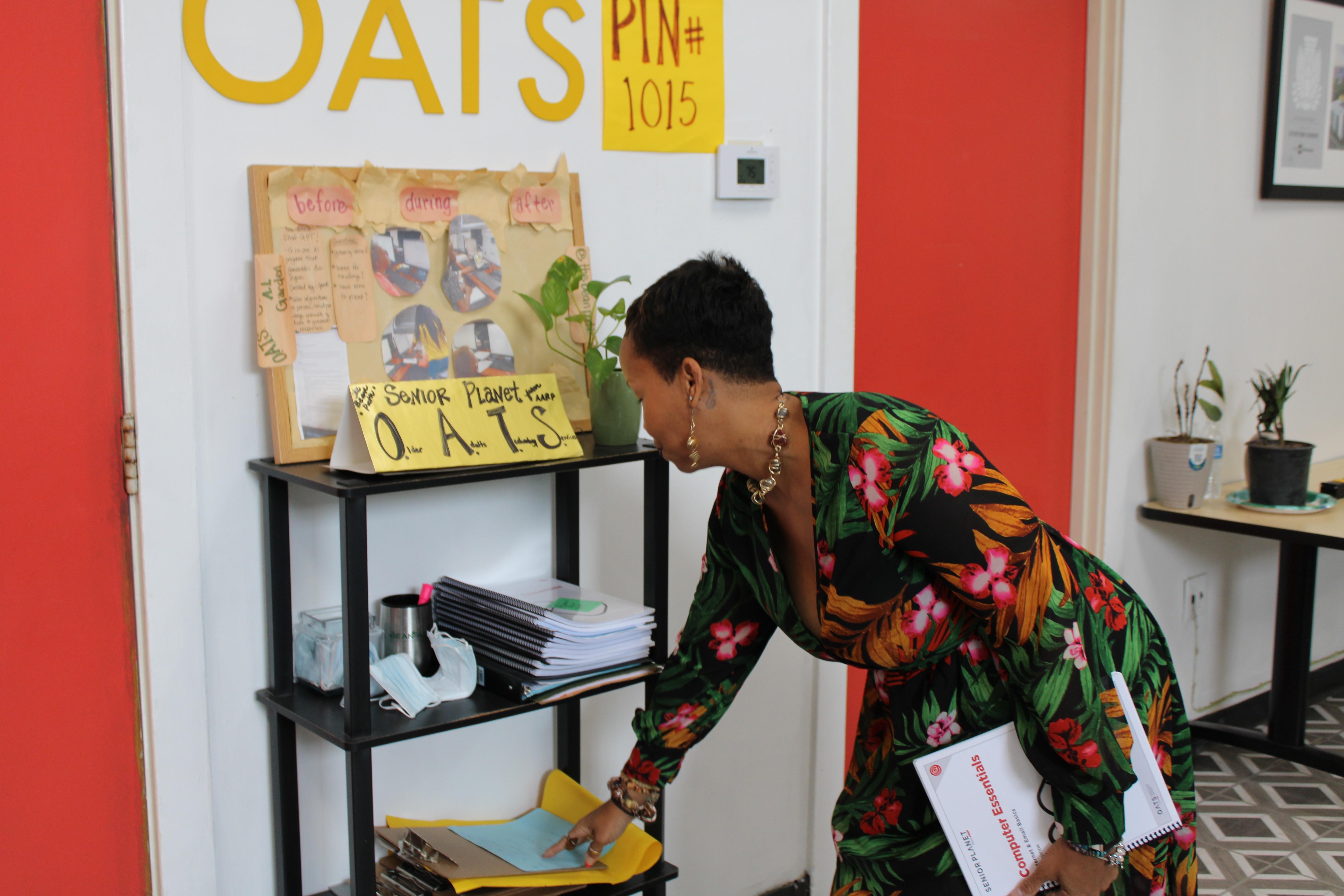
OATS instructor Erica Archie points to materials for the senior tech class.
(Shamira Muhammad, MPB News)

The advanced classes are structured for seniors who may already have some experience with tech.

J.C. Johnson Jr., an older adult from Jackson enrolled in the advanced course, used to use technology all the time in his former position with UPS. But a trip last year through the Houston airport made him want to get better acquainted with new forms of tech.

“When I got to Houston, I was confronted with a rude awakening,” he said. “I could not use cash. They accepted no cash.”

Society, Johnson realized, was forcing him to learn technology, whether he liked it or not. 

“I had to use my debit card, my credit card,” he said. “I had to. No choice.  Either go without getting something to eat, fly all the way to Utah hungry.”

Johnson reckons he’s been in almost all nine OATS classes the Bean Path has offered, allowing him to learn how to avoid financial scams, protect confidential information and better use email.

“This class is going to be talking about digital wallets. Online banking is good, I use that, apps are good, financial apps as well,” he said. “So I am using the technology and I'm being more comfortable in using it because being educated takes away the fear and the boundaries of what you cannot do.” 

It also provides the opportunity for class members to create social connections, an important aspect for a demographic often facing isolation. 

The last advanced class learned how to take Lyft and even make a group travel plan.

“They had to learn how to make reservations at restaurants, they had learn how to make reservations at hotels, they had to learn to reserve train tickets and stuff like that,” said course instructor Archie. “We looked at all of those types of things. They could not call anybody and we actually set up a trip and went to Memphis.”

Johnson, who came down ill just before the trip, wasn’t able to go to Memphis. 

But, he said laughing, “check this out, I saw some of their posts on Facebook. TECHNOLOGY! When technology works well, it's a wonderful thing.”

Shamira Muhammad

An expert explains how Mississippi's seniors can avoid tech scams

00:0000:00

The course also focuses on how to recognize when things aren’t what they seem. Mississippi has the lowest rates of internet crime victim complaints for adults over age 60, according to America’s Health Rankings. But it does happen.

According to the Department of Justice, financial scams are one of the fastest growing forms of elder abuse. 

“We've had individuals that have lost hundreds of thousands of dollars,” said Campbell, director of AARP’s Mississippi chapter.

Campbell said identity theft is also a problem and believes the growing popularity of smartphones poses a unique risk for seniors, many who may be new to tech and will clink links that seem like they’ve come from a reputable source. But she urges seniors to consider the veracity of these correspondences.

“The IRS does not operate that way,” she said. “Your utility companies do not operate in that way.”

Instead, Campbell suggests calling a verified number for companies and government offices, but never, ever click links, which could be an attempt to introduce spyware into a device and crash a system or get sensitive information, like routing numbers and bank account information. But Campbell emphasizes the goal is not to make seniors afraid.

“We don't want people to be frightened to that extent because that really can make you become very isolated from the world, isolated from friends, and even for your brain health,” she said. “How we age with our brain health is really important and connection is really a part of that.”

Cyber crimes can be reported to the Attorney General’s office, local law enforcement or AARP’s Fraud Watch Network. 

April is Fraud Prevention Month.