“As a 47-year-old woman, I lived through the development of Title IX, which provided fairness in sports for girls and women. It took decades,” Heather Stuckey said. “Feminists worked for it tirelessly [and] over the last two years, it has been absolutely destroyed.”
Stuckey said she has a daughter in high school who competes in track and field and is worried about how the new rules would affect her.
“I need someone to explain to me why it would in any way make any sense for her to have to compete in a race against a biological male,” she said.
This pushback against transgender athletes occurred after the National Association of Intercollegiate Athletics, which governs nearly 250 small and private universities across the U.S., implemented a ban on trans women competing in women’s sports in April, just before the new Title IX rules were announced.
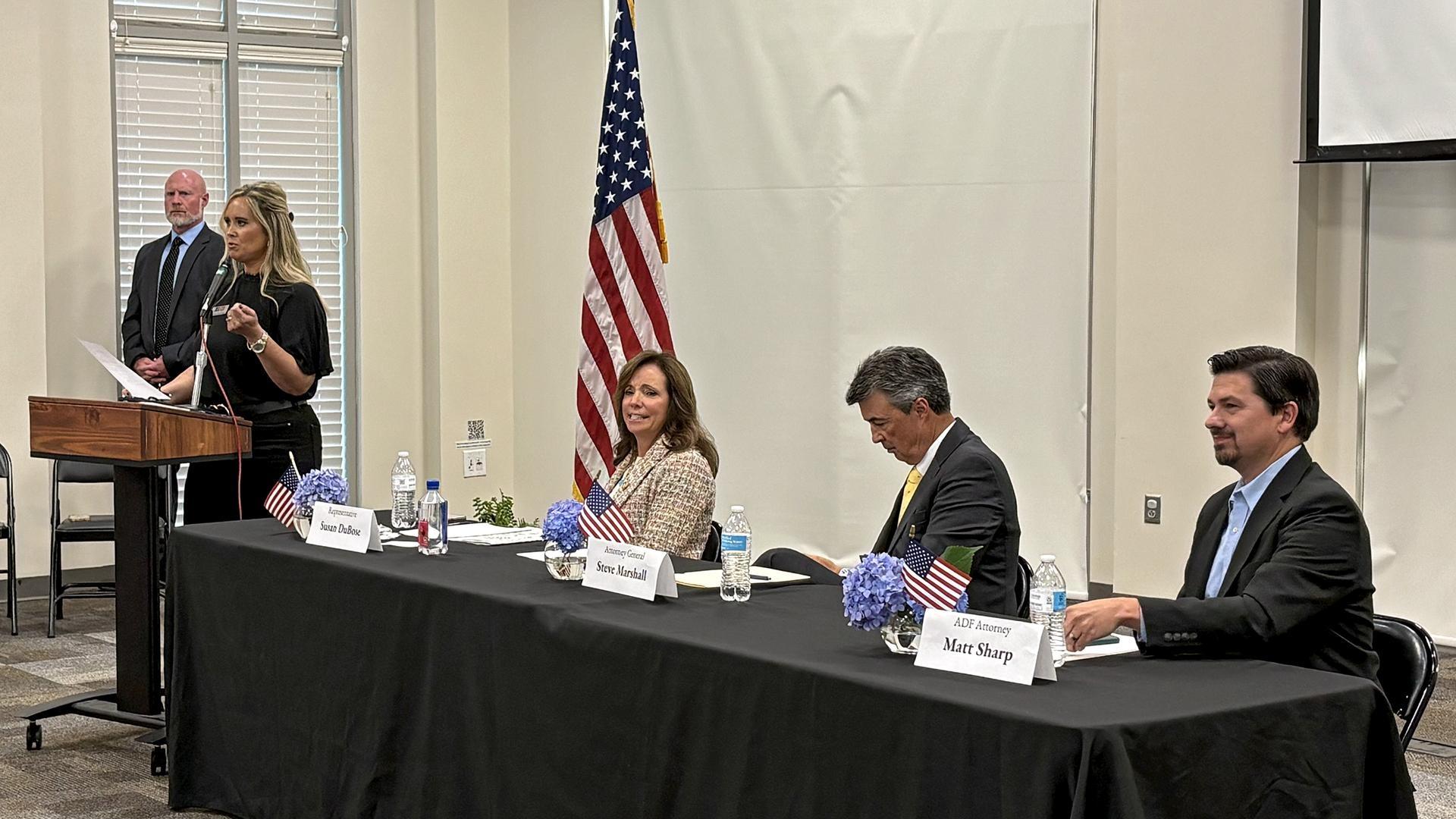
At the town hall, Marshall said he wasn’t aware of the NAIA ban when it was enacted, but he agrees with it, calling it “appropriate and consistent with what we’ve done in Alabama.”
In 2021, Alabama banned transgender students from competing in high school athletics, even though the Alabama High School Athletic Association said it wasn’t aware of any trans athletes ever competing in the state. In 2023, Alabama extended its ban on trans athletes to include public colleges and universities.
Marshall said the laws were made to set a precedent.
“We’ve seen it going around the country,” he said. “This makes the public policy of the state of Alabama very clear so we ensure that it doesn’t happen.”
Alabama Republican U.S. senators Katie Britt and Tommy Tuberville called for the NCAA to do the same as the NAIA in a recent letter. During the 2024 Summer Olympics, both politicians participated in misgendering female Algerian boxer Imane Khelif on social media.