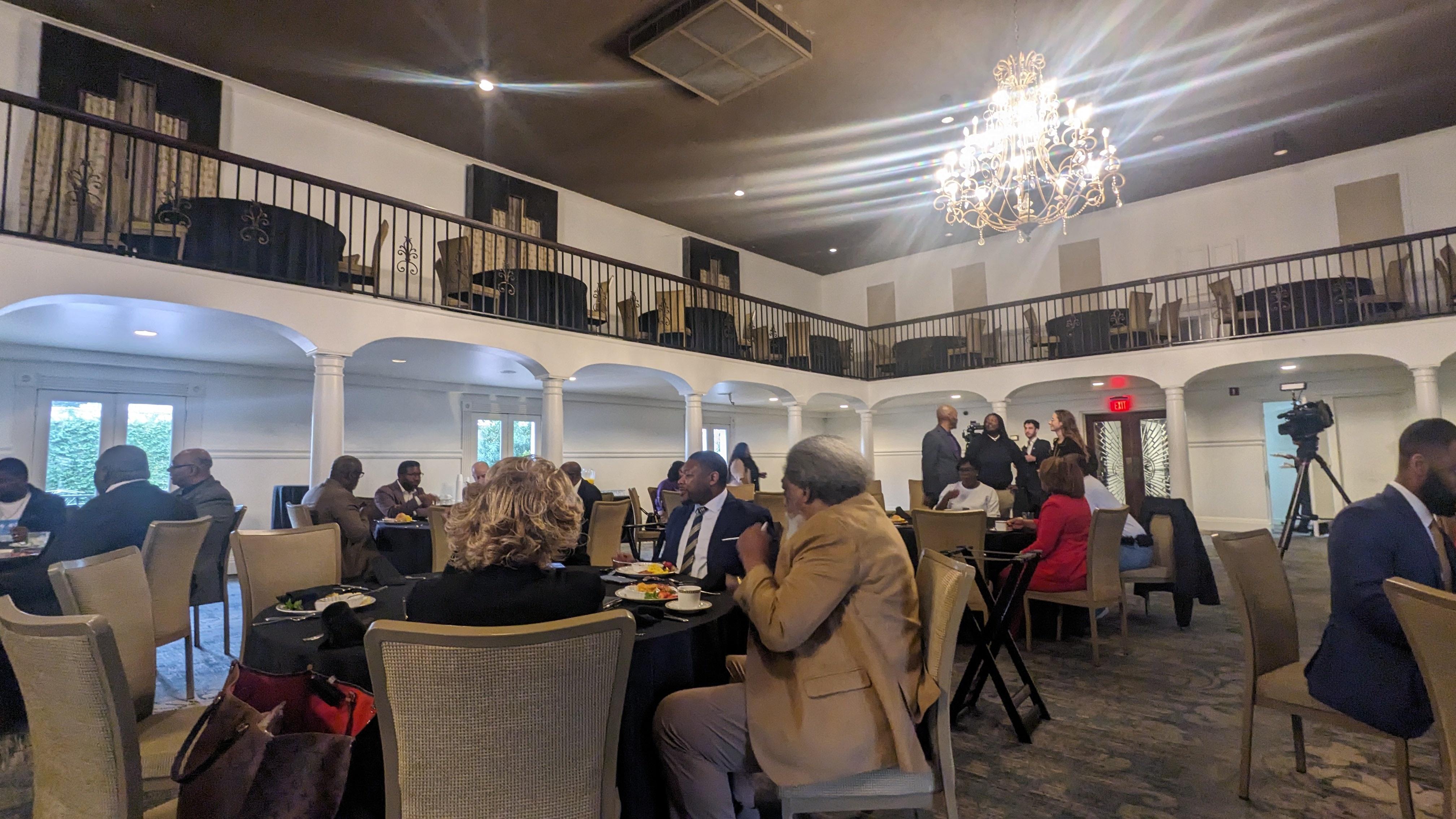
Hosted in collaboration with Clergy for Prison Reform, the prayer breakfast featured religious leaders from across faiths praying for legislators — and their constituents — over the next few months.
"We pray that at the center of each of their agendas would be people, ordinary people, hurting people, people whose lives are impacted by the decisions they make downtown," said Rev. Dr. C.J. Rhodes of Mount Helm Baptist Church. He's also the the founder of Clergy For Prison Reform.
Folks' prayers focused on hope, peace, justice and love for the upcoming session.
"We must never forget that as God's love extends to all of humanity, so must ours," said Rabbi Debra Kassoff during her prayer. "We may love our family most of all, our electoral district, our state, or our country above others, but like God's love, ours must extend to all of humanity."
"This is our calling."
Mississippi Votes also used the breakfast to share their goals for the upcoming session. They're keeping an eye on issues like felony disenfranchisement, early voting and absentee voting, with an overarching goal to get Mississippians meaningfully engaged in the civic process.
"Barriers to participation weaken trust in outcomes," said policy and research director Lily Moens. "If we don't feel like we have a voice in our democracy and our government, how can we trust that our representatives are truly representing our interests?"
Moens told MPB that they're especially watching for restoration of the ballot initiative process.
"That is the most direct form of democracy: allowing citizens to put things on the ballot they care about and that might not be brought up during our three month legislative session," she said.
With voting specifically, they're focused on working with younger Mississippians especially; for example, getting high school students pre-registered to vote and setting up polling locations at Mississippi colleges and electronic absentee voting for college students.
Moens added that they're also advocating for automatic voting rights restoration for people who have completed their sentences. Within the criminal justice system, they're also hoping raise the age of juvenile jurisdiction to 18 years old, expand infrastructure for diversion and reentry, and end incarceration for unpaid fines and fees, among other measures.
She also presented some of the bigger-picture goals too: economic security, education, healthcare and more all play into their goals of civic engagement for folks who are often excluded from civic participation.
"Young, black and low-income Mississippians face the greatest hurdles to this participation, so making sure that those folks and those communities' voices are centered in everything that we do," she said during her presentation.
And practically, that looks like making voting as accessible as possible, like with early and absentee voting measures, as well as pushing for online voter registration.
"We hope that together, all of these reforms will do the following, improving election administration and reducing election day strain, lowering incarceration and court costs, strengthening workforce participation and family stability, and increasing public trust in our democratic institutions," she said.