Her son’s coverage also allows them to visit the ER without a wait. It pays for his daycare, occupational therapist and the feeding tube he relies on for nourishment.
“I think the misunderstanding of Medicaid is anybody that has any type of government benefit, the people, and when I say the people I mean those that are in charge, they think that people solely want to stay on Medicaid long-term,” Reese said. “I am a mother that believes that this is a stepping stone. So meaning it's temporary, it's to get us back to where we need to be.”
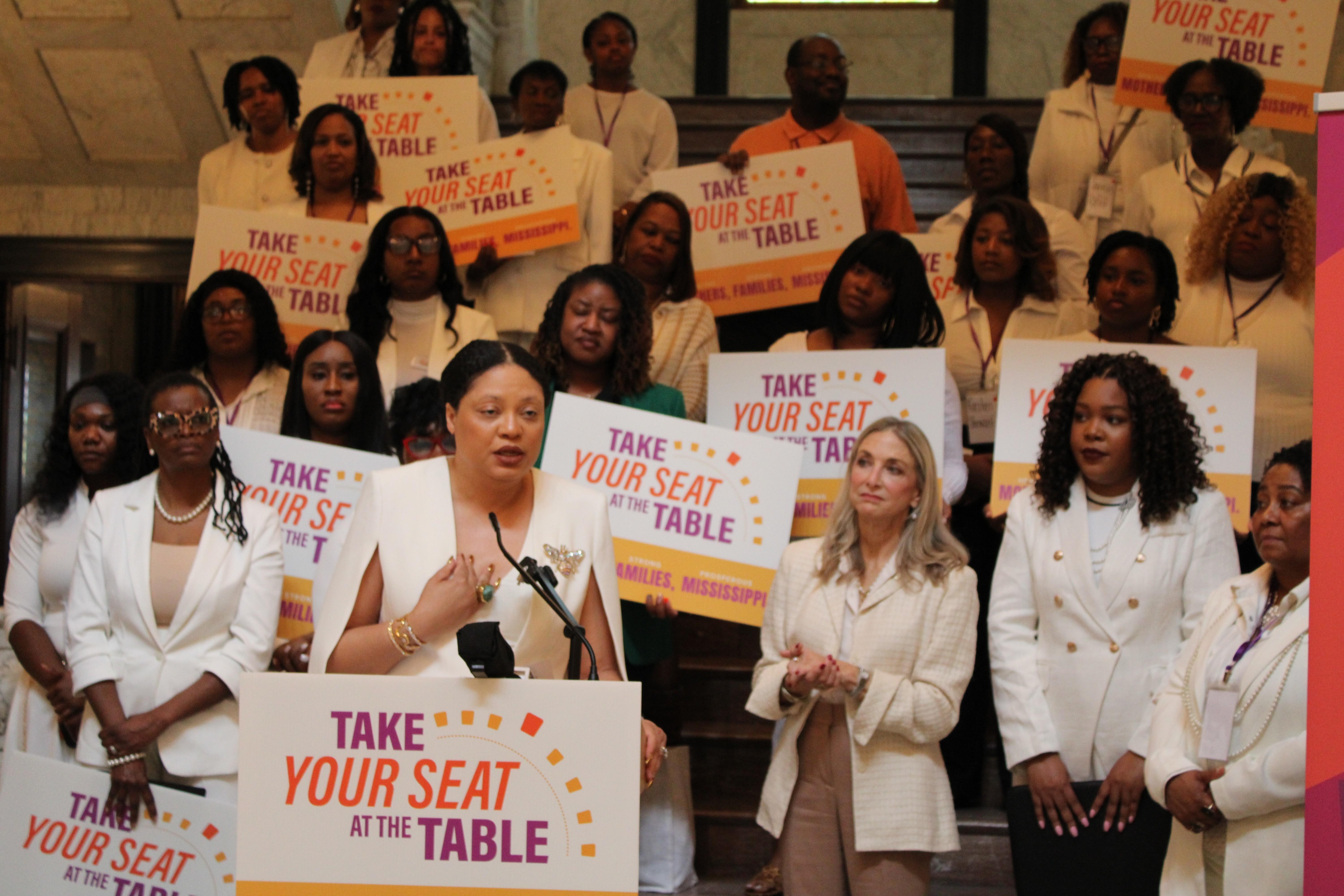
Reese and other advocates met at the capitol in Jackson Wednesday to push for Medicaid expansion and several other legislative priorities that impact Black women disproportionately in the state.
“I think this will make a huge impact when it comes to black women and not just them, but any woman in general,” Reese said. “Because we're not the only ones who need those benefits.”
Executive director of the Mississippi Black Women’s Roundtable Cassandra Welchlin said other priorities include economic justice, paid family and medical leave and expanded maternal health options including doula access and childcare assistance.
“We are losing millions of dollars by not allowing the state to expand Medicaid,” Welchlin said. “But it also goes to our health care systems, right? We don't have emergency rooms in some places, and we don't have doctors in some place. Expanding Medicaid will do that.”
Tanya Smith-Johnson is president of the National College of Midwifery and a Certified Professional Midwife. She supports House Bill 1839, which would create a licensing system and regulations for midwives in the state.
“Being one of just two black CPMs in the state, that already tells you how difficult it is to get trained here in the state and work in the state,” Smith-Johnson said. “Many people who are interested in midwifery, they actually have to leave the state to attend school or to be trained.”
Smith-Johnson believes H.B 1389 could provide better resources and strengthen the scope of what midwives can do.
“I can't get medication. I can’t order ultrasounds. I can’t do a lot of the things that a midwife or a CPM in other states are able to do,” she said. “I can’t have a birth center here yet because we're not recognized as providers. So all of those things open up to us. It allows us to move forward to think about insurance and Medicaid coverage for our care.”
According to Smith-Johnson, a midwife’s fee can range from free to about $5,000 for patients.
“At this point, that's not sustainable, but we do it anyway,” she said.