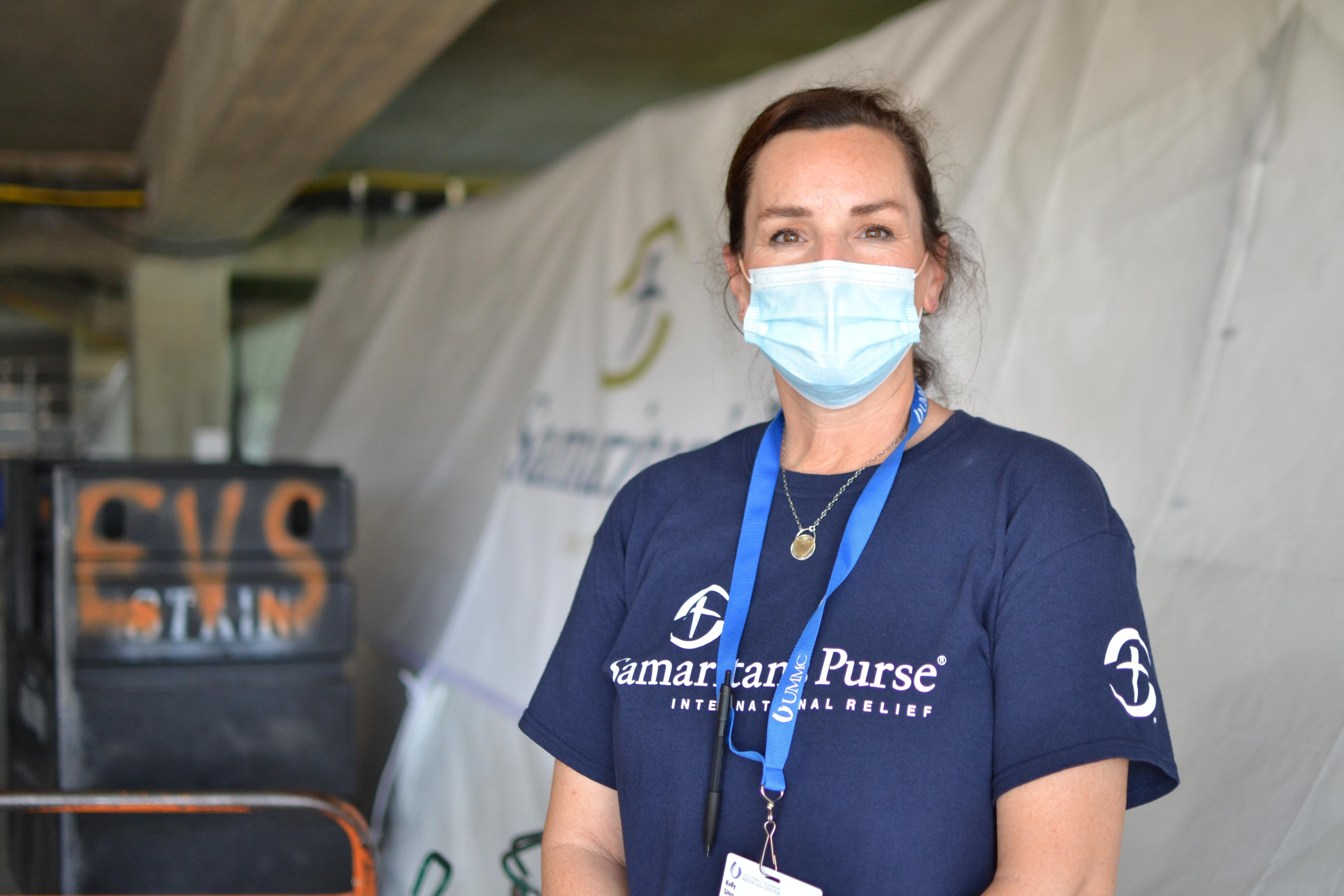
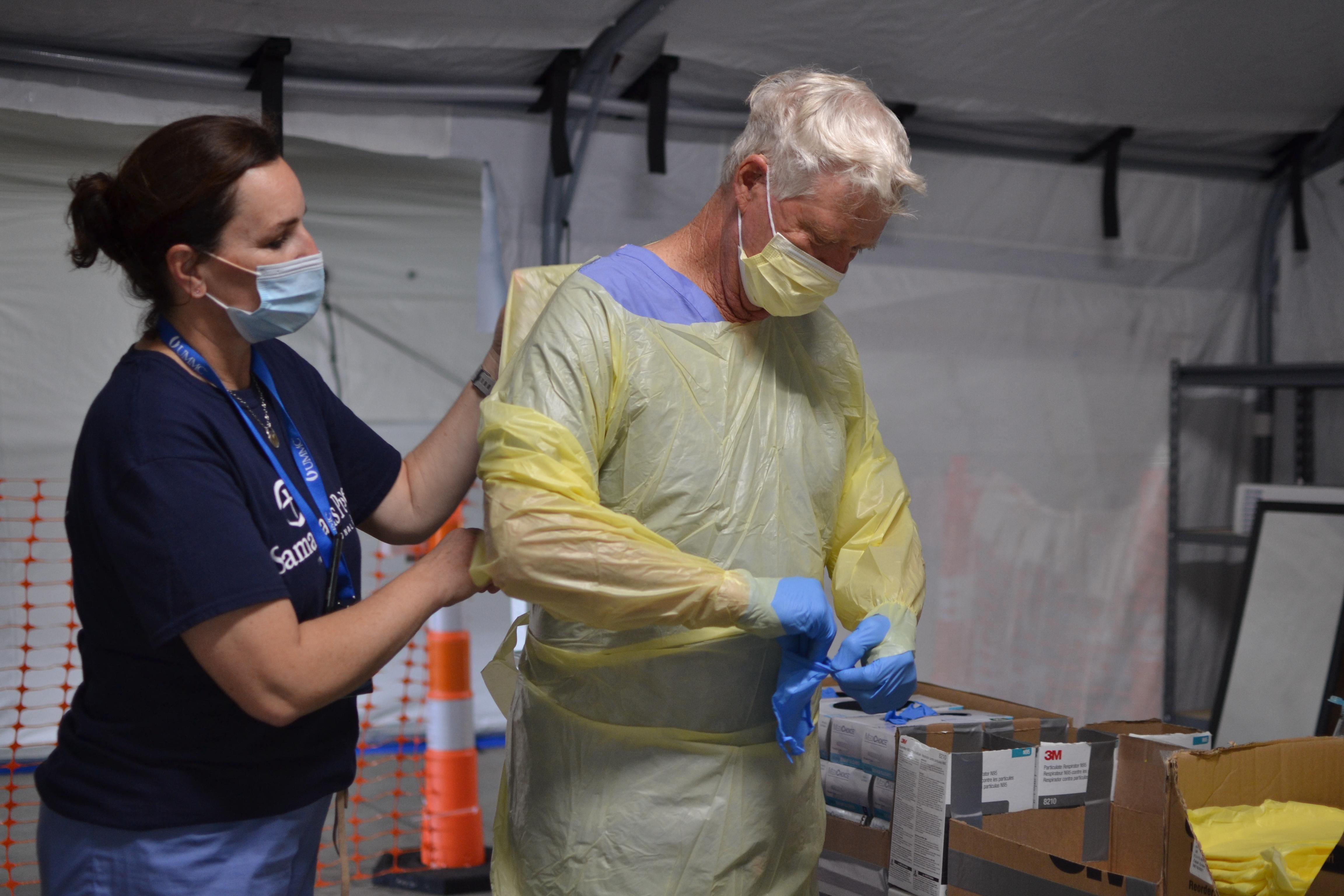
For Sites, the Mississippi deployment is her third time working with COVID-19 patients in the U.S. for Samaritan’s Purse. Sites said that normally health care professionals might work three or four full 12-hour shifts at their jobs before getting a break. When deployed, though, they do a month of 12-hour shifts with no breaks.
Sites says she can’t believe the pandemic is still raging on.
“It's unbelievable that we're still doing this,” Sites said. “No one saw that coming, really, but it's what we do and we're happy to help.”
But, the exhaustion and emotional distress isn’t just in the field hospital. It’s also palpable upstairs in the University of Mississippi Medical Center’s ICU.
“Emotionally, I'm going through an adrenaline phase and then sort of a depression phase and then an anger phase,” Dr. Andrew Wilhelm, a UMMC critical care pulmonologist, said. “Now I'm in a disappointment phase with a little bit of adrenaline to make sure people are taken care of.”
Wilhelm says the team here has been caring for about 45 patients everyday, with more than half having COVID-19. The ICU has had to perform at least five emergency C-sections for women that were critically ill as well.
“That's probably the most difficult population for us to emotionally deal with,” he said. “Having a 20-year-old mom getting sick, coordinating life support and then baby gets sick. That's a tough one. We did not see this the first time around.”
Wilhelm says he doesn’t have the energy to think about a potential fifth wave.
“I'll be more optimistic when we talk about an increase in vaccinations that’s more than a slight bump,” he said.
Lindsey Harris, president of the Alabama State Nurses Association, said nurses in the state feel overworked, underpaid and so stressed that they’ve even held protests.
“In this crisis, with the increase in patient load and shortages in staffing, it definitely was a cry for help,” she said.
On Sunday, Samaritan’s Purse plans to fully leave its Mississippi site. But the state says it will continue to look for help by contracting health care staff from outside of the state to keep their systems afloat.
In Alabama, health officials are seeking help from the U.S. Navy to deploy medical teams that can assist overburdened hospitals. And in the wake of Hurricane Ida, Louisiana is even contracting out with private cruise ships to offer room and board to healthcare professionals they are inviting to the state to help with critical care.
This story was produced by the Gulf States Newsroom, a collaboration between WWNO in New Orleans, WBHM in Birmingham, Alabama, Mississippi Public Broadcasting and NPR. Support for health equity coverage comes from the Commonwealth Fund.