Your Page Title

Black Balloon Day honors memory of Mississippians lost to opioid epidemic

Email share
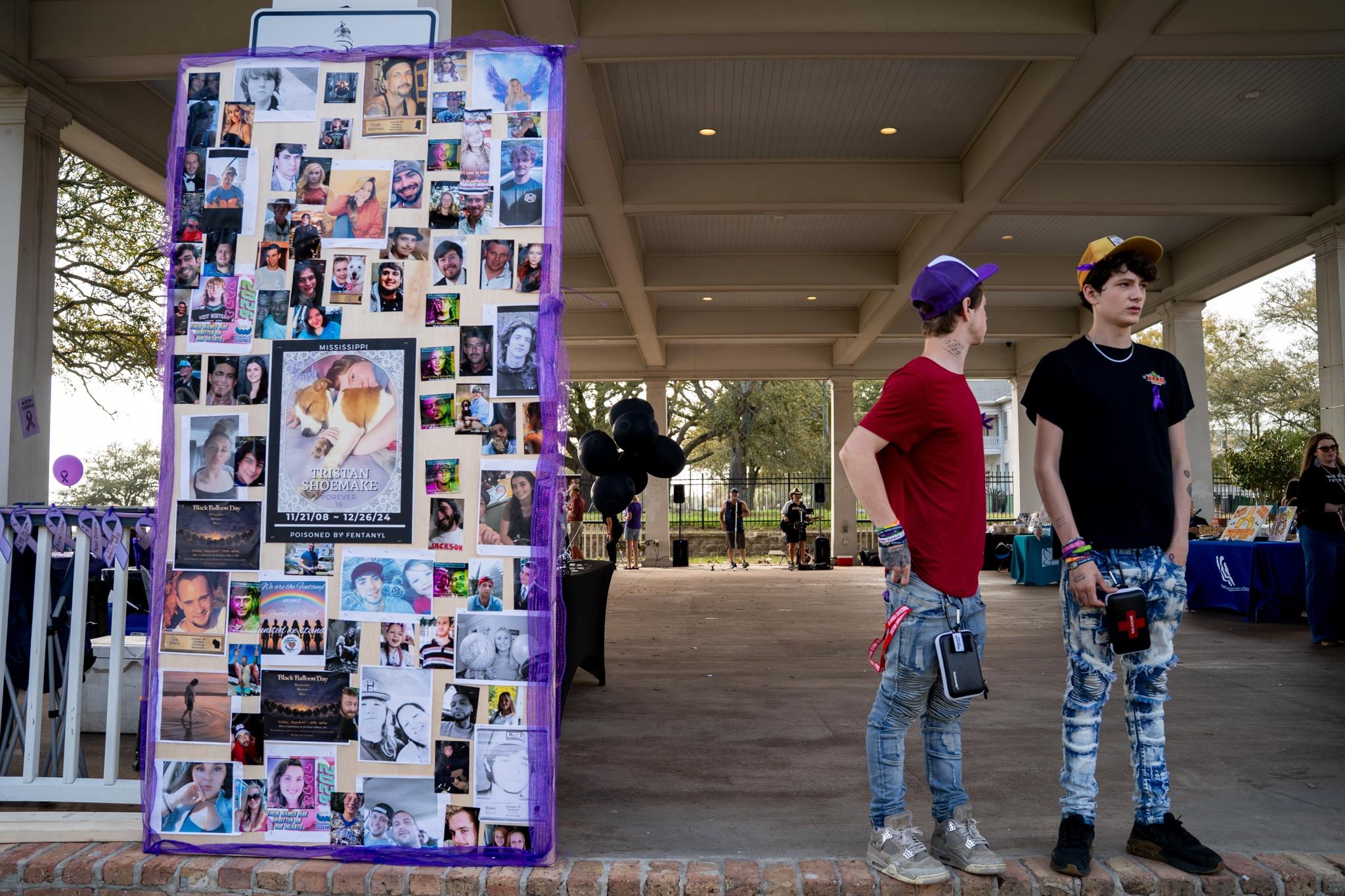
Folks at Black Balloon Day came with signs and photos of loved ones lost to overdoses. 
Jay Marcano for the Gulf States Newsroom

On the coast, hundreds gathered this past weekend to remember lives lost to the opioid epidemic and to support folks in recovery. 

Elise Catrion Gregg

Black Balloon Day honors memory of Mississippians lost to opioid epidemic

00:0000:00

On Friday, at Lighthouse Park in Biloxi, people from across the state came to the coast to celebrate Black Balloon Day. It was a day to not only remember loved ones lost to overdoses, but also to look forward.

Brenda Foster, lead nurse navigator for the Mississippi Department of Health was really excited with how the day was going. Talking above the music and busy crowd, she estimated that they'd have around 200 people there throughout the day. 

"A day of remembrance: let's make it a day of celebration for recovery, too," she said. "Let's do it on the coast because there is a high overdose death rate here and let's make a huge impact; and let this be a yearly event."

"Let's let it grow bigger and better so that people feel loved, encouraged and supported." 

Part of the reason she was so excited is because this was actually their first Black Balloon Day: she said it all came out of the stories she and her team hears from people in recovery everyday. 

"When you hear their story of trauma and the past and things, you just can't help but want to love on them," she said. "When you hear them say, 'Miss Brenda, I'm sober now, I have a job, I have my family back' -- oh my gosh, it makes it so worth it."

"My peer navigators and I were always looking for thngs to do to really support families and people in recovery."

Black Balloon Day was another way to do what Foster said they strive to do with all the people and families who come their way on a daily basis. 

"This means so much to me today to give them that support, encouragement," Foster said. "It means so much to them."

"We've just got to be there for each other, right?"

Filer image
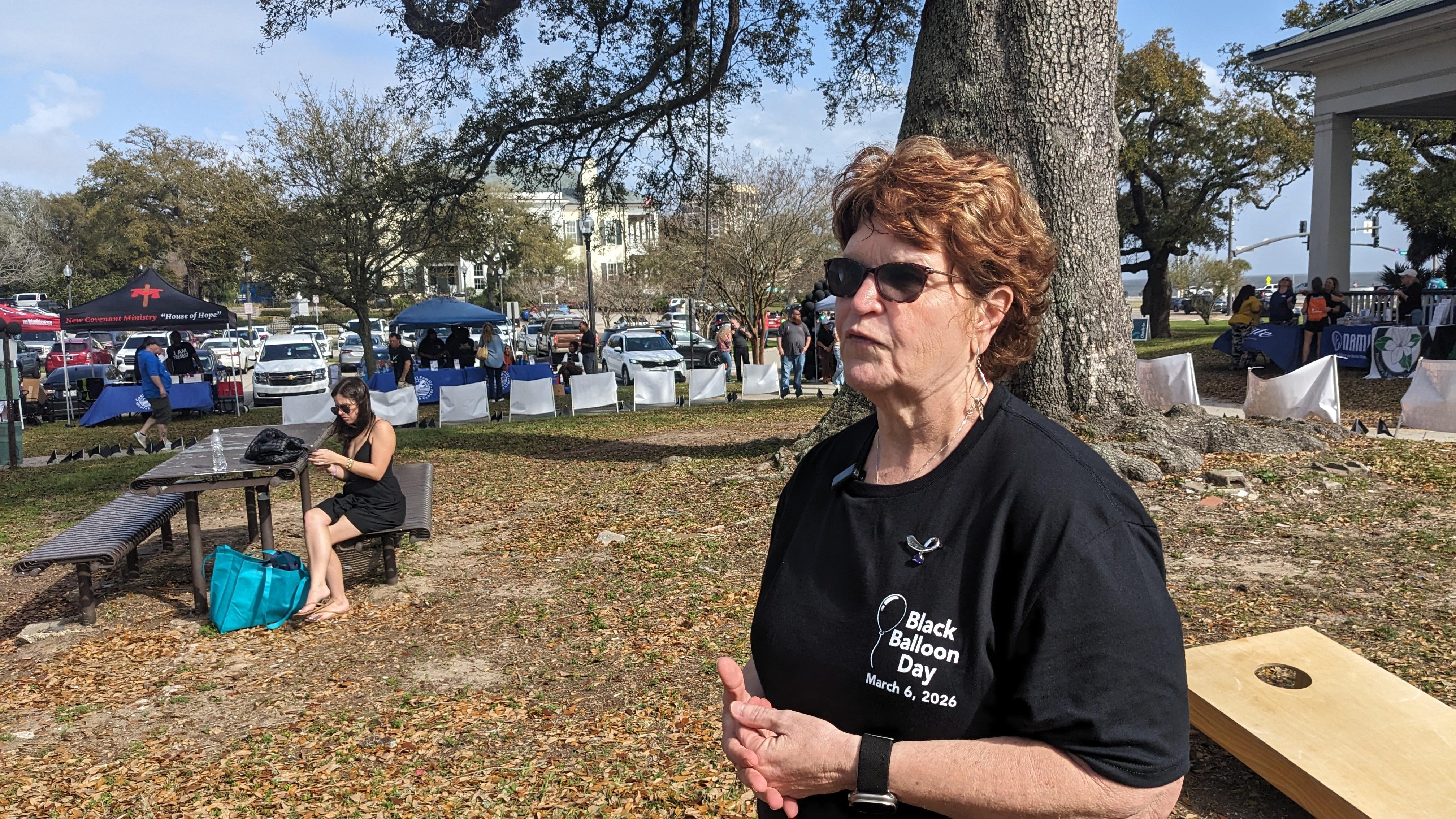
Brenda Foster, lead nurse navigator for the Mississippi Department of Health, planned Black Balloon Day through her work with people affected by the opioid epidemic. 
Elise Catrion Gregg for the Gulf States Newsroom

Brian Kenner is a peer navigator with the CDC Foundation. He was part of the team, along with Foster, who planned the Black Balloon Day. 

For him, remembrance means a lot of different things. 

"What comes to my mind is remembrance of the people we've lost way too soon, before their time," Kenner said. "Remember their death but also their wonderful lives."

"We're able to do that by talking with their families." 

It means remembering the depth of the opioid epidemic, but also the work being done to help people through addiction. 

"You've got resources here: whether it's touched your life or your best friend's son's life," he said. "There are resources." 

This moment of remembrance comes just as Mississippi's lawmakers are trying to figure out what to do with millions of dollars from legal settlements with opioid manufacturers and distributors. 

Recommendations for funding are being reviewed by legislators this session, with programs meant to help folks with recovery and to provide support for families. 

Filer image
Brian Kenner, who helped plan Black Balloon Day, shares his thoughts on how families have been impacted by the opioid epidemic and what Mississippi can do to help them. 
Jay Marcano for the Gulf States Newsroom

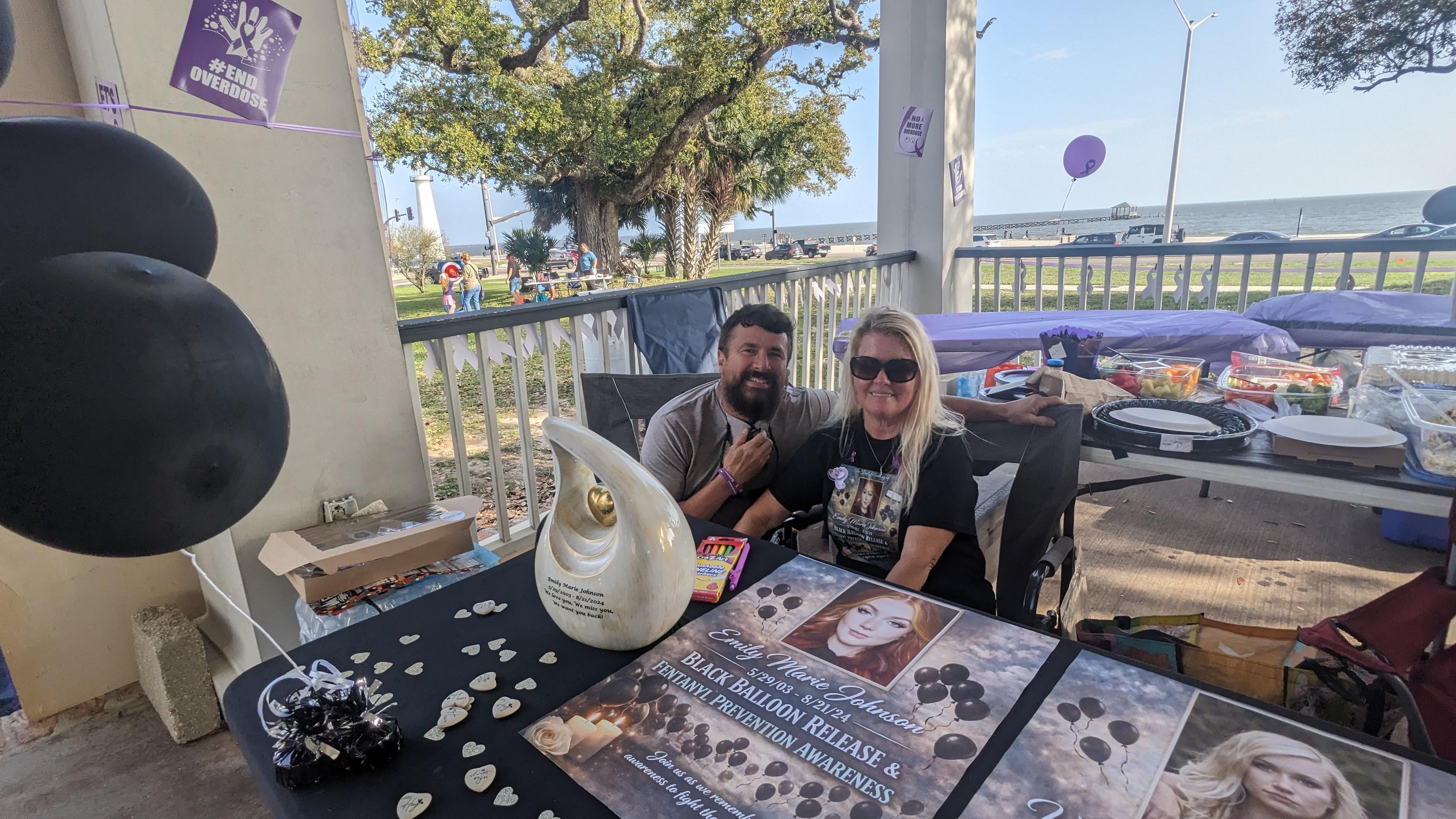
Heather Marshall drove down to Biloxi from north Mississippi on Friday. She lost several loved ones in 2024 to fentanyl.

"My daughter was 21 and she thought she was taking a Xanax and it was not Xanax at all," Marshall said. "It was something not made in the United States; it was mixed with fentanyl."

"She took it with her boyfriend and her grandmother and another friend, and they all passed away." 

Filer image
Heather Marshall and her husband on Black Balloon Day, with photos of loved ones who passed away from fentanyl. 
Elise Catrion Gregg for the Gulf States Newsroom

Support to her looks like spreading awareness about the opioid epidemic and the dangers of fentanyl.

That's what she saw happening at Black Balloon Day: she said she saw several people come up to ask for help. 

"If four lives got saved today, I think that's great," she said. "I'm sure a lot of people don't even know how to go about getting help."

"This event right here, it could save a lot of people if it's done everywhere."