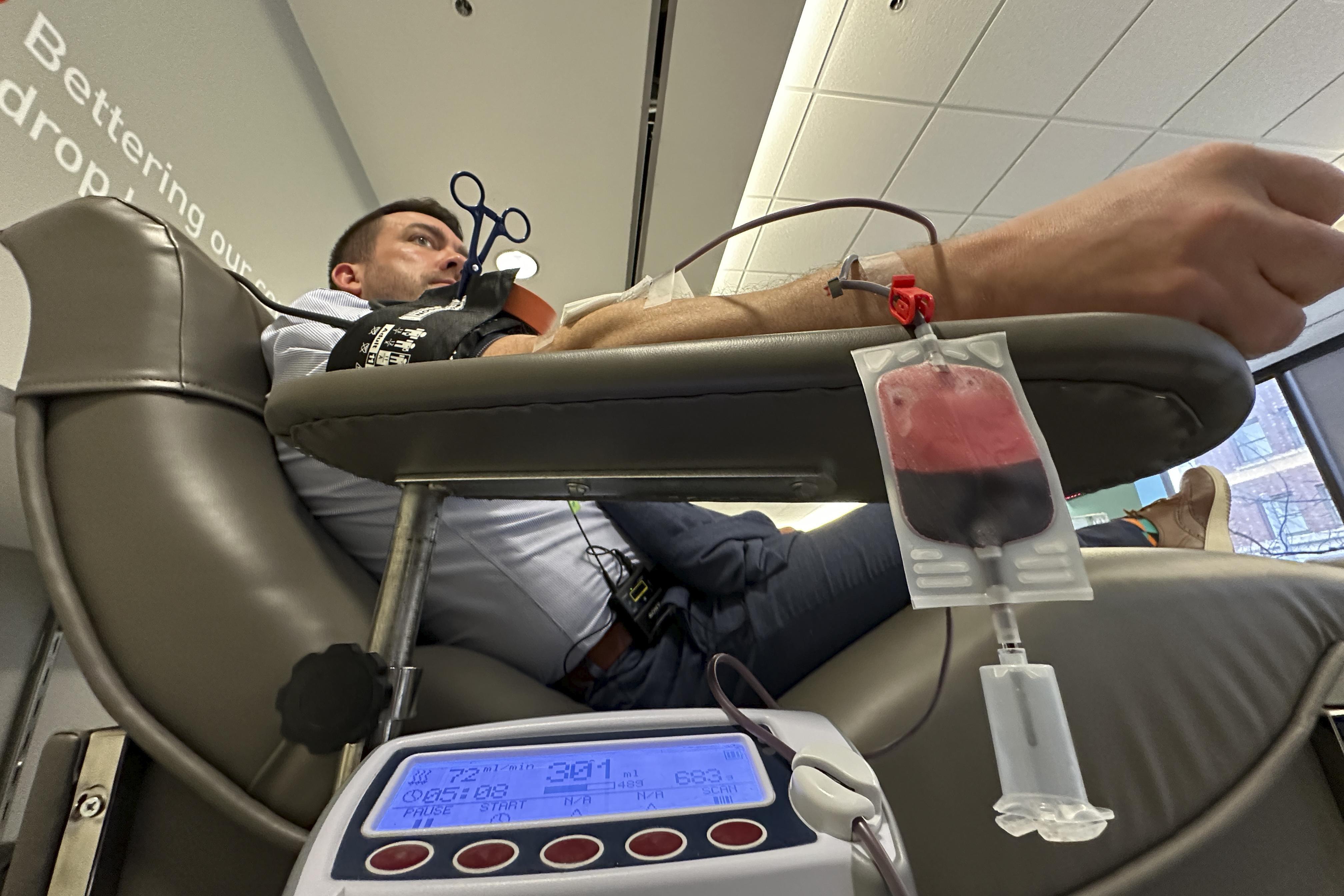
At Mississippi Blood Services in Flowood on Tuesday, Julianna Claire Frazier spent a few hours donating blood and platelets. Frazier said she came in after seeing that a child in her community had relapsed with leukemia and needed blood products.
But Frazier also sees the need at work. She is a nurse in the bone marrow transplant unit at the University of Mississippi Medical Center, where she said some patients need consistent transfusions.
“The types of chemo that we give, it completely wipes out their bone marrow,” Frazier said. “So they’re not making any red blood cells, white blood cells or platelets. They have literally nothing. We’re basically running the blood bank dry, just our unit, and we have 12 beds.”
Mississippi Blood Services says several blood types are in short supply across the state. Platelets are also a major concern because they expire within days, making them harder to keep on the shelf.
Kasey Dickson, director of public relations and marketing for Mississippi Blood Services, said the organization is entering one of its most difficult collection periods of the year.
“We’re ending some of what we would call our busier months because of the volume that we’re able to collect from our students in the schools,” Dickson said. “The summer months are extremely hard for us to collect.”
Dickson said MBS would ideally collect about 200 units of blood a day, but the organization is well below that mark. MBS is a community-based blood center, meaning the blood it collects is primarily used by Mississippi hospitals.
The Blood Center in New Orleans, which serves South Louisiana and South Mississippi, is also reporting strained inventories.
Dr. Tim Peterson, medical director for The Blood Center, said some hospitals in the region have seen unusually heavy blood use over the last several days from trauma cases, transplants and other major surgeries. He said The Blood Center would normally like to have a five day blood inventory. Right now, he said, it’s closer to two days.
Peterson said a liver transplant can require anywhere from 10 to 40 units of red blood cells, plus platelets and plasma, depending on how difficult the surgery is. Trauma cases can also put immediate pressure on the supply, especially when doctors do not yet know a patient’s blood type. In those cases, Peterson said O-negative blood is especially important as the universal red-cell donor type.
Demand for blood can also be unpredictable and rise quickly. quickly. In one recent day, Peterson said, a New Orleans-area hospital had an ongoing liver transplant and multiple aneurysm surgeries, all of which can require significant amounts of blood.
The broader issue is that the blood supply depends on a relatively small number of regular donors, Peterson said.. Nationwide, only about 3% of eligible people donate blood in a given year.
“It’s a very tenuous supply when a small amount of people are providing all the blood that’s used in the country,” Peterson said. “And it’s the blood that’s on the shelf today that’s used for the patients today.”
Mississippi Blood Services has information on donor appointments and upcoming blood drives at msblood.com.