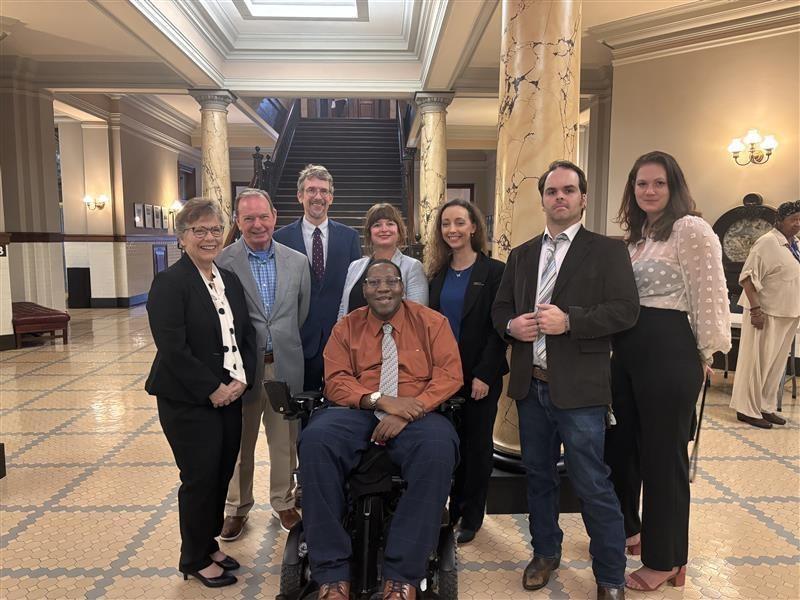
“The simple fact is, no matter how slow the progress you’re seeing is, you are still doing better than the you that never did anything to begin with,” Ward said.
Ward’s experience led to the passage of the Mississippi Youth Concussion Act in 2014, a law named in his honor aimed at protecting young athletes from head injuries. Catherine Bishop, executive director of the Brain Injury Association of Mississippi, said the need for greater awareness remains urgent.
“Brain injury does not discriminate. It can happen to anyone at any time,” Bishop said. “Nobody wakes up in the morning thinking today is going to be the day their life looks completely different.”
Bishop said more than 60,000 Mississippians live with disabilities caused by brain or spinal cord injuries.
House Public Health Chairman Rep. Sam Creekmore sponsored House Bill 314, which would create a pathway for the state to fund and conduct clinical trials of ibogaine, a drug being studied as a potential treatment for traumatic brain injuries and posttraumatic stress disorder.
“In our bill, we are going to put $5 million toward it and join Texas in their efforts to be one FDA trial application with shared data,” Creekmore said. “Our money will stay in the state and offer the clinical trials for Mississippians.”
The bill has passed both the House and Senate and awaits further action.