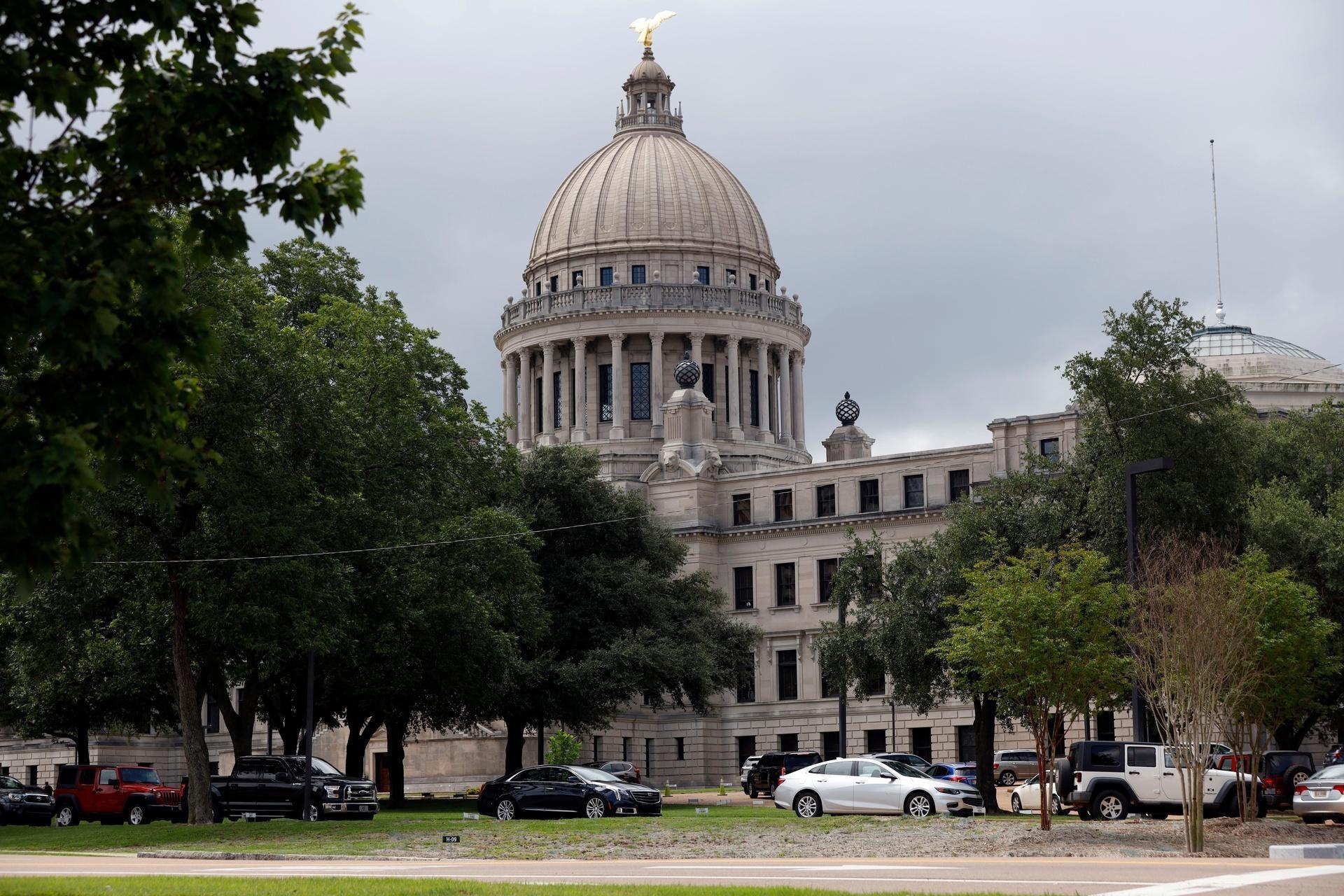
Speaking with SuperTalk Mississippi,Reeves acknowledged that while congressional redistricting has become a political flashpoint across the country, he was primarily focused on the judicial districts.
“What I would tell you is the tenure of Congressman Benny Thompson reigning terror on the second congressional district is over,” he said. “It is not a question of if, it's a question of when. I think that that's something that we will continue to look at and try to determine, but the congressional redistricting is not the reason the special session was called.”
Judge Aycock had previously ruled in favor of the plaintiffs in north Mississippi, deciding the state’s judicial map to be discriminatory. The state was obligated to create a new map during the 2026 legislative session, an obligation that was paused in anticipation of the Callais ruling. Both Mississippi and Louisiana’s cases dealt with similar issues from section two of the Voting Rights Act of 1965.
After the U.S. Supreme Court determined Louisiana’s congressional map to be unconstitutional in Louisiana v. Callais, both sides in Mississippi’s judicial redistricting case asked the appellate court to vacate the earlier decision. This means Mississippi’s current judicial map can continue to be used.
“There is no longer any reason for the legislature to come in on next Wednesday for judicial redistricting,” Reeves said.
Lt. Governor Delbert Hosemann has announced the creation of a Senate Select Committee on Redistricting and Reapportionment following the Supreme Court’s ruling and the Governor’s decision to rescind the special session. House Speaker Jason White has announced the creation of six committees that will also study redistricting ahead of the 2027 legislative session.
While Mississippi has already held congressional primaries, Reeves’s decision to not hold a special session has not stymied calls for redistricting to happen this year. Writing on social media, Mississippi State Auditor Shad White mused over what his actions would be as governor, beginning with calling a special session to “redistrict Bennie Thompson out.”
Reeves emphasized that congressional and legislative redistricting, which he expects sometime between “now and the 2027 elections,” should be redrawn with timely consideration.
“While it may be in the best interest of individual politicians in Mississippi to talk about congressional redistricting, what happens in Mississippi doesn't happen in a vacuum,” he said. “What happens in our state affects what happens in other states or what happens in other states may affect what happens in Mississippi.”
State officials including the governor, State Auditor Shad White and Agriculture Commissioner Andy Gipson have expressed public support for having the second district redrawn or represented by someone else after the November elections.
But some believe change should come sooner rather than later, with State Senator Joel Carter, Jr. writing on social media Thursday that “it is unfair to wait until the next legislative session. If the Governor supports changing the district maps, call a special session now.”
Second District Congressman Bennie Thompson is the state's only democratic congressional member and has been in office since 1993.
In an interview with MPB News, he defended his tenure, stating that his votes on issues including housing and economic development are progressive and that his record “is higher for trying to get us off the bottom than any other member of the delegation.”
Thompson is also Mississippi’s only Black congressional member. The state is 38% African-American.
ACLU Attorney Ari Savitzky represents the plaintiffs in the state’s judicial redistricting case. He said race still influences the outcome of maps even when racially blind systems are implemented.
“We had our map drawer turn all racial data off. All racial data. And draw a map,” he said. “And he drew a majority Black district. Just because the state has a very, very large Black population and the Black population is concentrated in certain parts of the state.”
Savitzky said the creation of at least one majority-minority district utilizing these racially-blind demographic metrics isn’t surprising.
“I mean, it's all well and good to say, oh, we should be race-blind, but what it sounds like to me is there's a racial goal of targeting black voters and making sure that they don't have power,” he said. “I just think that is wrong and problematic.”
Civil rights and advocacy organizations in the state have released a flurry of statements speaking out against calls to redraw judicial, state legislative and congressional maps.
The Mississippi Center for Justice, a Jackson-based advocacy organization, has said it still plans to hold a rally May 20 and “will continue to oppose any efforts to redraw district lines in a way that weakens Black representation.”
“Obviously, the struggle for multiracial democracy is front of mind in the South and with some of the redistricting-related moves that we see there. But the advancement of multiracial democracy is something that we all have a part in,” said Savitzky. “It is our national project, our constitutional project as a nation. If we can advance multiracial democracy in the South, it can inspire everyone across the country.”