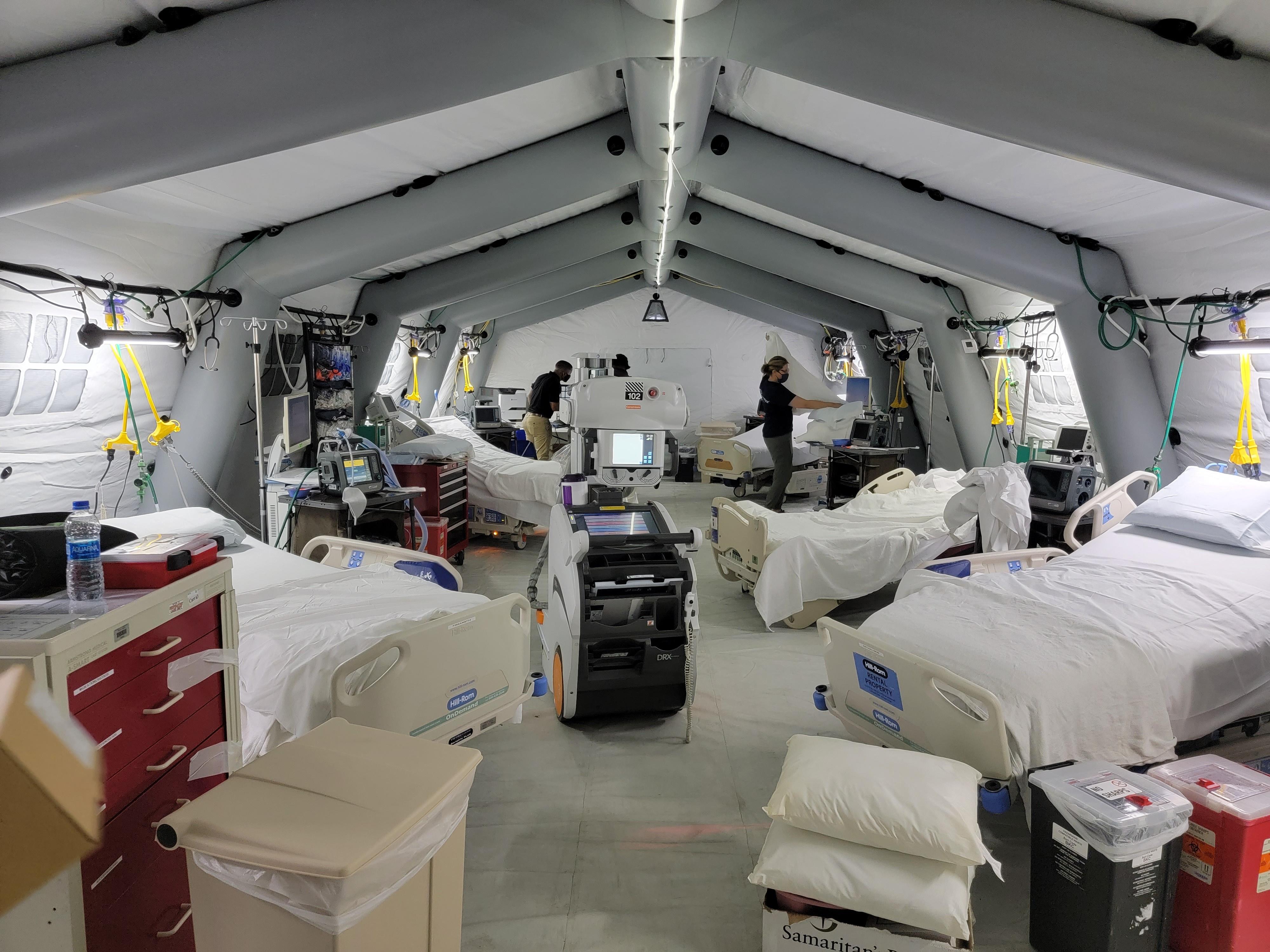
Mississippi’s hospitals are operating at or near capacity as the state’s coronavirus hospitalization rates remain near peak utilization. Governor Tate Reeves announced earlier this week that more than 1,000 healthcare workers are being dispersed among 50 hospitals to alleviate staffing shortages. Jennifer Dumal is Senior Vice-President of Patient Care at Gulfport-Memorial Hospital. She says they are receiving 18 contract nurses who will work alongside their current staff to care for patients.
Dumal says “We’re very concerned about how far our nurses are stretched. We’ve increased our nurse-to-patient ratios, we have nurses who typically work in our recovery rooms for our [operating room] helping in the [intensive care unit]. 18 nurses is a tremendous help in a crisis like this.”
The Gulf Coast has one of the state’s lower vaccination rates. And while the Delta has one of the highest in the state, hospitals are still facing challenges with meeting patient needs. Greenwood Leflore Hospital CEO Dr. Jason Studley says his hospital is taking on patients from across the state as part of the Department of Health’s system of care program.
“We do have our share of difficulties, however with the state program in place, that’s for the rural markets in Mississippi,” says Dr. Studley. “And the support we have for our area is because of these kinds of situations. Not everything can be handled in the urban markets. And we’re here to assist and serve whatever the state needs. And so it’s actually been a benefit I think to the rest of the state, our ability to care for these patients.”
Training for some of these out-of-state contract workers began on Wednesday, and state officials say contracts to provide additional staffing could be finalized as early as today.