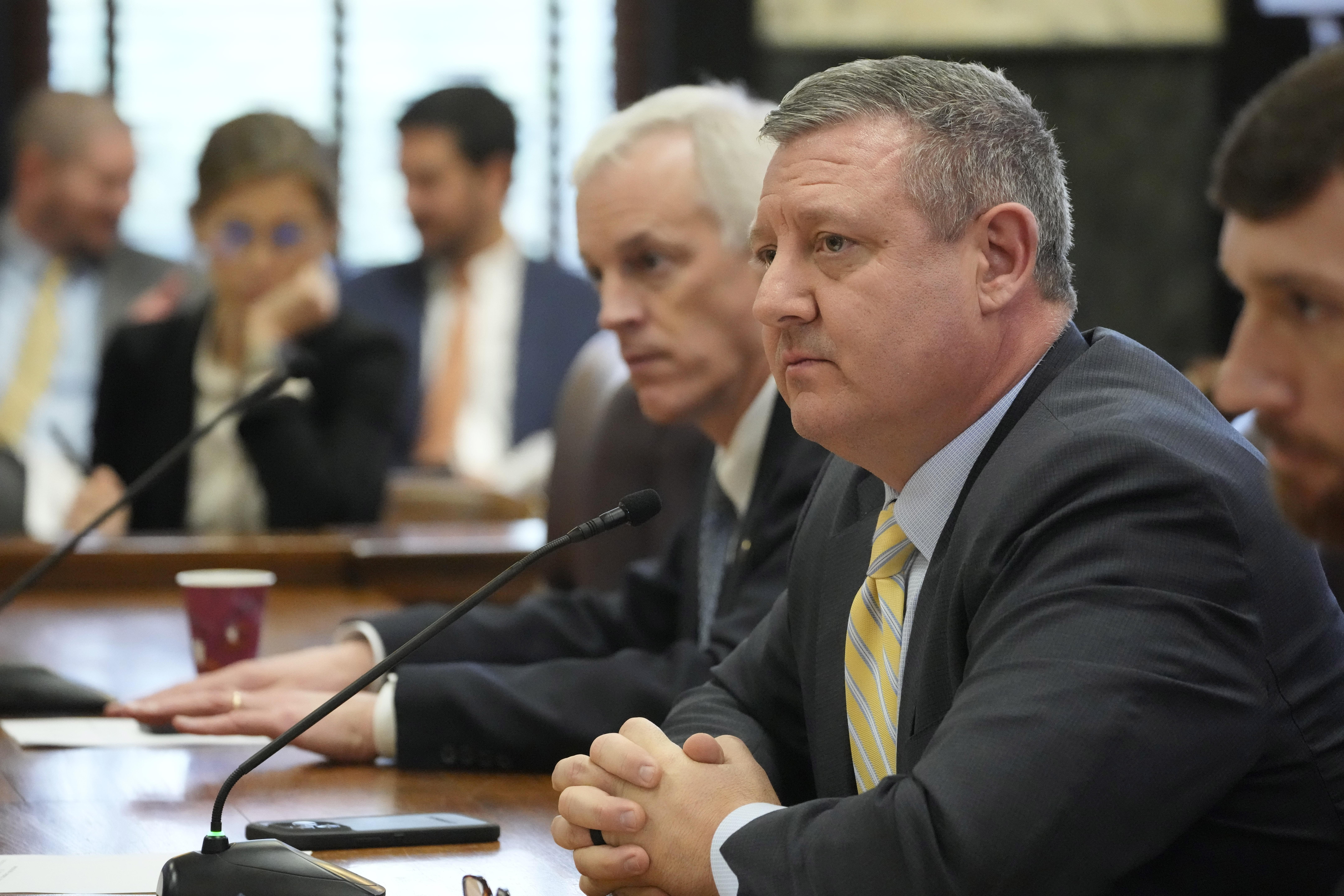
Tuesday marked the first major culling of the 2026 legislative session with a deadline for committees to advance general bills and constitutional amendments that originated in their own chambers. Facing that time limit, the House Education and Appropriations committees advanced House Bill 1126, which would give Mississippi’s public school teachers a $5,000 pay raise, with an additional $3,000 supplement for licensed special education teachers.
House Education Chairman Rob Roberson said the bill reflects lawmakers’ effort to push teacher salaries as high as possible without jeopardizing the state budget.
“We wanted to do as much as we possibly could,” Roberson told MPB in an interview after the meeting. “That was kind of the top number that we could do without overextending our budget.”
At $5,000, the House proposal exceeds the $2,000 teacher pay raise passed by the Senate earlier in the session.
Alongside the pay raises, the bill includes changes to the Public Employees’ Retirement System, or PERS. Under the proposal, first responders would be allowed to retire after 25 years of service and the general service requirement for other state employees would be reduced from 35 years to 30 years. The legislation also places limits on superintendent salaries, tying compensation more closely to teacher pay.
Across the Capitol a few hours later, the Senate Education Committee met for the sole purpose of taking up House Bill 2, the House’s education omnibus package that bundled together school choice programs, charter school changes and other education reforms.
After less than two minutes of deliberation, the committee voted down the bill in a unanimous vote.
“The bill dies today,” Senate Education Chairman Dennis DeBar said as the committee concluded its business.
While Senate opposition to HB2’s school choice provisions has been clear for weeks, the chamber’s education committee had until March 3 to take up HB2, so the vote's timing surprised House leaders.
In an interview after the vote, DeBar said the committee was ready to resolve the issue directly.
“It’s been hanging over our heads all session,” DeBar said. “I thought HB2 deserved an up or down vote as it was. And I think everybody knows where the Senate stands.”
DeBar said the Senate has already advanced the education initiatives in HB2 it supports through separate bills, including public school portability and an expanded literacy program.
The House could still revive HB2’s school choice program by amending a different bill that contains the relevant code sections, and Roberson said the broader debate over school choice is far from over.
“I mean, this is the Legislature,” Roberson said. “There’s nothing dead until the final day.”
House Speaker Jason White, who has made school choice a central priority of his speakership, declined to take questions from reporters Wednesday as he left the House floor following the Senate committee vote.
Later Tuesday evening, White criticized the Senate’s handling of HB2 in a lengthy social media post, calling the committee vote premature. He argued the Senate acted to preserve what he described as the “status quo” and said the House would not be deterred from pursuing school choice legislation.
“The self-proclaimed deliberative body did not deliberate,” White said. “Instead of engaging in meaningful work to build on Mississippi’s education gains, the Senate has chosen the route to shut down any productive pathway to put students before systems.”
White also accused Senate leadership of aligning with Democratic groups and national organizations opposed to school choice and said the House’s passage of HB2 reflected a willingness to confront entrenched systems. He emphasized the support HB2 has received from Gov. Tate Reeves, national Republican leaders and conservative advocacy groups.
Gov. Tate Reeves also criticized the move in a social media post Wednesday morning, accusing Senate leaders of killing a conservative priority and doing so by aligning themselves with Democrats.
Meanwhile, the Mississippi Democratic Party celebrated HB2’s defeat, calling it a victory for public education and grassroots organizing. Party leaders argued HB2 would have diverted resources from public schools and said the Senate’s action protected students and educators from what they described as outside influence.
“Our public schools are the cornerstone of every community in this state, and this unanimous rejection sends a clear message: Mississippi will not abandon the students and families who depend on quality public education — no matter how much out-of-state money tries to buy our legislators,” Mississippi Democratic Party Chairman Cheikh Taylor, said.