The Mississippi Emergency Management Agency is urging Mississippians to assist with the request by self-reporting home damage sustained from the storm or its aftermath.
“There's a lot of damage. There's no question when you talk about a storm of this magnitude,” said Scott Simmons, Director of External Affairs for MEMA. “51 counties impacted in some form or fashion by this horrific ice storm. We've lost 27 lives.”
More than 30,000 residents are still without power while downed trees and power lines continue to present obstacles to recovery.
“The impact to the infrastructure is just enormous,” said Simmons. “For these power providers, they're fighting an uphill battle right now, trying to get through the down debris, trying to rebuild the power poles, to restring the lines and get energy back to those homes that need it.”
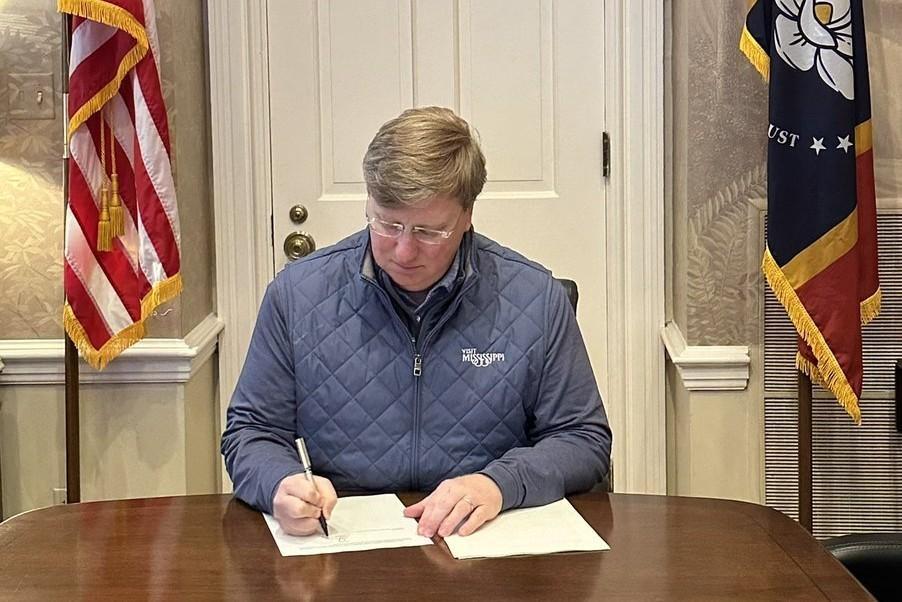
Gov. Reeves said he is working to assess damage with the Federal Emergency Management Agency, MEMA and other agencies to ensure the declaration request meets federal thresholds.
In the meantime, Simmons urged homeowners and renters to provide MEMA with photos and videos of home damage.
“When we go back through with FEMA, hopefully to make our case for a federal disaster declaration, that self-reported documentation is a huge chunk of the evidence we need to make the state's case,” he said.
President Trump has already signed an emergency declaration for Mississippi, giving the state $3.75 million for essential items. The Major Disaster Declaration would go further.
“You get a reimbursement for counties that have spent enormous amounts of money and overtime expenses collecting debris,” said Simmons. “The government will reimburse them for some of their costs, a good lion's share three-to-one usually of the cost of the damage done. For individuals, it could lead up to as much as $38,000 a person.”
State lawmakers are considering a bill that would provide MEMA with $20 million to assist with disaster response and recovery efforts. Simmons said he also hopes the state could be considered for “mitigation funding,” or money that could go towards efforts to secure Mississippi’s infrastructure against future storms, including investing in care facility generators or at warming centers.
“That has been a tricky one to get these days,” said Simmons. “For example, last year's March tornadoes we had did not get mitigation funding, nor did the other states get it.”