Food banks across the Gulf South had a tough year in 2025, spurred by funding cuts and a 43-day government shutdown.
Gulf South food banks look back on a challenging year as another shutdown looms


Food banks across the Gulf South had a tough year in 2025, spurred by funding cuts and a 43-day government shutdown.

Gulf States Newsroom
Gulf South food banks look back on a challenging year as another shutdown looms
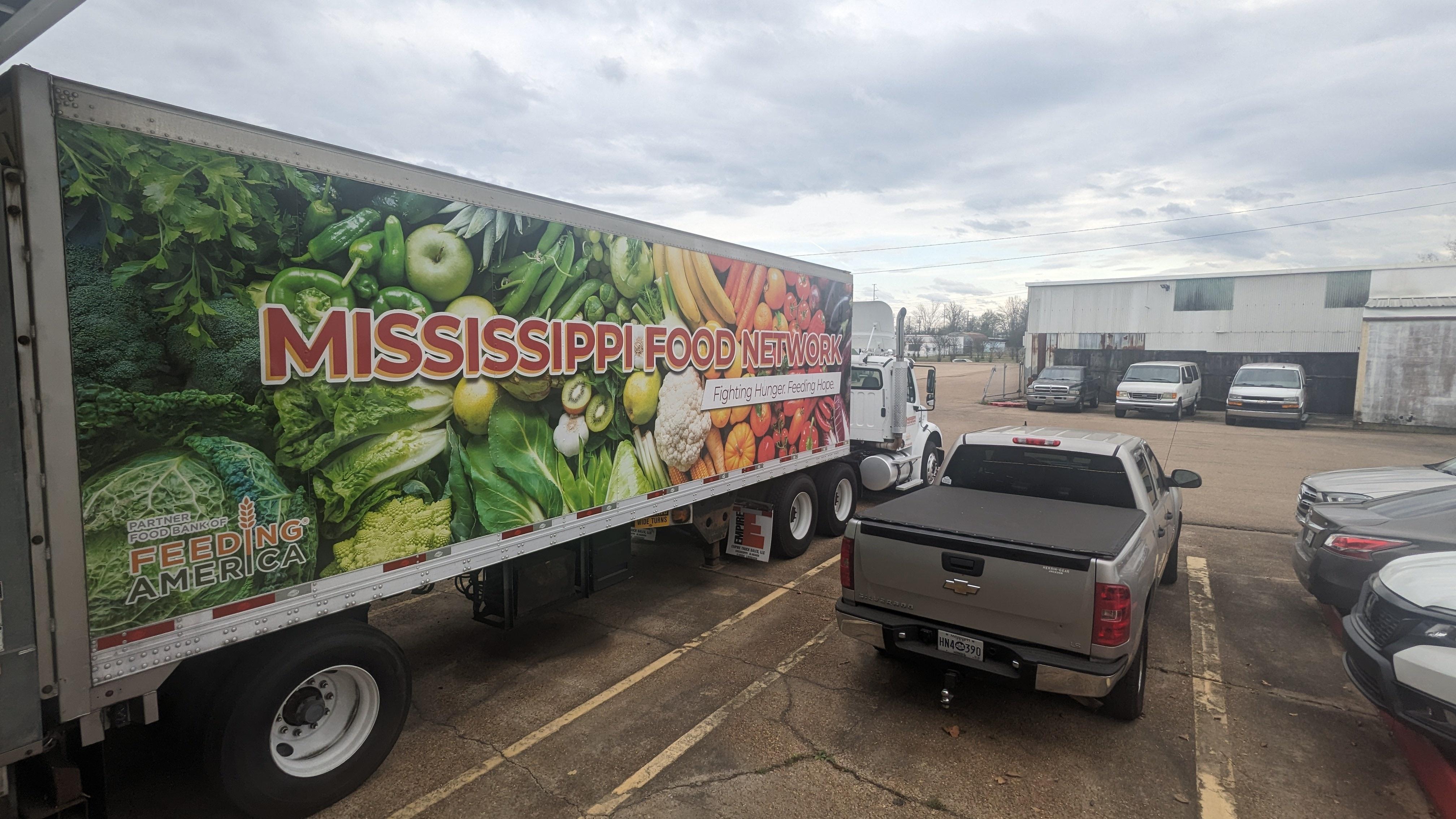
For Mississippi Food Network (MFN) in Jackson, that meant doing more with less.
Interim CEO Cassandra Mobley said the nonprofit that serves 430 member agencies across the state distributed about 26 million pounds of food last year — about 4 million pounds less than the previous year.
“Our pounds were down,” she said. “We served about the same amount of people with a good bit of less food.”
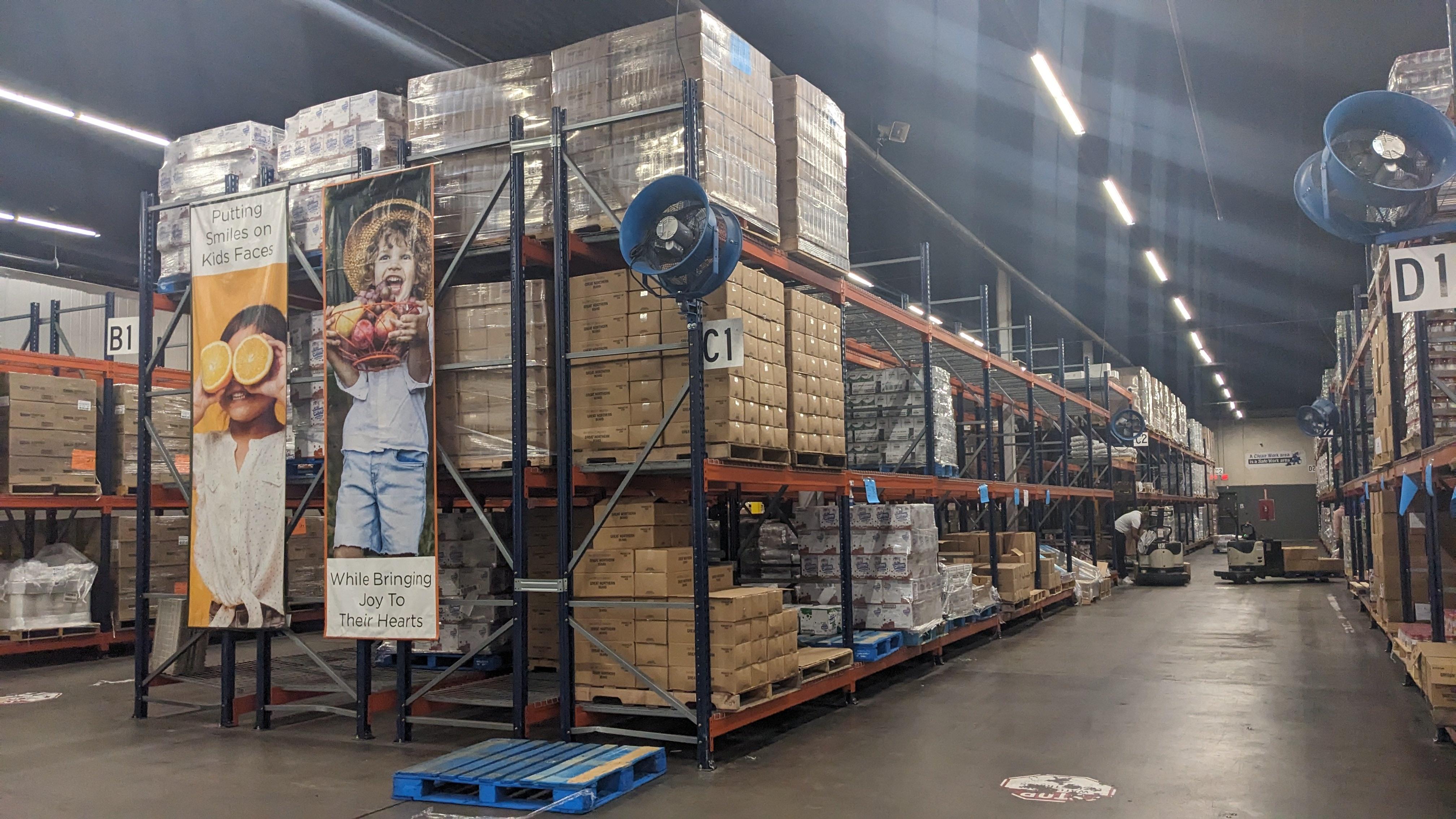
A visit to their warehouse in January of this year was quiet — just a few people organizing boxes of donations.
It stood in sharp contrast to the flurry of the previous year, which started with federal funding cuts and ended with the longest government shutdown in U.S. history, bringing furloughed government employees to MFN’s door along with many Mississippians who lost SNAP benefits.
“Some of the biggest challenges were just the changes administratively that had effects on how nonprofits in general do their work, but then specifically, the changes to USDA,” Mobley said from her office in Jackson. “Then we had the government shutdown, and the government shutdown obviously caused some crisis.”
Aside from being its own dilemma, the shutdown exacerbated the challenges that food banks across the Gulf South faced in securing funding sources in 2025.
But Mobley prefers to frame the challenges of last year as opportunities for 2026.
“That's one of the things that we had to do: was really pivot and be flexible,” she said, “and think about how to serve our community and serve our neighbors and have those impacts that we want to have.”
And those communities and neighbors, she said, also turned back around to help Mississippi in 2025.
“When it really became known how negatively this was affecting families here in Mississippi, our Mississippi people stepped up,” Mobley said. “I was surprised at the level of support that we received.”

For Mississippi Food Network (MFN) in Jackson, that meant doing more with less.
Interim CEO Cassandra Mobley said the nonprofit that serves 430 member agencies across the state distributed about 26 million pounds of food last year — about 4 million pounds less than the previous year.
“Our pounds were down,” she said. “We served about the same amount of people with a good bit of less food.”
A visit to their warehouse in January of this year was quiet — just a few people organizing boxes of donations.
It stood in sharp contrast to the flurry of the previous year, which started with federal funding cuts and ended with the longest government shutdown in U.S. history, bringing furloughed government employees to MFN’s door along with many Mississippians who lost SNAP benefits.
“Some of the biggest challenges were just the changes administratively that had effects on how nonprofits in general do their work, but then specifically, the changes to USDA,” Mobley said from her office in Jackson. “Then we had the government shutdown, and the government shutdown obviously caused some crisis.”
Aside from being its own dilemma, the shutdown exacerbated the challenges that food banks across the Gulf South faced in securing funding sources in 2025.
But Mobley prefers to frame the challenges of last year as opportunities for 2026.
“That's one of the things that we had to do: was really pivot and be flexible,” she said, “and think about how to serve our community and serve our neighbors and have those impacts that we want to have.”
And those communities and neighbors, she said, also turned back around to help Mississippi in 2025.
“When it really became known how negatively this was affecting families here in Mississippi, our Mississippi people stepped up,” Mobley said. “I was surprised at the level of support that we received.”
Mississippi wasn’t the only place to see its communities step up, either.
Michael Ledger, president and CEO of Feeding the Gulf Coast, which serves Florida’s panhandle and the southern parts of Alabama and Mississippi, said his organization got support from communities across the coast during the shutdown.
But the work food banks do requires support from states, too.
“Some are more supportive than others,” Ledger said. “As a food bank…that exists across state lines, our ability to serve these states can vary depending on the amount of support we get from each state.”
In Alabama, the state used a total of roughly $5 million dollars to mitigate the effects of the shutdown. Louisiana put together a system to fund SNAP for some residents as well, although those plans were upended when the Trump administration promised to send funding.
But in Mississippi, Gov. Tate Reeves simply said there wasn’t much he could do.
“What Mississippi's emergency statutes don't do is they don't allow me to just spend money, just appropriate money,” Reeves said at a press conference last November. “While the governor in Louisiana certainly has that authority, evidently, the governor of Mississippi doesn't have that authority.”
Last year, Reeves said he would fund state agencies when the state budget was stalled during the legislative session. Mississippi’s Department of Human Services is responsible for operating the federal SNAP program in the state.
Along with support, Ledger said food insecurity is a consistent issue across the region. A 2024 report from Feeding America found that of the counties in the top 10% for food insecurity, about 8 out of 10 were in the South.
“These are areas regionally that have high rates of poverty, high rates of hunger, and unfortunately, relatively low rates of support systems,” Ledger said.
“A lot of people that you wouldn't expect to be in the line, as I say, or needing food support are the folks that are doing everything right.”
Feeding the Gulf Coast distributed about 45 million pounds of food, according to Ledger, despite the challenges of 2025.
“I'm really proud of our team having been able to increase again this year,” he said. “But I fear that 2026 may be an insurmountable task just given where we're heading with support levels.”
What that means for many food banks is that the main priority — at least for now — is maintaining basic operations and continuing to get food out to the communities they serve.
A common goal for banks is connecting with those communities more locally, to both understand and meet their specific needs. It’s why Second Harvest Louisiana put a couple of new distribution centers in its service area, which covers the southern part of the state — from the Texas to the Mississippi borders.
“It's a huge priority,” said John Sillars, chief strategy officer of Second Harvest in Louisiana. “That's one of the reasons why we put [the distribution centers] in those areas, because we thought it was really important to more effectively serve those areas.”
That’s also a goal of Mobley’s for Mississippi, and hopefully something they can circle back on in 2026.
“When you're serving 56 counties in such a huge area, six trucks are not a lot, and our trucks are out every single day going and delivering,” she said. “That's where we were headed with the hubs or the branch idea, but that's something that we're going to kind of have to come back to right now.”
Sillars said they’d like to get other resources to local communities in Louisiana as well, like a community kitchen in their Bayou distribution center or a nonprofit grocery store near Lafayette.
He and Mobley both want to expand their food sources. Sillars hopes to expand partnerships with Louisiana grocery stores, retailers, distributors and anyone who would be able to help with donations.
Mobley wants to develop partnerships with Mississippi farmers, which she said would not only help them with getting food, but also with her goal of collaborating more with banks across the region.
“If we're able to share that information and say, ‘Hey, I've got two farmers down here that are just overrunning us with whatever it is that they have – could you guys use some of it?’” she said. “Of course, 99% of the time it's gonna be yes.”
It also meets a goal she and Ledger both have of continuing to get out healthy food and fresh produce as much as possible.
Ledger said working with vulnerable populations – like children and seniors – as well as helping educate folks on healthy eating and shopping habits are a priority for them in 2026.
“We're trying to get people healthy, which we hope will have lots of benefits for that individual in our community,” he said.
But ultimately, branching out in 2026 depends on maintaining those basic operations to cover food insecurity across the region.
“[It] went from I think more than 407,000 people last year to more than 436,0000 people this year,” Sillars said. “And I think that's driven in part by poverty, loss of jobs, slow growth.”
And that means when there’s a crisis — like another government shutdown — things go from bad to worse, oftentimes leaving food banks to clean up as much of the mess as possible.
“We're hoping that people's memories aren't short because with the government shutdown,” Sillars said. “If they turn off SNAP again, it's going to create more of a need where people are going to be coming to us and our partner pantries for additional food.”
This story was produced by the Gulf States Newsroom, a collaboration between Mississippi Public Broadcasting, WBHM in Alabama, WWNO and WRKF in Louisiana and NPR.