Civil Rights activist Flonzie Brown Wright just happened to be awake at four a.m. on Tuesday.
“I just kind of peeped at the phone for a second when I saw that he had passed,” she said. “It really broke my heart.”



Civil Rights activist Flonzie Brown Wright just happened to be awake at four a.m. on Tuesday.
“I just kind of peeped at the phone for a second when I saw that he had passed,” she said. “It really broke my heart.”

Shamira Muhammad
Mississippians remember Rev. Jesse Jackson
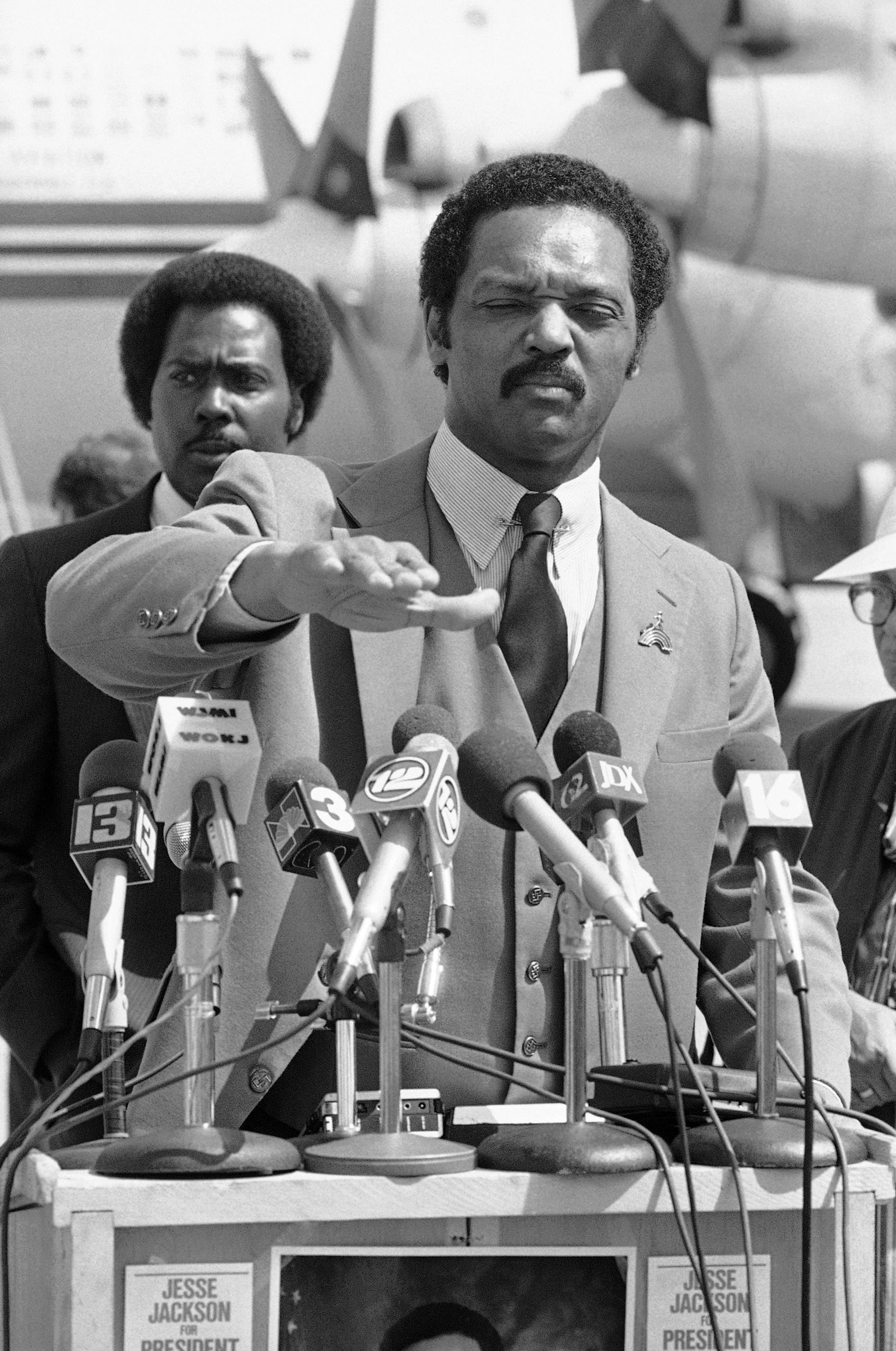
Reverend Jesse Jackson, a Civil Rights icon, died early Tuesday morning at his home in Chicago. He was 84.
Wright, the first Black woman elected to public office in Mississippi after Reconstruction, regularly worked alongside Dr. Martin Luther King, Jr. and Jackson.
Jackson often traveled to Mississippi to organize with the Congress of Racial Equality, or CORE, and other organizations.
“He was quite an individual,” said David Dennis, Sr., a Civil Rights activist and CORE advocate. “Very important to the movement, and one of the strengths of the movement and a great leader. I knew him personally. I’ve known him since he was a youngster. We both got involved about the same time in the movement. So it's a sad situation.”
Jackson would go on to politically organize around the country, including with Wright.
“I met him so many, many years ago,” she said. “We were team members. The first speech that we gave was in Philadelphia, Pennsylvania. I want to say back in 1966 or 7, when we were invited to speak at the NAACP Freedom Banquet.”
Together, the two helped campaign for Black Pennsylvania State Senator Hardy Williams and continued what Wright called a friendly professional partnership, usually exchanging telephone calls over the years.
“I was in Las Vegas to speak for a group, many years ago, and so I said, well, let me go down to the gym,” Wright said. “I went down to the gym, who did I see in the gym? But Reverend Jackson. His two sons, Jesse Jr. And Jonathan. We laughed, we talked, reminisced about the old days, about the old candidates as a matter of fact.”
Wright would go on to help Jackson develop several key areas of his political organizing, including the civil rights non-profit he founded, the Rainbow PUSH Coalition.
“When I met Mrs. Mamie Till [Mobley], Reverend Jackson had invited me to Chicago to speak for what was then Operation Bread Basket,” she said. “That's when I met Mrs. Till [Mobley]. We were both keynote speakers. From that it became Operation Push.”
Over time, Jackson developed deep relationships with other Mississippi leaders, including Pastor Jerry Young of the New Hope Baptist Church and former president of the National Baptist Convention.
“To be honest with you, behind the scenes, he was a jokester,” he said. “I mean, Jesse, he was a lot of fun. He was absolutely just a great man.”
Young said he’ll remember the civil rights icon’s conviction and courage.
“I would describe him, as I said to someone, as a fearless soldier,” he said. “He really had tremendous courage and outstanding commitment. I marveled at how selfless he was, unlike so many today who are persons in leadership roles.”
Jackson developed health challenges after two bouts of COVID-19 infections and lived with progressive supranuclear palsy, a rare neurological disorder.
“He made us feel, you are somebody,” remembered Wright. “You may be poor, but you are somebody. You know, you may be sick, but you are somebody. You may be uneducated, but you are somebody. He drilled that in my generation, years and years and still, people still say, we are somebody.”
Although Wright said she’s experiencing some waves of sadness, there is a general optimism she feels about Jackson’s legacy.
“He finished his assignment,” she said. “Just like all of us, when the assignment is done, it's time to go.”