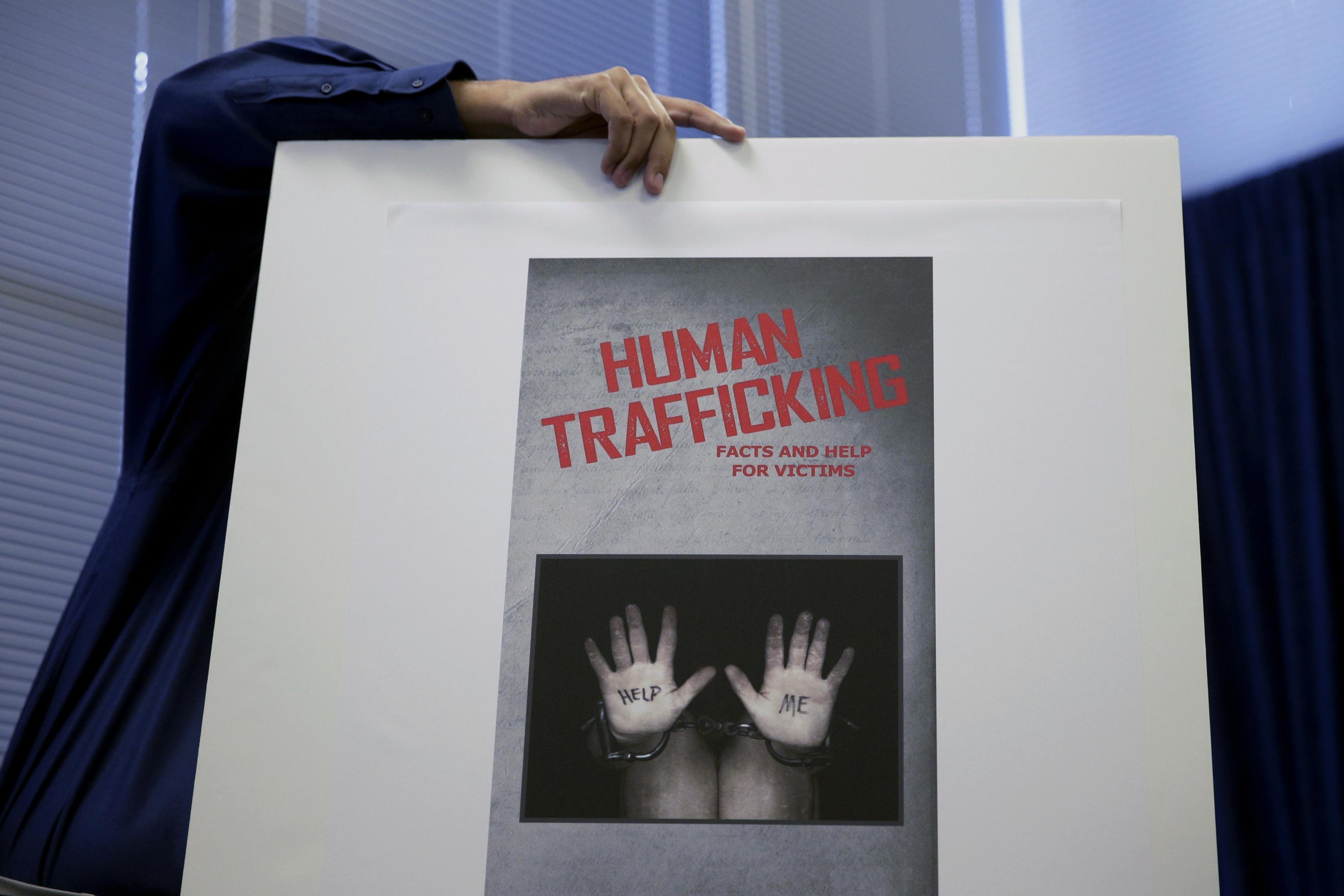
In 2024, the National Human Trafficking Hotline reported that they identified 195 cases of human trafficking in Mississippi, involving 300 victims.
Human trafficking involves using people for labor or commercial sex through force, fraud or coercion — and applies to recruiting, providing or holding people for those purposes.
When it comes to prevention and helping victims there are signs to look for: physical abuse, lack of proper care or signs of coercion and control are all things the state Department of Health lists as red flags.
And to keep yourself and your loved ones safe, the department says to watch for things like jobs that pay well but have low skill or experience requirements, controlling relationships and requests for personal details from people online.
But prevention, in the bigger picture, isn't just about those red flags, advocates say.
"I think people think it's always going to be a white van that picks up someone for human trafficking and we just know that that's not necessarily true," said Rebecca Stewart, executive director of the Domestic Abuse Family Shelter, which serves southeast Mississippi.
She and other advocates say that in the state, traffickers are most often someone the victim knows and are usually family members.
"A very typical scenario would look like parents or a relative who had custody of the child who had a substance abuse disorder," said Sarah Young, a survivor support specialist with the Mississippi Coalition Against Human Trafficking. "And they would traffick the child for either food or funds or more drugs."
Young says traffickers prey on vulnerable people. So, prevention requires looking long-term at vulnerabilities in Mississippi.
"It's more nuanced than what we think: it's a lot of our poverty level, it is drug usage, it those who have experienced a lifetime in foster care," she said.
And those are all issues that require long-term, in-depth intervention and creating resources to address those needs throughout the state.
"We hear this all the time from those that we work with: educators, law enforcement, when you do have mental health concerns for those in the community," Young said. "They're like, 'I don't know where to send these people; I don't know where to refer them because of lack of resources.'"
But they're also things that Young says communities can work together to address by knowing who is vulnerable in a community and how to step in to fill those gaps.
"Looking out for your neighbor, being a helping hand," she said. "If there's, let's say, a single mother in your community who really needs assistance: she might have small children, she really needs some help, she might be in a vulnerable place."
"She may have experienced a lifetime of foster care herself and those are the things that make someone vulnerable to potential traffickers."
Stewart said another critical issue is education: both for victims and community members.
"I know I've talked to victims just all across the United States and it's so surprising to me when they'll hear the word trafficking and then once they get the details then they'll be like, 'Wow, that's what happened to me,'" said Stewart. "And they didn't know what it was called."
Knowing what that looks like from the other side is important, too. Kirsten Foot, CEO of Businesses Ending Slavery and Human Trafficking, says that businesses should set up routine systems and support for employees to report incidents.
"When a staff person is equipped to see a pattern of things until I notice the interactions between possible victims of human trafficking, the people controlling them, then it's possible for that staff person to intervene in a way that is safe and effective," she said.
BEST is based in Seattle, but puts out trainings for businesses in various industries — including important ones for the Gulf Coast like the maritime and hospitality industries.
"There are indicators in hotels, for example, patterns of use of hotel rooms, where somebody who maybe is parking a crew of workers that are being confined and not allowed to leave," she said.
"You have specific kinds of things that we might see in a hotel setting that an alert and trained staff person would know what to do, would be able to recognize."
To report suspect child trafficking in Mississippi, you can call the state's Department of Child Protection Services at 1-800-222-8000 or make an report online.
You can also report suspected adult trafficking with the MDHS Adult Protective Services at 1-844-437-6282 or by making a vulnerable adult report online. You can call the National Human Trafficking Hotline at 1-888-373-7888 for more resources.