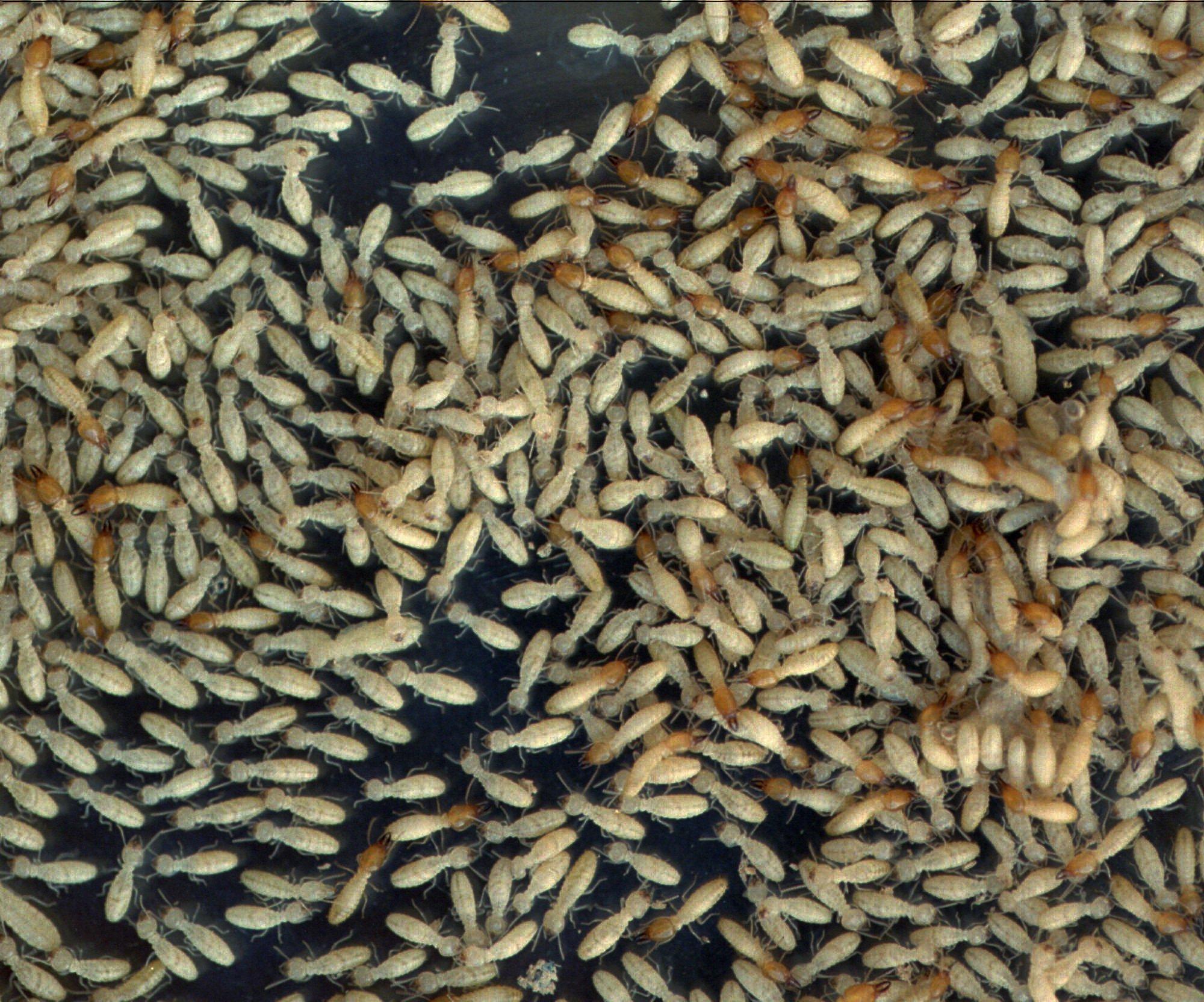
The insects were Formosan subterranean termite swarmers, the winged reproductive termites that emerge from colonies to mate and start new colonies. They’re active in Mississippi from late April through June and often swarm after sunset, especially after rain.
Santos Portugal, an urban entomologist with the Mississippi State University Extension Service, said the timing was not unusual, but the size was.
“It was one of the largest swarming events that many Mississippians have seen in quite a while, and maybe ever,” Portugal said.
Formosan termites are primarily established in south Mississippi, but they are not limited to the Coast. MSU Extension says the invasive species is considered established in parts of 26 counties in south and central Mississippi. A few northern counties have had isolated collections, though Portugal said it is not known whether those colonies continue to grow.
Kolby Krohn, a certified entomologist and chief operating officer of Redd Pest Solutions in Biloxi, said heavy swarms are a familiar part of life on the Gulf Coast this time of year.
“It’s almost like it’s snowing outside because there's so many termites swarming all at one time, millions and millions,” Krohn said. “They get in every crack and crevice in your hair, in your jacket, in your clothes and can make quite a mess.”
Formosan termite swarmers are especially drawn to light. That can make porches, streetlights, neighborhoods and ballfields especially attractive during swarming season.
Krohn said this year’s swarms have felt heavier because dry weather delayed some early activity.
“When we finally got a good weather movement across the coast with some precipitation, it was almost like everywhere swarmed at once,” Krohn said.
Portugal said Formosan termites can outcompete native subterranean termites because their colonies are much larger and more aggressive.
Kevin Ragon, an associate Extension professor of sustainable bioproducts, said native subterranean termites play an important ecological role by breaking down dead wood and other debris
“Native termites are decomposing organisms. Without them, our forest floors would be covered in limbs, down trees and other cellulose-based debris,” Ragon said in an Extension press release. “They play a vital role in forest ecology converting biomass back into soil for other insects, animals and trees.”
Portugal said unlike their native counterparts, Formosan termites can also infest healthy trees. They are unlikely to kill a tree directly, but they can hollow it out, making it more vulnerable to damage from storms or high winds.
For homeowners, experts say the flying swarmers are mostly a nuisance. Seeing a few indoors after doors or windows have been opened does not necessarily mean a home is infested.
“Our homes are cooler and drier than these swarmers like, and they almost always need soil to start a colony. So, swarmers are not likely to survive indoors for very long,” Portugal said. “But if you see them emerge from the walls, ceilings or floors, call a reputable pest management professional.”
Portugal and his team are tracking the spread of the insects and are asking Mississippians who find suspected Formosan termites outside of known counties to send samples to the MSU Extension Insect Identification Lab.