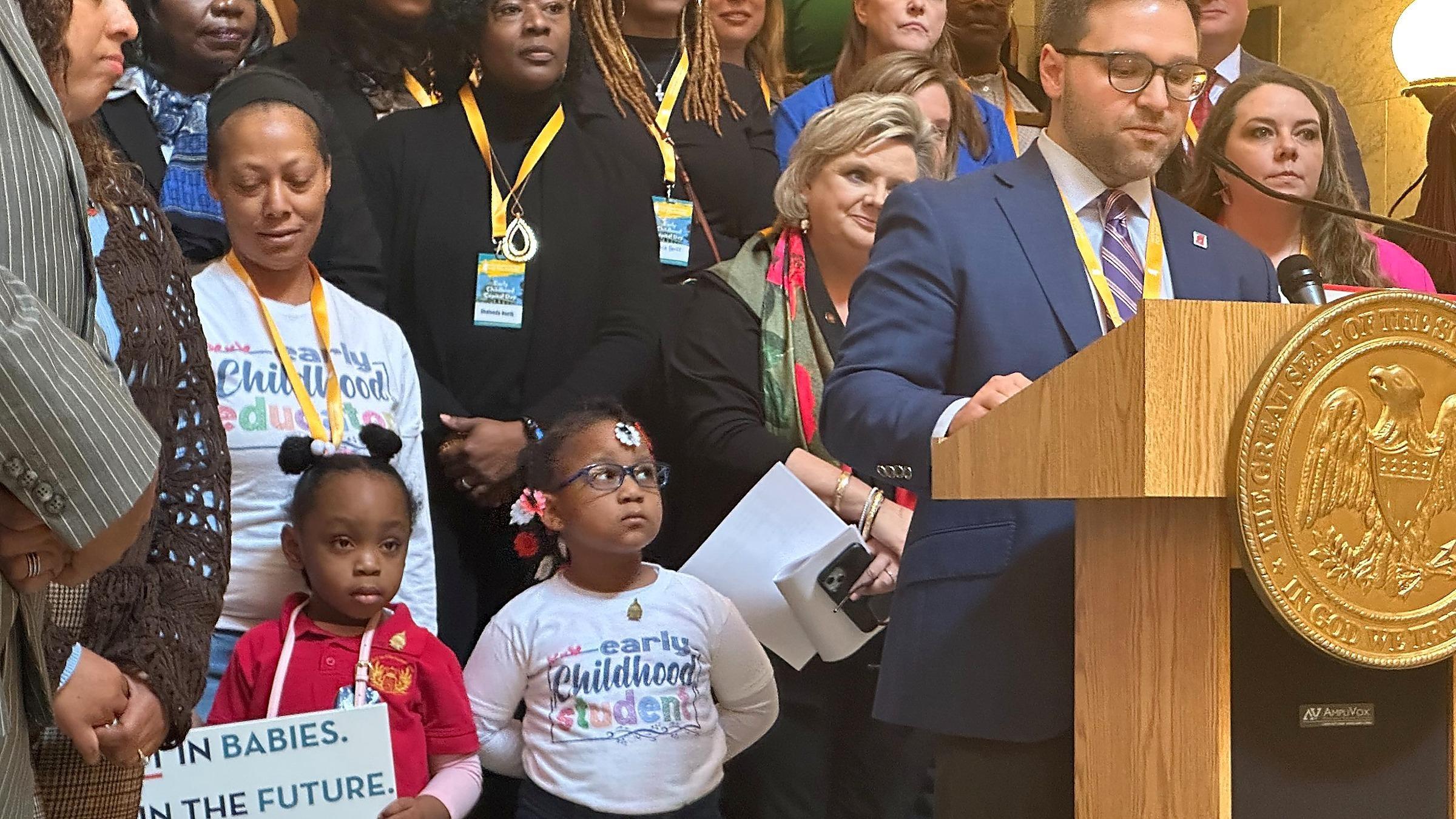
During a press conference, speakers highlighted last year’s $15 million expansion of child care subsidies and the extension of paid parental leave for state employees as signs of progress. But they warned those steps have not been enough to stabilize a child care system they say remains out of reach for many families.
Sen. Nicole Boyd, R-Oxford, said employers across Mississippi consistently raise child care as a barrier to hiring and retention, particularly as the state works to attract new industries.
“If we want to grow our workforce, we need help with one thing. Child care,” Boyd said. “It’s not a social policy debate, it’s a workforce reality.”
Boyd noted that single mothers make up a significant share of Mississippi’s frontline workforce, especially in critical sectors like health care and education. When child care options are unstable or unavailable, she said, parents are often forced to leave jobs, costing families income and businesses trained workers.
Child care providers said the ripple effects of instability are already being felt. Lisa Daniel Hollingshead, who owns and operates multiple child care and after-school centers in Clinton, said recent disruptions tied to federal child care subsidy pauses have forced dozens of families to withdraw from after-school programs.
“They’re now riding the bus home to an empty house because their families still have to work,” Hollingshead said.
She said providers are struggling to absorb the financial impact, noting that enrollment losses do not translate into cost savings.
“We are literally struggling from Friday to Friday to pay bills and pay payroll and cover all of our expenses so that we can stay open,” Hollingshead said.
Lawmakers also emphasized the role early childhood nutrition plays in long-term health outcomes. House Public Health Chairman Sam Creekmore, R-New Albany, said inadequate access to healthy food for pregnant women and young children contributes to higher rates of chronic disease and educational setbacks later in life.
“The child’s first prescription to health is not a pill, it’s not a shot, it’s healthy food,” Creekmore said.
Creekmore has introduced legislation aimed at expanding access to fresh, locally grown food through partnerships between Mississippi farmers and food banks. While the bill died on Tuesday due to a legislative deadline, he said advocates’ continued support could help revive the proposal.
Advocates at the event also urged lawmakers to repeal Mississippi’s sales tax on diapers, calling it a targeted cost-of-living measure to help working families. Chelsea Presley, executive director of the Diaper Bank of the Delta, said the ability to provide diapers is often a prerequisite for child care enrollment for infants.
“No diapers mean no child care, which means you can’t go to work,” Presley said.
Presley cited estimates showing families spend about $1,000 per year per child on diapers and said eliminating the sales tax would offer immediate relief, particularly for families with multiple young children.