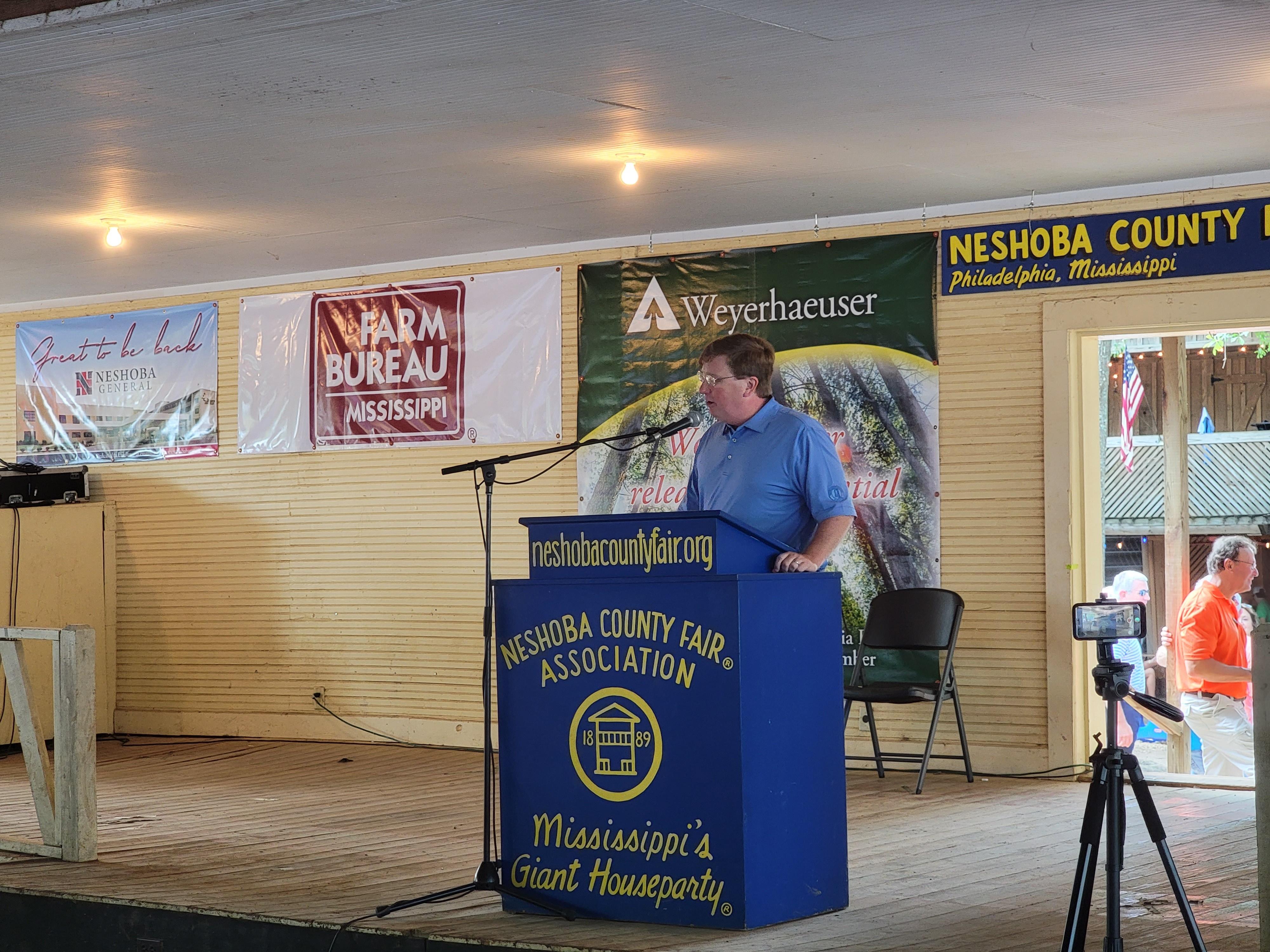
Speaking at the Neshoba County Fair, Governor Tate Reeves spoke out against what he says is a political movement entering classrooms across the nation.
“In what world is it okay to teach children that they’ll be judged by the color of their skin, not by the content of their character," says Reeves. "That is not the education that we need for the next generation of America’s leaders.”
And Speaker of the House Phillip Gunn says he plans to introduce legislation in the upcoming 2022 legislative session to ban the teaching of critical race theory in classrooms.
Gunn says “From what I have learned, it is certainly an attempt to teach racism. Everything that we’ve learned and studied about it is not what we as Mississippians want to embrace. We worked long and hard to overcome our racist past. We don’t need to go back there.”
But experts say critical race theory is not something taught in public schools. Catarina Passidomo, Associate Professor of Southern Studies and Anthropology at the University of Mississippi, says it’s an advanced legal theory typically used in graduate law programs that is very complex and nuanced. She says the rhetoric against critical race theory may be directed towards education about the history of race and slavery.
“And when you tell educators and parents and students that we can’t talk about race and we can’t have an accurate accounting of our country’s history then that does have a chilling effect on education," says Passidomo. "I do that think that we should be very concerned about the rhetoric and the sort of fervent attachment of this sort of boogieman idea.”
Experts say lawmakers’ efforts could be better served addressing the racism that currently exists in the state’s legal system rather than ban teaching of a complex theory that is a non-issue.