Your Page Title

Local officials work with communities to power through storm damage

Email share
Comments
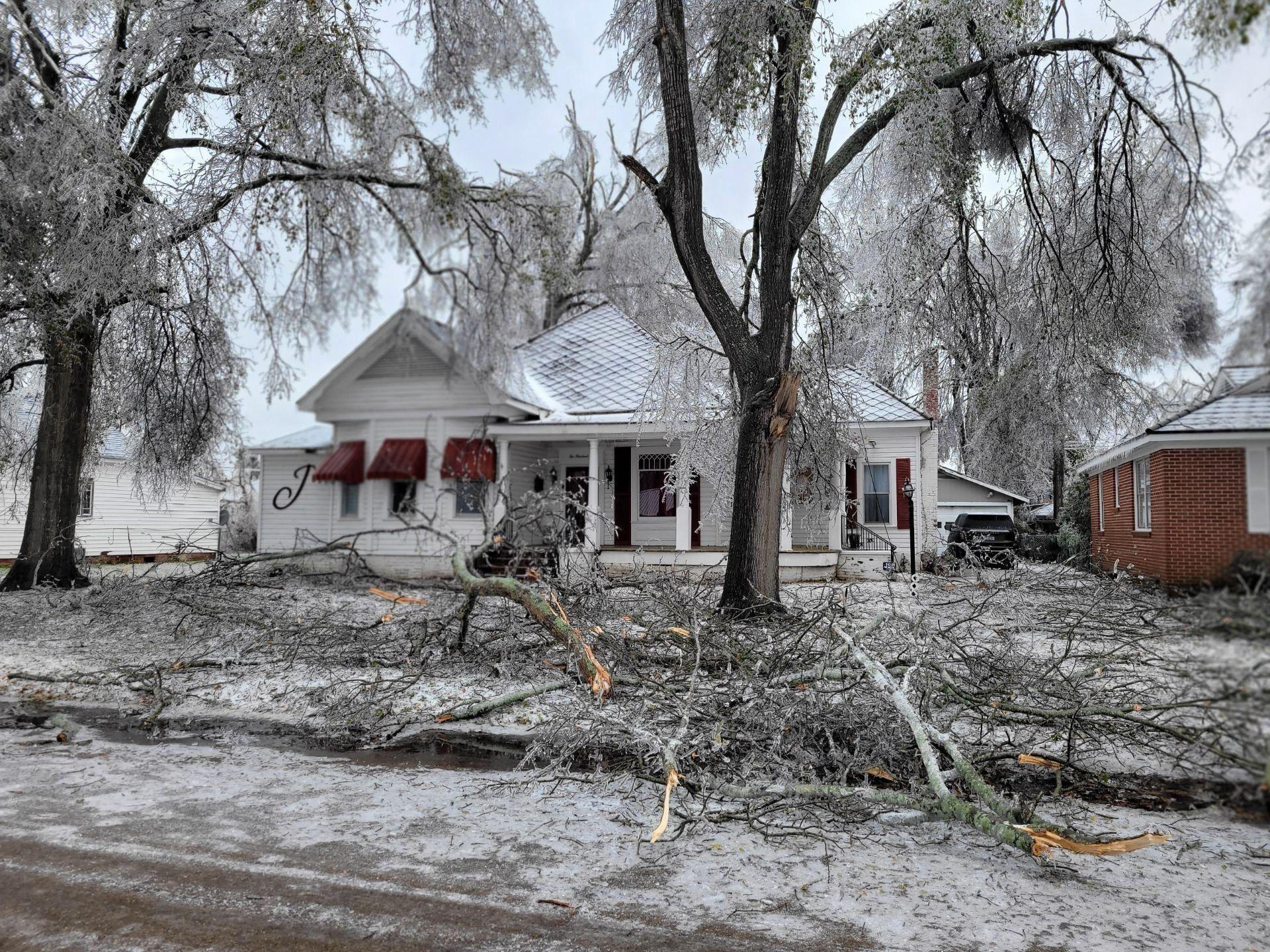
Ice and downed tree branches cover the town of Belzoni while folks wait for needed relief supplies. 
Courtesy of Representative Timaka James-Jones

As the state works to respond to the devastating effects of Winter Storm Fern, cities and counties across Mississippi are getting their bearings in areas hit hardest.

Elise Catrion Gregg

Local officials work with communities to power through storm damage

00:0000:00

Power is still out for thousands of Mississippians, with many roads impassable from downed lines, trees and ice. The hazardous conditions mean that for now, many counties and cities are still waiting for help from state agencies.

Charles Hale, director of Cohoama County emergency management, says they were fortunate enough to have few power outages, but are dealing with building damage around the county.

"We do have some infrastructure and resident structure damage, so we're going to make those assessments when it's safe to do so," he said. "We know it's there from the reporting, but it's just too dangerous for us to get to it right now at the moment."

The north part of the state and the Delta have been hit the hardest 

"We have a lot of limbs down, we're without electricity right now, alot of power lines down," said Belzoni Mayor Eula Davis. "The limbs are heavy with ice, so they are still falling."

She says that the city's been working closely with the county to try and restore power, clean up roads and respond to folks with damage to their homes.

But, she says it may take a week or more to get power back in Belzoni. 

"We've even had several calls where trees have fallen on houses and they are trying to answer those calls," she told MPB from her truck, where she was having to charge her phone. "So as far as the weather situation: it's bad, but we are managing the best we can by working together."

It may end up being as bad as the storm of 1994.

"It would be equal to a little bit more dangerous than that one," Davis said. "But it's one of the worst ones that we've had to come through the Delta recently."

Davis and Hale, like many other local leaders and emergency workers, say that there's no timeline for recovery right now, as road conditions make getting needed resources uncertain.

Mississippi representatives say storm shows where the state needs to invest most

Representative Lester Carpenter says his constituents in Alcorn and Tishomingo counties are by and large, completely without power. 

Elise Catrion Gregg

Mississippi representatives say storm shows where the state needs to invest most

00:0000:00

"The real rural areas is where it's bad, out in the county roads," Carpenter said. "The actual distant roads to part of the municipalities are just, I mean, it's unreal."

Downed trees have been some of the biggest challenges for folks in the area so far, especially in those rural areas.

"Most of them are trapped on these dead end county roads," Carpenter said. "We're actually starting to cut them out."

Though current conditions are hazardous, he's hopeful that the state's current response will be a boost for his district's recovery.  

"My folks are really hurting; fortunately, the governor did declare a state of emergency," he said. "500 National Guardsmen have been activated for logistics, transportation, fuel himmets, fuel trucks, things like that coming this way, coming out of Grenada, Camp McCain."

"So we should start seeing some stuff boots on the ground tomorrow, and that we'll start seeing some relief with our power companies."

He says it could take two weeks or even longer to get power back in some parts of his district. 

State Representative Daryl Porter, Jr., serves Pike and Walthall counties agrees with Carpenter that Mississippi did its best to prepare for the scale and severity of the storm.

But, he says his counties have been without resources in other natural disasters and is concerned that the warming centers — open in 35 counties — are not enough to keep up with current needs. 

He said this storm has revealed what the state needs to do better long-term. 

"We should be investing more money into our infrastructure so we did not have to deal with people going without power, no gas, and no water," Porter said.

To him, it's a matter of proactivity —  and priorities. 

"They want spend upwards of a hundred million dollars into taking taxpayer dollars and putting it into private schools," he said. "Well why not take that money in and put into infrastructure? Mississippi has some of the worst-ranked bridges and roads in the entire country."

Representative Timaka James-Jones, who serves multiple counties in the Delta, says the Mississippi Emergency Management Agency promised to get them generators by Tuesday evening: but they're still waiting on many immediate resources.

Like up north, her rural areas are struggling and many of her constituents are still without power. The Delta was hard-hit by Fern this weekend. 

She believes that proactive investment in the region's infrastructure would allow them to more quickly respond in emergencies like this one. She says their requests for infrastructure improvement often go unanswered.

"These areas oftentimes are not funded," she said. "So, of course, if we have those components already in place, surely we would be well-prepared for instances such as this."

So far there have been at least four deaths from the storm in Mississippi.