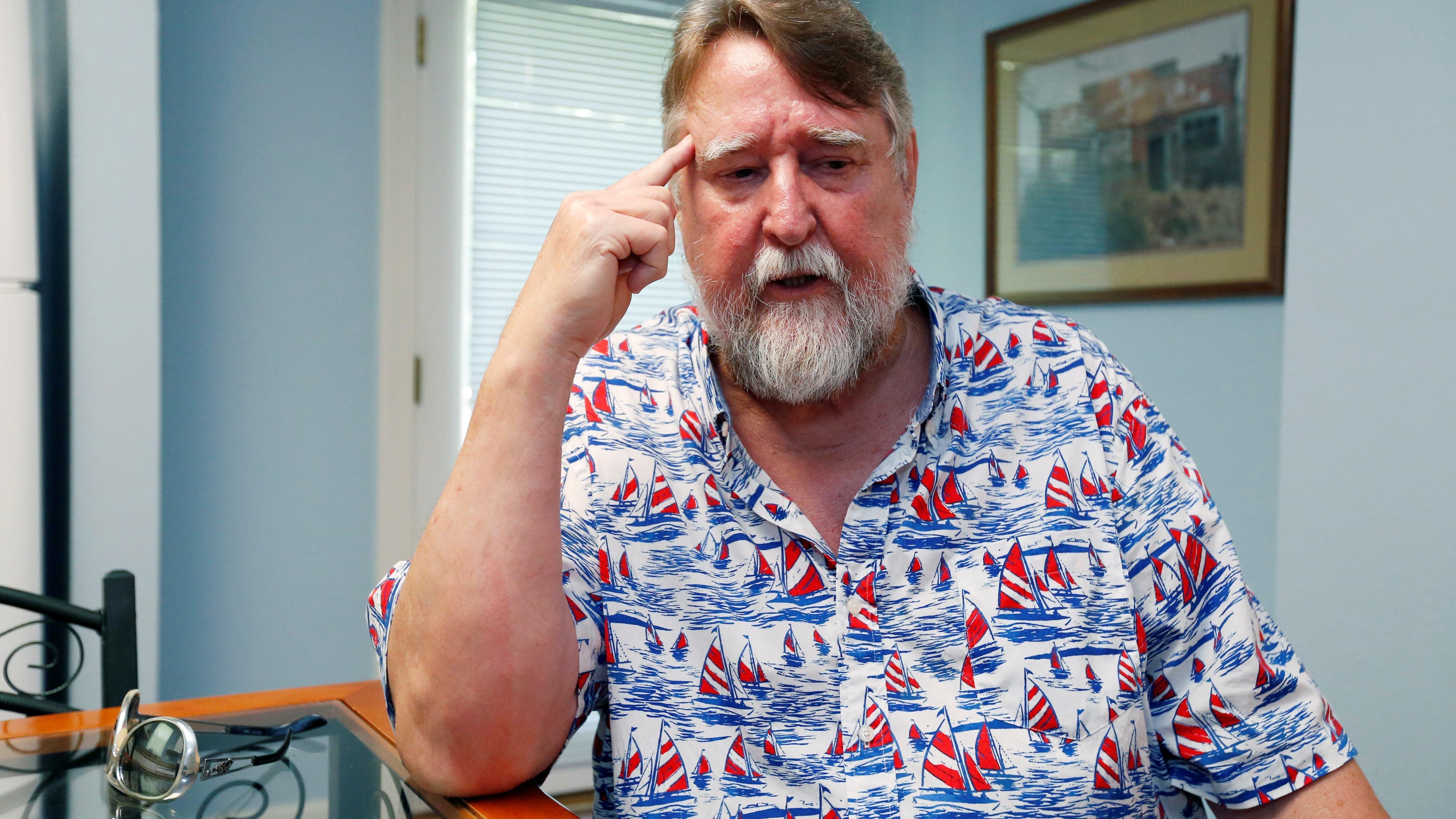
Dr. Damien Thomas, CEO and clinical director of Resilient Counseling and Recovery Center in Flowood, notes that many men do not seek professional help until a external intervention occurs.
“Generally speaking, it's going to be because of a family member or a physician that stated it, that help is needed,” Thomas said. “Sometimes it's that person's employer.”
Thomas explains that deeply rooted social attitudes continue to shape how men view their own mental health.
“The stigma is so strong that denying any type of mental health or emotional concern is gonna be celebrated in a lot of circles,” Thomas said. “But again, culturally, we're taught not to acknowledge these kinds of concerns. And a lot of that has to do with fear of shame.”
This culture of silence often starts early, with many men growing up believing they must suppress emotions and endure hardship without complaint.
“One of the stereotypes is men don't cry,” Thomas said. “I've understood it that men are supposed to just protect and provide, and that they're not to acknowledge any type of mental health concern or any type pain that they may be experiencing.”
While the CDC reports that millions of Americans experience mental health challenges each year, men remain less likely to seek care due to a fear of being perceived as weak or vulnerable.
Thomas said changing those attitudes requires support from families, communities, churches, schools and workplaces.
“We also need to have environments that allow those kinds of conversations, different platforms,” he said. “Whether it's a church, whether it's a podcast or a news interview. We're seeing that more men are coming out and talking about these things, which normalizes the conversation and makes it okay.”
Mental health concerns can be especially complex for military veterans and first responders, who are regularly exposed to traumatic events throughout their careers.
Jeffory McKenzie, a retired chief warrant officer who served 25 years in the Mississippi Army National Guard, including a deployment to Iraq during Operation Iraqi Freedom, knows these challenges firsthand. Some experiences, he says, remain with him decades later.
“What I saw and heard, I wouldn't wish that on anybody,” McKenzie said. “The deployment can weigh on you. I know I saw a lot of things that, to this day, certain things will remind me of when I was in Iraq and I had to catch myself and realize that I'm back on American soil.”
Upon his return home, McKenzie was diagnosed with post-traumatic stress disorder, commonly known as PTSD.
“PTSD is real,” he said. “Certain things will just automatically trigger something in your brain that you don't want to go into those places anymore.”
He recalled how everyday sounds and smells can bring back memories of combat.
“The smell of wood burning. The sound of dump trucks, that door shutting. We encountered a lot of IEDs, roadside bombs,” McKenzie said. “A lot of things can trigger a lot of memory that will never go away.”
Much like Thomas, McKenzie observes that military culture can make it uniquely difficult for service members to acknowledge their struggles.
“There is a stigma with military people that you're supposed to be tough and you're supposed to play through any pain,” McKenzie said. “That's what all of us should do at the first sign of any injury, any thought — seek help. Let it be known that you're hurting.”
While the Department of Defense reported a decline in military suicides in 2024, service members and veterans continue to face elevated risks associated with trauma exposure, relationship difficulties, and workplace stress.
Thomas said veterans and first responders face additional challenges because of the trauma they may experience while serving.
“We're talking about folks who are more exposed to traumatic risk, have a risk for trauma, PTSD in particular,” Thomas said. “That further complicates the risk factor because now in addition to being a man, now you're a man that's exposed to traumatic narratives or trauma experience.”
To counter these risks, mental health professionals encourage families and friends to watch for warning signs such as social isolation, substance misuse, and emotional detachment.
Education, Thomas notes, remains one of the most effective tools for breaking down harmful stereotypes and encouraging life-saving treatment.
“We don't have to put on these stereotypes because they're ultimately unhealthy and harmful,” he said.
McKenzie said seeking professional help should never be viewed as a weakness.
“We all have our issues, demons that's deep within us,” he said. “We should always solicit help. If it gets unbearable to the point that a person thinks about suicide, they need to definitely seek help. It shouldn't be no stigma attached to a person that seeks mental health.”
Advocates say continued conversations, community support and access to care are essential to reducing stigma and helping men seek treatment before a crisis occurs.
Support is available for those experiencing a mental health crisis. The 988 Suicide & Crisis Lifeline provides free, confidential support 24 hours a day by calling or texting 988. Veterans, service members, National Guard and Reserve members, and their loved ones can reach the Veterans Crisis Line by dialing 988 and pressing 1 or by texting 838255. The service is available 24 hours a day, seven days a week and does not require enrollment in VA health care.
Veterans can also seek counseling through local Vet Centers, which provide confidential services for veterans, service members and military families. Additional mental health and substance use treatment resources are available through the Substance Abuse and Mental Health Services Administration's National Helpline at 1-800-662-HELP (4357).
For Thomas, the message is simple.
“It's okay to not be okay,” he said. “It is certainly okay to ask for help.”