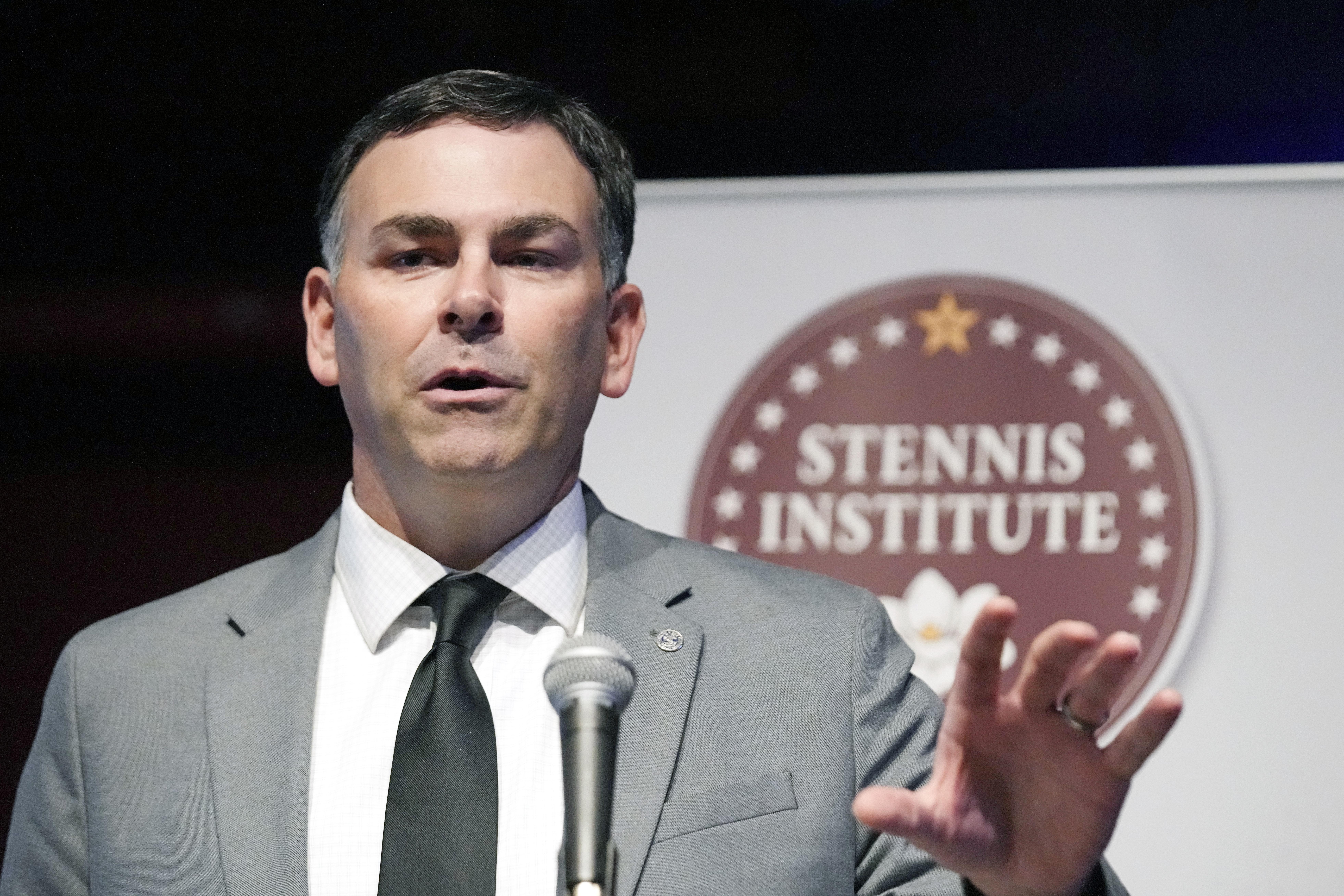
Speaking at the Stennis Institute Capitol Press Forum, Watson said he’ll “still be on the ballot” next year but did not specify which office he plans to pursue.
“We'll talk more about the future when that time comes,” Watson said.
A former state senator, Watson was first elected secretary of state in 2019 and won a second term in 2023. At the forum, he described election integrity and administrative modernization as defining priorities of his tenure.
Watson cited voter roll maintenance efforts, the implementation of paper ballots in all 82 counties and new proof of citizenship requirements as key accomplishments.
“We have really gotten to the point where we feel like we've done our duty, we've done our work at the Secretary of State's office,” Watson said. “I can walk out of there and feel like I've left the place better than I found it.”
Watson also pointed to cross-state data sharing agreements and what he described as increased national attention to Mississippi’s election and regulatory policies.
Still, the future of one of Watson’s top legislative priorities remains uncertain.
Senate Bill 2859, which would require Mississippi candidates to file campaign finance reports online, appears likely to die on a legislative deadline Tuesday.
Currently, many state and local candidates file paper reports that are scanned and uploaded as PDFs. Watson has long argued the system should mirror the federal model used for congressional campaigns, allowing voters to search and sort contributions and expenditures.
Some House lawmakers have floated the idea of exempting certain local candidates who raise less than $2,000 from mandatory online filing requirements.
Watson rejected that approach.
“If it’s good for one, it’s good for all,” Watson said. “I don’t care who you are, if you run for election, you need to be held accountable and this is one of the cleanest and easiest ways to do it.”
He said his office plans to move forward with building the online reporting system regardless of whether lawmakers ultimately require candidates to use it.
Watson also reiterated support for House Bill 1241, legislation that would create a centralized statewide election night reporting system.
The proposal would require county election officials to begin submitting unofficial results within one hour of polls closing and to update totals every 30 minutes until all votes are counted. The Secretary of State’s office would publish those returns on a state-run website.
Watson and members of his office have said the change is intended to provide a consistent, official source of results, rather than relying on media outlets to compile county reports.
Assistant Secretary of State for Elections Kyle Kirkpatrick told lawmakers last week that past reporting gaps have caused confusion, including an issue in Lincoln County in 2023 when results were sent to media outlets but were never reported, prompting calls to local officials the next morning.
He said the state system would help prevent that dysfunction and give voters more information about what those early numbers actually represent.
If it's 500 votes cast out of precinct one, it'll also show you that's 2% of the total vote count of the county, as well as the voter turnout in that precinct,” Kirkpatrick said. “So it will provide a lot of that context of what you're looking at, not just raw numbers.”
Some lawmakers have cautioned that even clearly labeled unofficial returns can take on added authority when posted by the state. The bill passed committee with bipartisan support and is moving through the Senate.