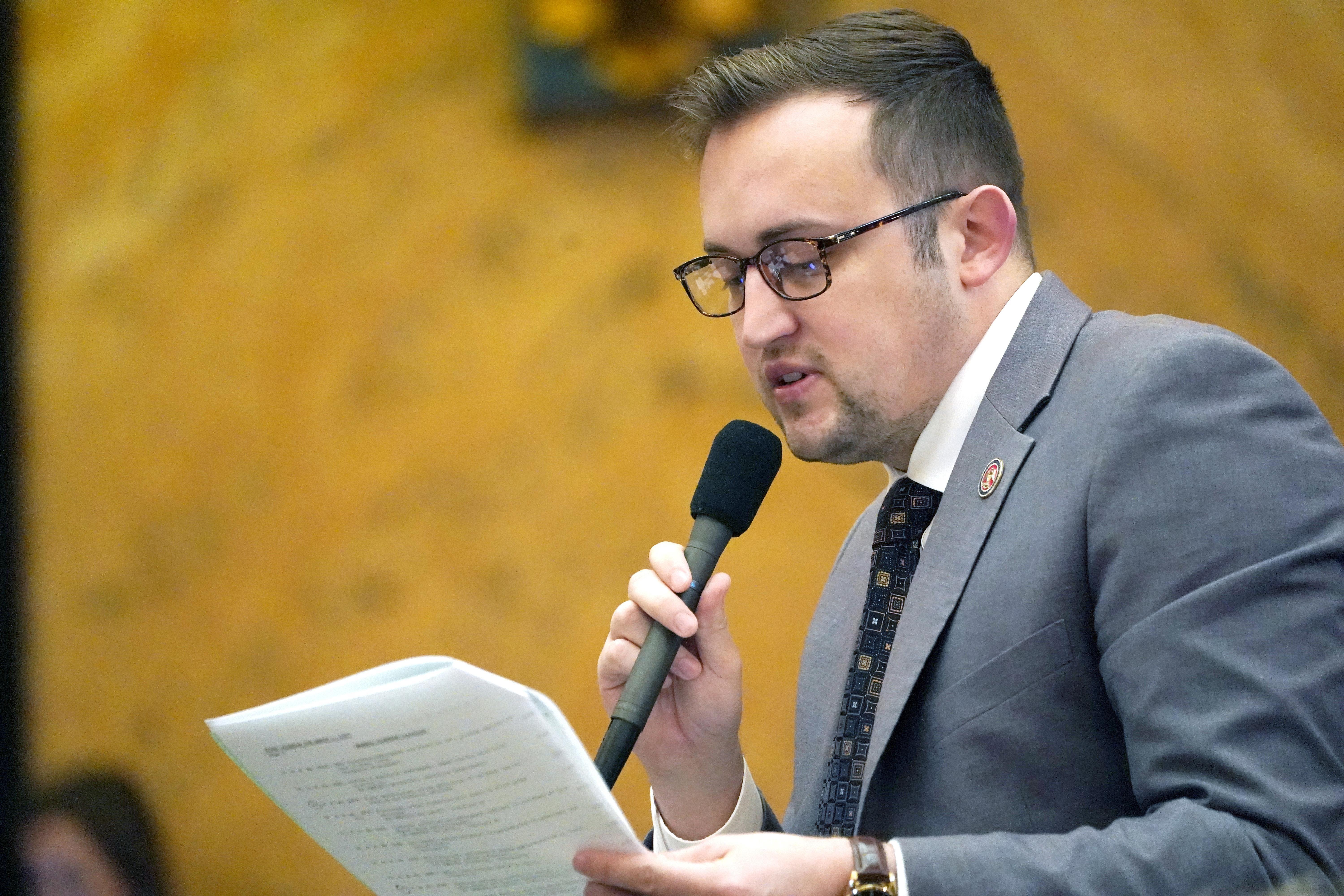
House Bill 1310, dubbed the “Mississippi Open to Religion Act,” would require public school districts and nonsectarian public charter schools to adopt policies allowing students and employees to opt in to group prayer during the school day.
The bill’s sponsor, Rep. Jansen Owen, R-Poplarville, framed the measure as a response to what he called uncertainty and hesitation around religious expression in public schools.
“This bill gives parents and students a choice, not a mandate,” Owen said during floor debate. “It protects parents and students religious freedom and ends official hostility to religion, restoring a constitutional balance that has long been missing.”
Under the proposal, participation would require written parental consent. Schools would have to ensure students who do not opt in are not exposed to the prayer period. The bill prohibits broadcasting prayer over intercom systems and says the time set aside for it cannot replace instructional time.
Owen argued the policy simply places religious expression on the same footing as other student activities.
“If the rodeo club can get together and the beta club can get together, so can the religious kids,” he said.
Mississippi law already allows students to pray and organize religious groups to the same extent as nonreligious activities. House Democrats argued the existing statute sufficiently protects religious freedom and that the new bill goes too far by requiring districts to structure a daily prayer time.
Rep. Robert Johnson, D-Natchez, the House minority leader, warned the measure could trigger costly legal challenges.
“If we constantly find ways to violate the Constitution and invite litigation, we're going to be spending more money on lawyers than we spend on anybody else,” Johnson said.
Supporters point to recent U.S. Supreme Court rulings that show the current court is more receptive to religious expression in public settings. In 2022, the court ruled in Kennedy v. Bremerton School District that a high school football coach could pray on the field after games. That decision marked a shift away from older legal tests used to evaluate religion-related disputes toward a “history and tradition” analysis. HB 1310 is also written to be faith-neutral and opt-in, distinguishing it from earlier school prayer statutes struck down by federal courts.
Still, legal challenges in this area often hinge on how a policy functions in practice. Courts typically distinguish between student-initiated religious activity and government-facilitated religious activity, particularly in settings involving young children.
The bill does include several legal backstops. It requires the attorney general to defend any school district sued over the policy, with the state covering legal costs. Parents who opt their child in would also waive their right to sue the district or its employees over the school’s implementation of the prayer period.
After nearly 45 minutes of debate, the House passed the bill 80-35. It now heads to the Senate for consideration. If it becomes law and is challenged, courts would likely be tasked with deciding whether requiring districts to provide a daily opportunity amounts to neutral accommodation or government sponsorship of religious activity.