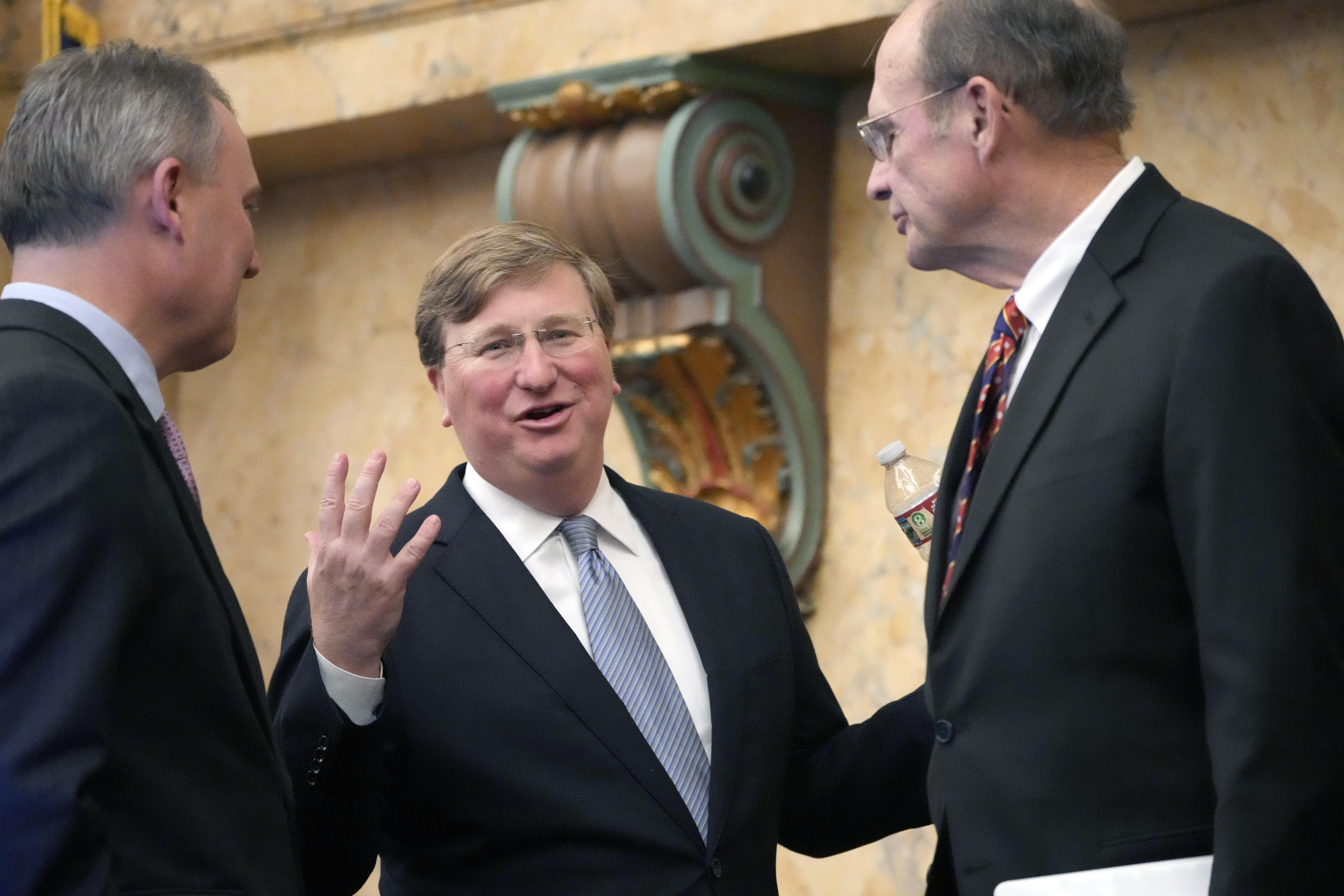
White, speaking on the House floor Thursday as lawmakers prepared to adjourn, told members he was proud of how the chamber handled contentious issues and long debate.
“I wanna thank y’all for mostly really good debate this year in spite of where the issues landed,” White said. “ I thought we did a really good job of keeping the debates about the policy, whatever they were.”
Hosemann struck a similar tone at a Friday press conference after both chambers ended their regular work. But he put more emphasis on the session as part of a longer-term project, casting the session’s teacher pay raise and other school-related measures as part of a broader economic strategy rather than isolated wins.
“My vision for this is not 2027, it’s 2037,” Hosemann said. “Where we’ll be in ten years from now will be an educated workforce.”
At the same time, Hosemann acknowledged new budgeting constraints caused by major federal funding cuts. He warned that as Washington confronts the national debt, lawmakers also have to prepare Mississippi for that becoming the new normal.
“We're going to have to stand on our own two feet,” Hosemann said. So I think it's really important to pay down our debt, and then to focus on how our people will be educated to earn a living and stay in Mississippi and raise their families here.”
The biggest unresolved issue hanging over the close of session is PBM reform.
PBMs are the middlemen that manage prescription drug benefits for insurers and employer health plans. They have come under growing scrutiny from lawmakers and independent pharmacists, who argue their reimbursement model and market power are squeezing local drugstores and driving up costs.
Mississippi lawmakers spent much of the session trying to craft a bill to increase regulation and transparency, but the effort collapsed late in negotiations.
White told House members Thursday that the issue remained active behind the scenes even as lawmakers wrapped up their regular work.
“There is major work going on behind the scenes,” White said. … “I would not rule out us being back here in the coming days for a day or two to deal with this matter if we can find compromise and agreement among the parties.”
The House and Senate split over key provisions in the bill. The House version would have moved PBM regulation from the Board of Pharmacy to the insurance commissioner. The Senate version would have kept oversight with the Board of Pharmacy.
White blamed the bill’s collapse in part on the Senate’s inclusion of a prescription dispensing-fee provision that also drew pushback from the Trump administration.
Hosemann described the stalemate less as a pure House-Senate clash than as a broader fight among stakeholders.
“I would love to come to an agreement on the PBM bill,” he said. “For full disclosure, I think both the speaker and I have had all the parties in this room multiple times, and it’s the Hatfields and the McCoys.”
Lawmakers extended the session to April 15 on paper and both leaders indicated lawmakers could return quickly if a deal emerges. Hosemann also left the door open to addressing other issues in that scenario, including vetoes from the governor and pending economic development projects.