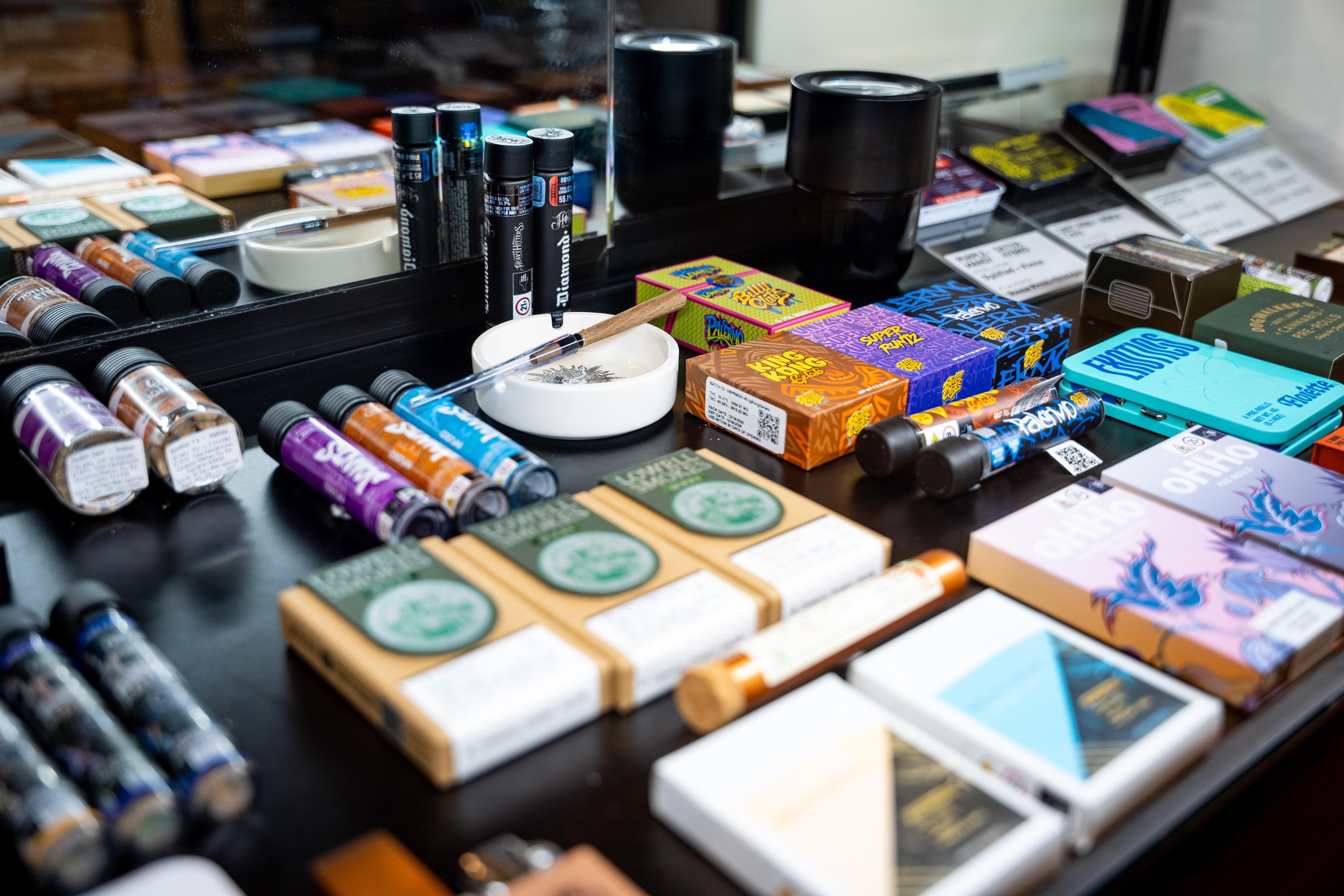
The new federal reclassification of medical cannabis means that businesses, including dispensaries, will see the removal of 280E tax restrictions. He said some companies previously faced an up to 70% effective tax rate because of their inability to take normal business deductions.
“Any business that is dealing in Schedule I or Schedule II drugs, the 280E tax law applies to them. They can't take off their rent, donations to a C6 organization like 3MA. They couldn't take a normal business deduction with it being Schedule 1,” said Crisler. “I think overnight, a lot of these businesses are going to save a significant amount and it's not clear yet, but the Department of Justice memo actually encouraged the IRS to consider making that 280E retroactive. So businesses that have in the past paid significant sums of taxes could see some relief there as well.”
The criminalization of recreational weed possession does not change under the current rescheduling, nor do state statutes prohibiting medicinal marijuana from being brought into certain institutions.
“State law already tells Mississippi patients not to travel at airports or train stations or at correctional facilities with their medical cannabis,” said Crisler. “So that rule still applies even under rescheduling.”
Crisler said patients are also not allowed to travel across state lines with their medical marijuana. He hopes this could lead the way to a total reclassification of marijuana, which could benefit Mississippi patients.
“Patients are allowed to purchase up to 24 MMCEUs [Mississippi Medical Cannabis Equivalency Unit] each month or on a 30-day cycle,” he said. “That's the equivalent of roughly three ounces of cannabis flower or 3,000 milligrams of THC in an edible or an oral form. It's tough to visualize, but it's significantly less than you would probably expect if you're not familiar with the program.”
The rescheduling is big news for research opportunities.
“As things often happen with federal legislation or rulings and DEA regulations, they can come about pretty swiftly and catch people kind of off guard sometimes. So we were very pleased with this,” said Robert Welch, the executive director of the National Center on Cannabis Research at the University of Mississippi.
He said medical marijuana will now be subject to federal regulation.
“In Mississippi, our patients can be assured that the products are of high quality due to that high standard set by the Mississippi Medical Cannabis Program,” he said. Still, he acknowledged this as a profound change in federal law.
He said his team at the Center includes “core experts,” with years of experience in cannabis.
“We have a core team of scientists that are going out to these industry partners, cultivators, processors, and even dispensaries and training those workers to really educate them on how we view this as medical,” Welch said.
He believes the money some producers could save on taxes could incentivize them to invest this money back into research or the development of products and best practices.
“We have been working with several licensed cannabis producers in the state in the development of what we're calling science-based products for Mississippians, to be available to Mississippi medical cannabis patients,” he said.
Welch indicated that some of these products will be intended for research studies at the University of Mississippi Medical Center in Jackson and would meet FDA requirements for human research study.
“We can use these products to conduct research studies, clinical trials, in humans,” he said. “And so one of the first ones we're doing coming up is in insomnia. Now this one is using CBD, so it's a non-intoxicating product. But now with this change, it opens up avenues to where if we wanted to do studies and conduct research on products that have THC, and are now Schedule III, it reduces the barriers to how we conduct these research studies.”
Schedule I research permits are much harder for researchers and scientists to obtain. Welch believes the FDA and DEA’s downgrade of state-regulated and FDA-approved marijuana to Schedule III means that potentially harmful impacts of cannabis can also be more broadly studied under human abuse potential studies.
“They take patients and they see, well, how addictive and abusive could these products be and are the patients gonna become physically dependent?” said Welch. “And also, is there a risk with these, like cannabis use disorder for instance.”
Mississippi Marijuana Executive Director Henry Crisler believes the state’s strict testing requirements and compliance regulations makes it poised to become a leader in the medical cannabis industry.
“We would hope that Mississippi can be sort of an example of how you can establish and maintain a medical program that fits the needs of patients and of businesses and benefits everyone involved,” he said.
The federal government is expected to hold a hearing to consider the full reclassification of medical marijuana in June. Crisler is hoping it could make an impact on the continuation of marijuana drug offenses.
“For the most part, cannabis offenses are at the state level,” he said. “So, I don't think there will be much of a change on the criminal aspects, but you know we will see. I think the real change on the criminal aspect would be if marijuana in general was reclassified in June. We'll see.”