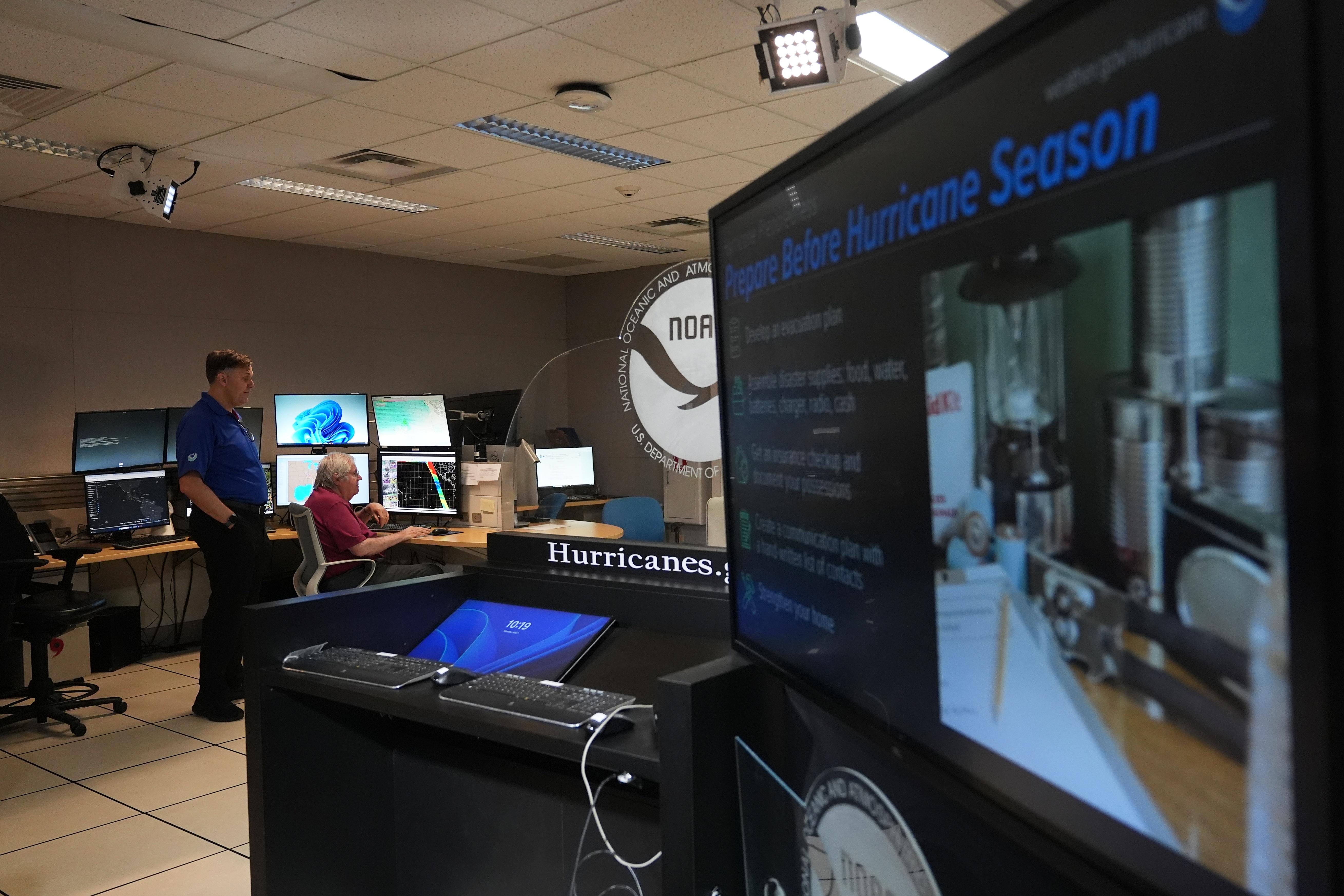
Forecasters are projecting a below-normal Atlantic hurricane season. But officials say residents should not use that forecast as a reason to ignore flood risk, especially after recent spring flooding in parts of the state.
“Remember that it only takes one,” said David Schlotzhauer, a meteorologist with the National Weather Service in New Orleans. “One hurricane can ruin your day.”
The warning comes as state officials point to a gap between the number of Mississippians who live in flood-prone areas and the number of residents who have federal flood insurance.
More than 325,000 Mississippians live in federally mapped floodplains. But Mississippi Insurance Commissioner Mike Chaney said fewer than 50,000 federal flood insurance policies are active in the state. He said private flood coverage accounts for only a few thousand more policies, most of them along the Gulf Coast.
“There is a serious flood gap insurance coverage problem in the state of Mississippi,” Chaney said. “The problem in Mississippi, people do not think they're subject to flood unless they're in a low-lying area.”
Standard homeowners insurance policies generally do not cover flood damage. Flood insurance is typically purchased separately through the National Flood Insurance Program or through a private insurer.
Chaney said that distinction is one of the most common points of confusion after flooding events.
“Most of the complaints we receive after flooding events are ‘why am I not covered’, or things like that,” Chaney said. “A consumer will say, ‘well, my agent never told me I didn't have flood insurance.’”
Federal flood insurance policies usually take 30 days to go into effect. Chaney said that means residents should not wait until a storm is already approaching the Gulf.
State emergency officials say the risk is not limited to coastal communities.
MEMA Executive Director Stephen McCraney said recent spring flooding shows how heavy rain can create problems across the state. He said inland flooding can also be shaped by new development. New roads, roofs and parking lots can change how quickly water moves through a community. He said older drainage systems may not be able to handle that runoff.
McCraney also said residents should not assume federal disaster aid will cover the full cost of recovery after a flood.
“Disaster assistance is not a tool that makes any residents, any area, whole,” McCraney said. “The federal response is not going to get you to 100% rebuilt or take care of all of your expenses.”
He said residents should have an evacuation plan and review insurance coverage before severe weather arrives.
Chaney said residents can ask their insurance agent whether they have flood coverage and whether their property is in a mapped flood zone. Residents can also check flood maps through the National Flood Insurance Program or contact local officials.