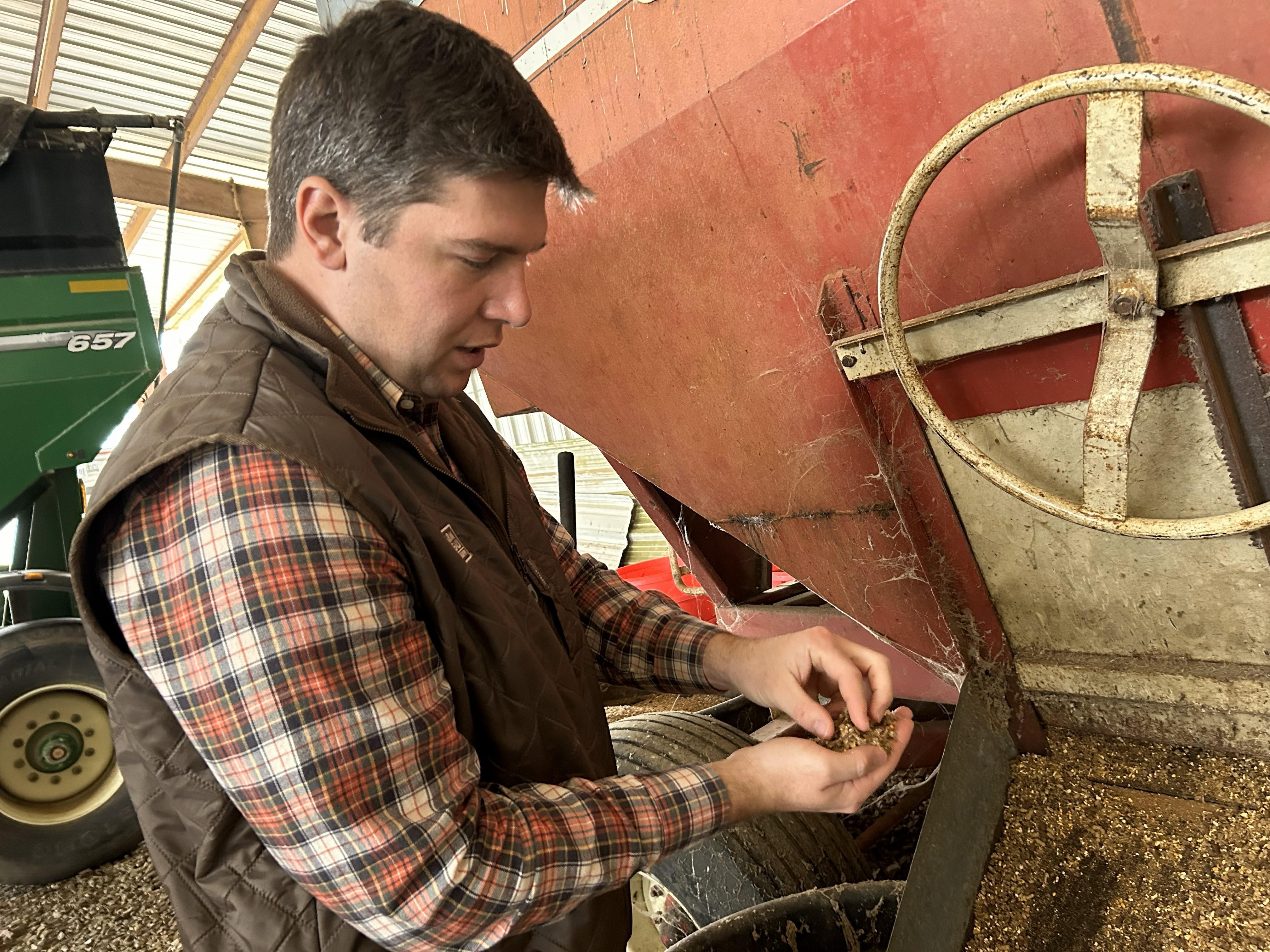
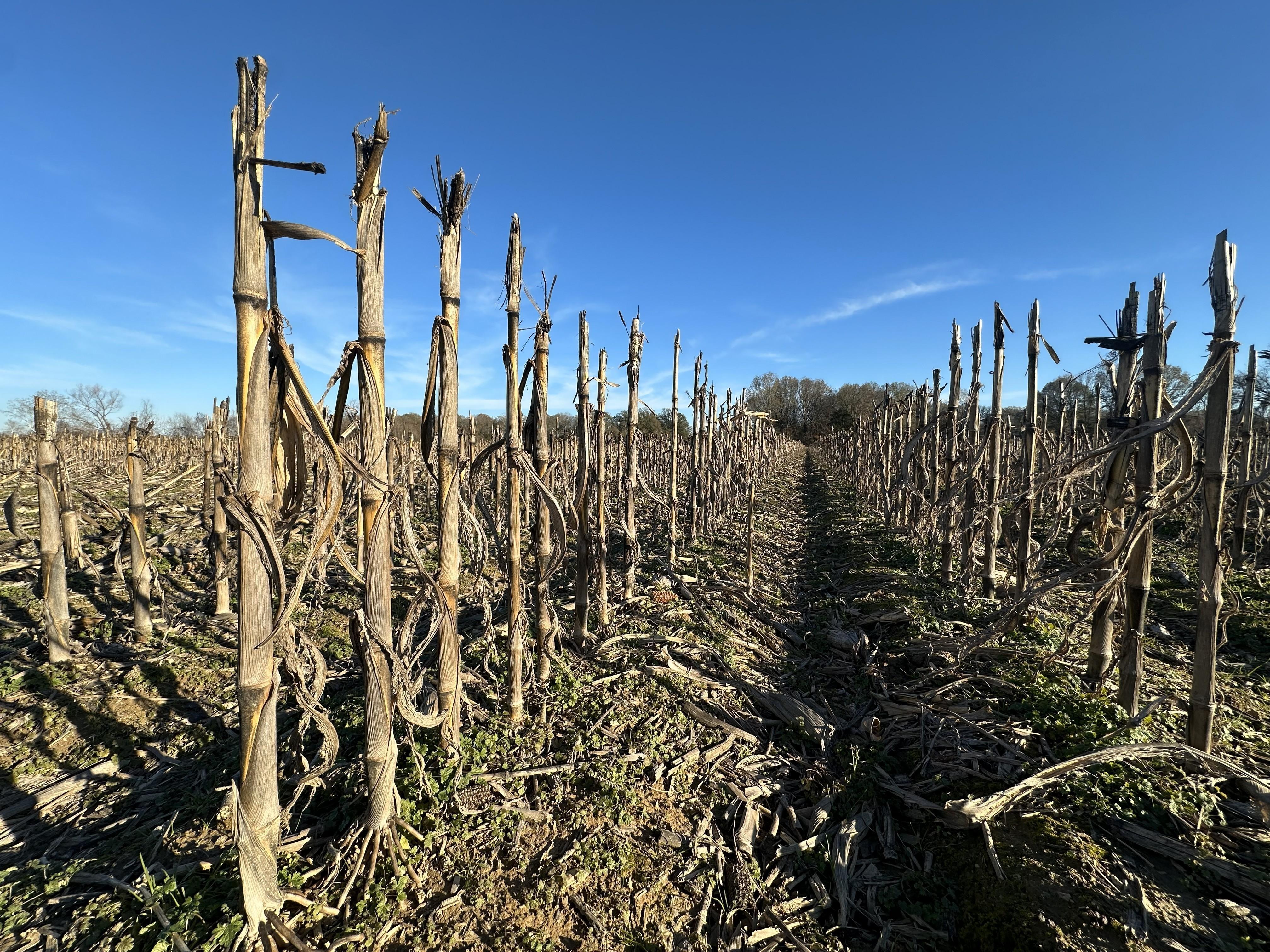
Good represents the seventh generation of his family to farm in Noxubee County. But at 31, his job is less about tradition than adaptation, managing crop cycles, disruptive weather and an increasingly unforgiving market.
“Everybody is talking about the triple squeeze and that is the commodity prices are low, the interest rates are high, and inflation has put our input costs at some of the highest levels,” Good said.
Christian’s father, Philip Good, said those pressures are evident even on large, diversified family farms like theirs.
“This year is going to be a year where we’re going to be eating into our equity,” Philip Good said. “We cannot sustain that long-term.”
The strain is pushing some farmers to leave the industry altogether, a reality that makes succession increasingly important for those who remain.
“We’re seeing people that are choosing to retire or to sell out at this point in time,” Philip Good said. “There’s some limited buyers, but people are waiting and looking and watching and it's just a time of real uncertainty.”
This year, poor weather compounded the losses caused by weak markets. Christian Good said excessive rainfall early in the growing season damaged crops at germination, cutting plant stands by roughly 20 to 30 percent in some of his hardest-hit fields. Because seed, fertilizer and field preparation costs were already paid, those losses were effectively locked in before the season got underway.
Even so, the challenges have not shaken his commitment to agriculture.
“Farmers are resilient,” Christian Good said. “You’ve got to be a lifetime optimist to be able to put a seed in the ground and expect the best outcome every year.”
Technology helps and complicates
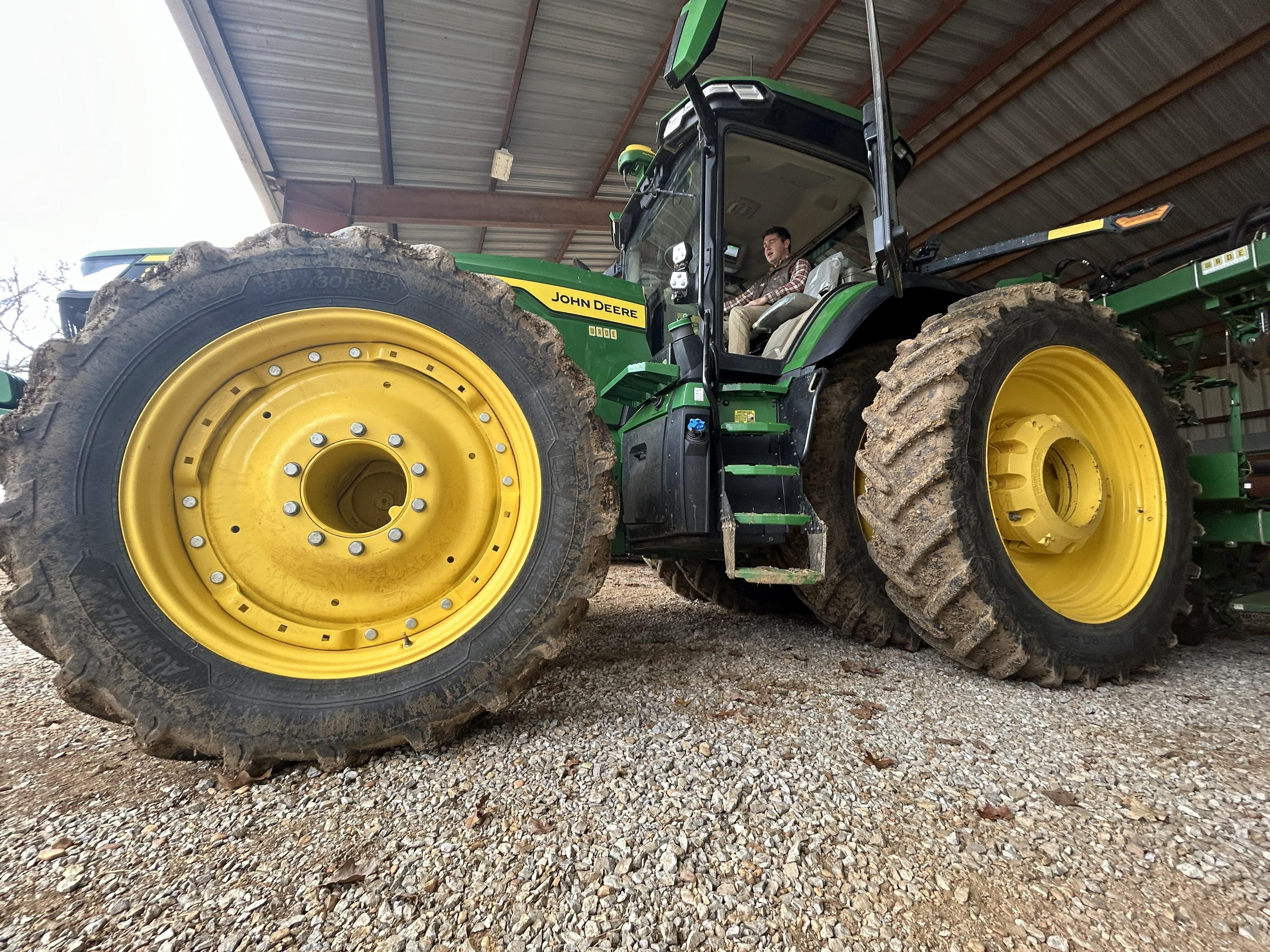
In an industry where margins leave little room for error, Christian Good said increasing efficiency is key to survival. He has overseen the adoption of newer farming technologies, using data, research and digital systems to guide planting decisions, input use and field management.
“Everything we do is based on sound research,” Good said.
Still, he is quick to say technology is not a cure-all. In some cases, he said, it has created new choke points that can slow work or shut down operations entirely.
During one planting window, Good said the farm’s equipment sat idle for hours while a required software update ran, halting work just as crews were ready to put seed in the ground.
In another case, a solar flare disrupted satellite guidance, throwing off GPS guidance and forcing operators to drive manually. For experienced hands, it was an inconvenience. For younger workers raised on automation, it was a reminder that even high-tech farming still depends on human skill.
“The technology means we can pinpoint and target specific areas of the field that we want to improve, but it also creates its own set of challenges and costs,” Good said.
Aid helps, but does not fix a broken system
Earlier this month, the Trump administration announced roughly $12 billion in new federal aid for row-crop farmers struggling with low prices and rising costs.
Many farmers say that assistance is needed because federal aid programs have not kept pace with changes in the farm economy. Commodity support programs still rely on outdated price triggers from the 2018 farm bill, meaning payments often do not match today’s markets or costs.
Will Maples, an agricultural economist at Mississippi State University, said the losses many row-crop producers are experiencing are only getting steeper.
“Some estimates on cotton are north of three hundred dollars per acre losses,” Maples said.
Maples said higher interest rates have magnified the damage, making it more expensive for farmers to carry operating debt from one season to the next. Even when emergency assistance is announced, he said, the timing and predictability of that aid often matters as much as the dollar amount.
“The bankers and lenders knowing that these payments are coming is really the most important thing,” Maples said.
Christian Good said the latest round of temporary federal assistance may help farms survive a season, but it will not solve deeper structural problems.
“Farmers don’t want aid, we want trade,” Good said. “So that’s the important thing. If farmers continue to have bad years, then they’re gonna go out of business.”
Taylor said that even when farmers manage risk carefully, they have little control over sudden and sometimes massive swings in commodity prices.
Taylor was less exposed than many Mississippi farmers when China halted U.S. soybean imports in response to the Trump administration’s trade war. Corn and cotton grew better in his soil, so he did not grow soybeans this season. Although that crop mix helped him avoid the worst of that damage, Taylor did not claim any special foresight.
“I think it was just luck,” Taylor said.
Keeping value and people closer to home
Another challenge looming over Mississippi agriculture is demographics. The average Mississippi farmer is now around 60 years old, and Taylor said a revitalization of the farm economy needs to happen soon for enough new farmers to enter and sustain the industry.
“It’s so expensive to get into farming that it’s almost virtually impossible for a young person to get into farming if they don’t already have some interest in a farm,” Taylor said.
Mississippi Agriculture Commissioner Andy Gipson said short-term assistance may prevent immediate failures, but he agrees that ensuring the long-term stability of the state’s agriculture sector will require deeper changes.
“We have to bring back domestic processing, domestic demand, and process everything that we grow here in Mississippi from soybeans to cotton to corn,” Gipson said.
Good agrees, arguing that increasing processing in Mississippi would support auxiliary businesses and increase local demand by shifting farmers away from just exporting raw commodities.
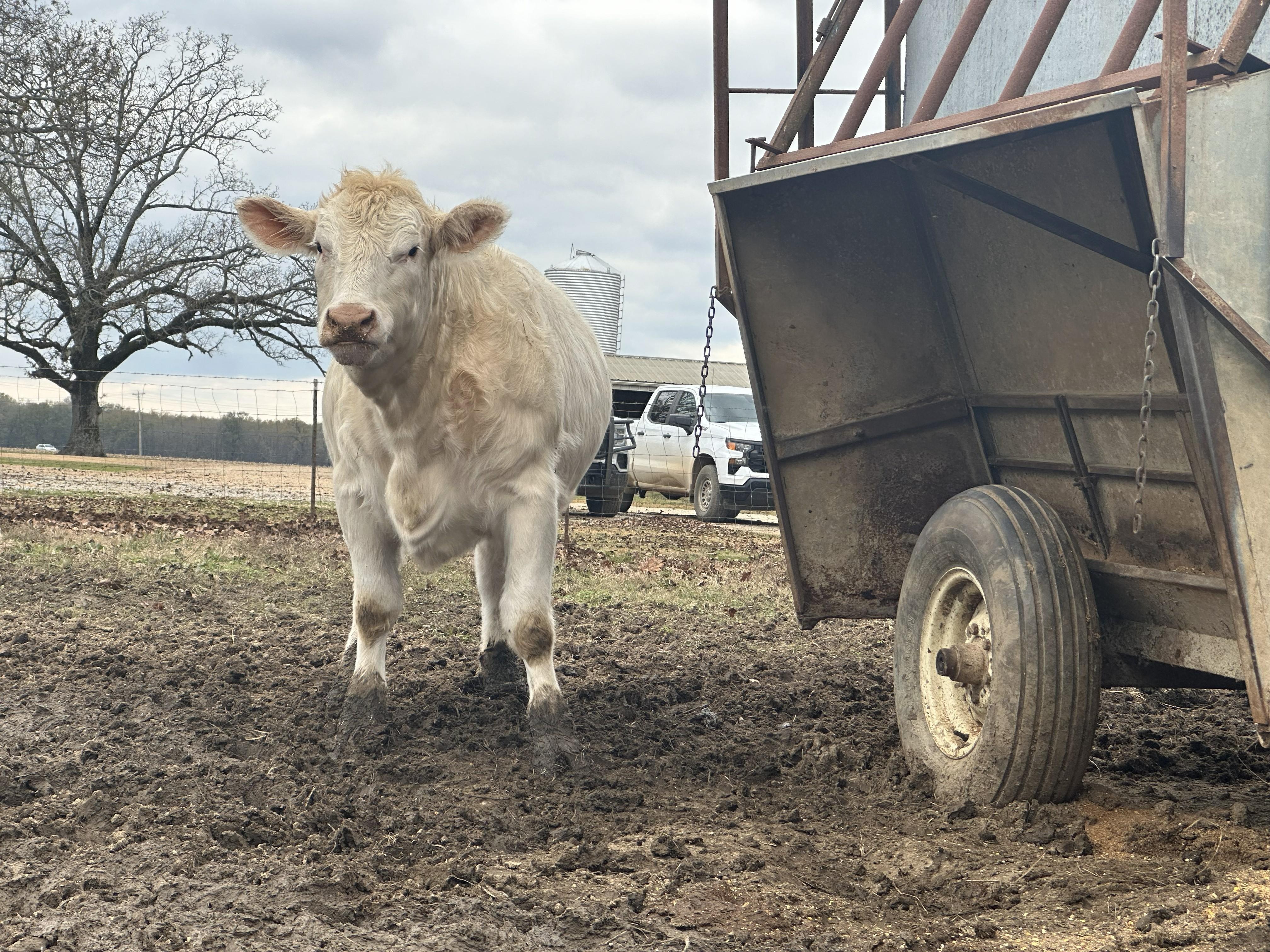
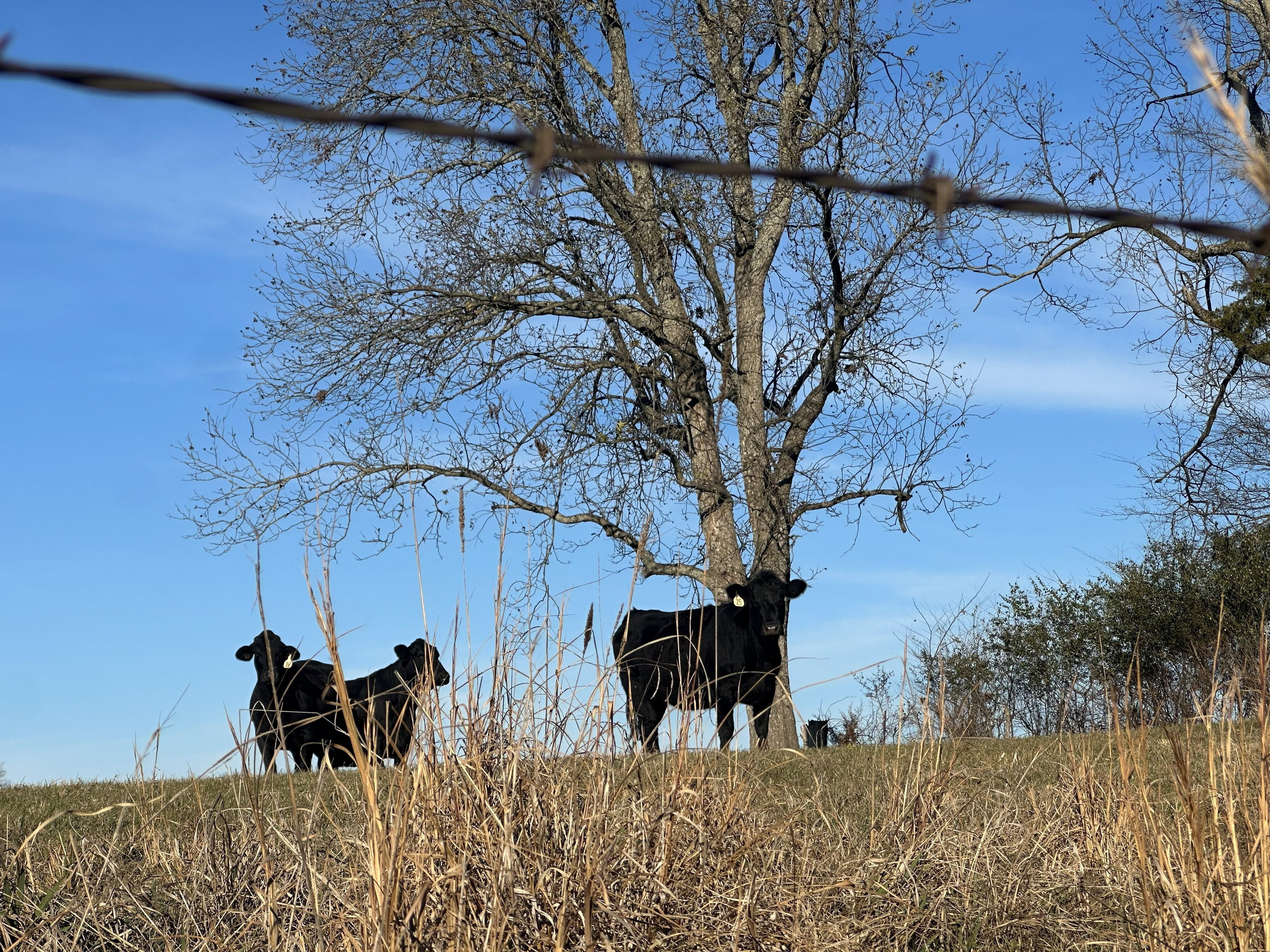
“Any way that we can grow what we grow and be able to process it internally, like we do with our farm to table beef program, I think that’s an opportunity,” Christian Good said. “It’s a win-win for consumers and producers.”
Back on his farm in Como, Taylor sees bringing back local processing as a way to reverse the loss of jobs and businesses in rural towns that depend on agriculture. He said consolidation has reshaped farming, pushing profits away from those communities and tightening margins for the farmers who remain.
“Now my money goes to John Deere, it goes to DuPont, and the money leaves us,” Taylor said. “Very little of the money stays in this community now.”
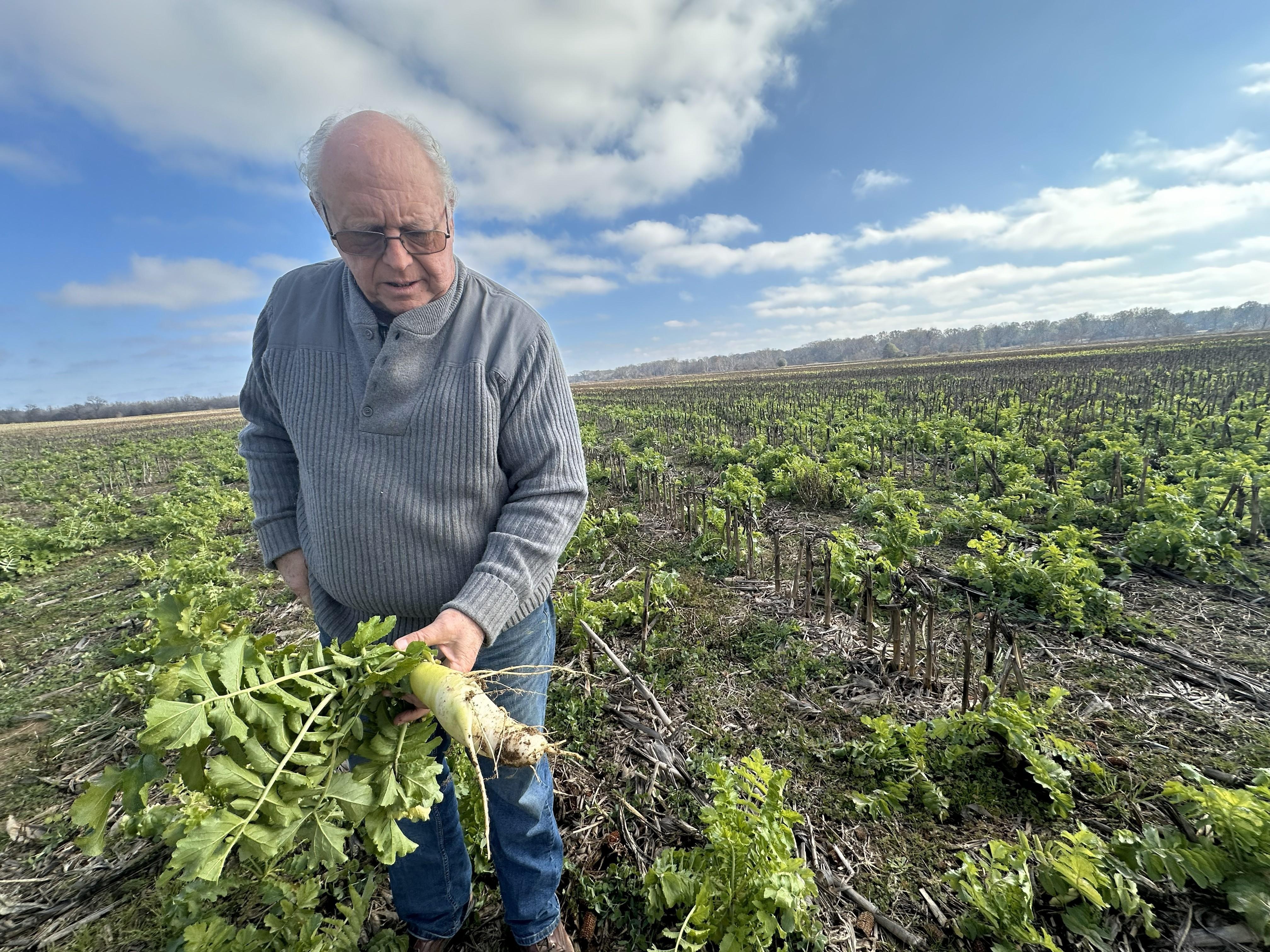
Taylor has spent years experimenting with conservation practices, including taking worn-out fields out of production to let them rest and replanting native grasses. He has seen land that was pushed too hard slowly come back into balance and hopes to see that happen with farming in general.
Regardless, for Taylor, it’s still about being a good steward of the land, even when the farm doesn’t pencil out.
“It’s not gonna make me any more money,” Taylor said. “But I figure I should take care of what I have.”