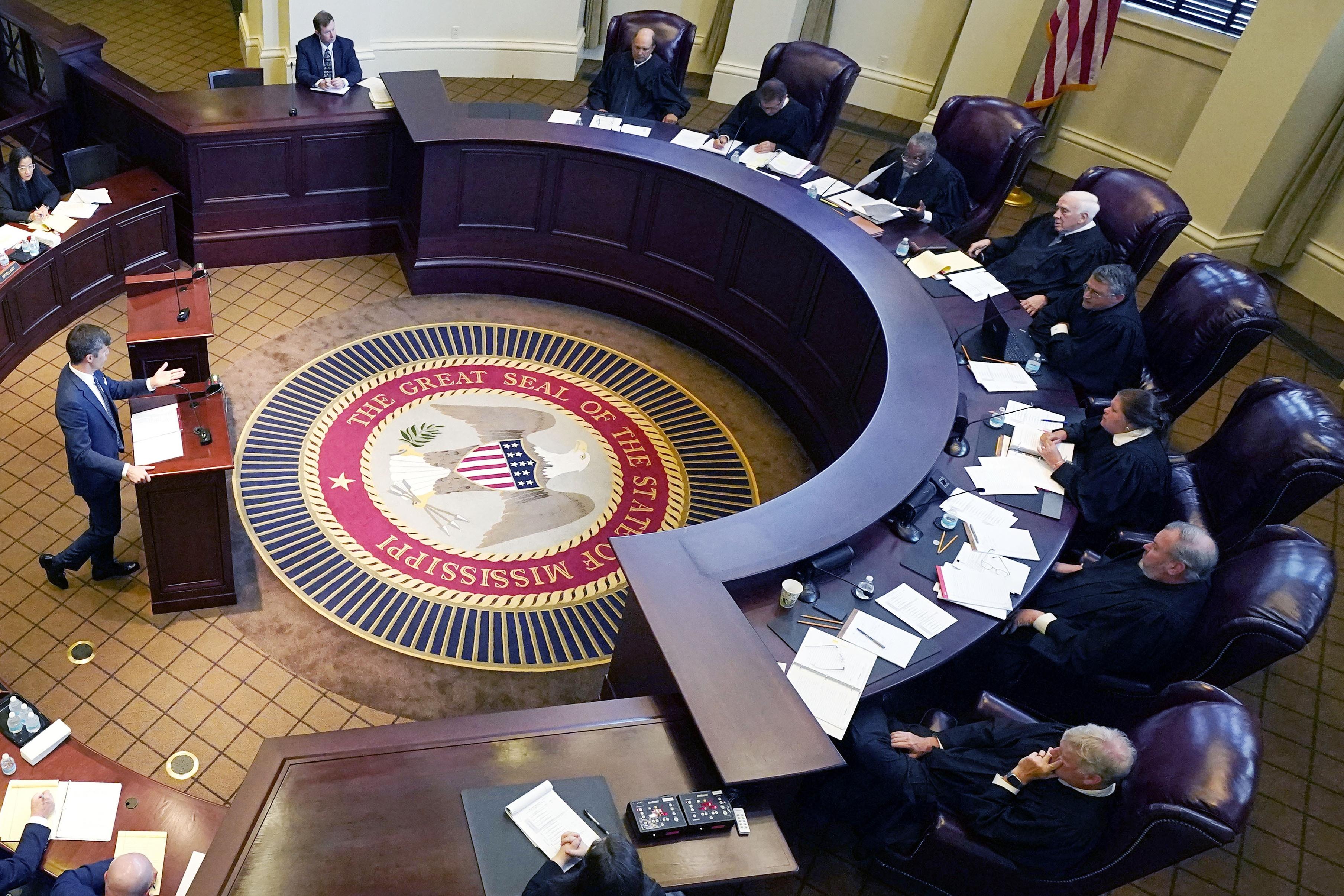
A federal appeals court has wiped away, for now, a ruling that struck down Mississippi’s state Supreme Court districts, sending the voting-rights case back to the same judge who first ruled the map violated federal law.
The 5th U.S. Circuit Court of Appeals vacated U.S. District Judge Sharion Aycock’s ruling after the plaintiffs and the state agreed the legal standard had changed, and that she should be the one to take another look at the case.
The lawsuit was brought by Black Mississippians and civil rights groups, who argue the state’s Supreme Court districts dilute Black voting power and deny Black voters an equal opportunity to elect candidates of their choice to the state’s highest court.
Aycock agreed last year. But the U.S. Supreme Court’s recent ruling in Louisiana v. Callais changed the legal landscape for Section 2 Voting Rights Act redistricting cases, making it harder for plaintiffs to prevail in some challenges to political maps.
Jade Craig, an assistant professor of law at the University of Mississippi School of Law, said the 5th Circuit’s order does not mean the lawsuit is starting from scratch.
“The case still has the full trial record and a remedial hearing behind it,” Craig said. “But the Fifth Circuit has sent the case back to Judge Aycock to evaluate whether there’s a need for additional evidence.”
Craig said the joint request for remand does not mean the two sides now see the case the same way.
“I think both sides have seen the writing on the wall and realized that the only path forward would be for Judge Aycock to decide the case based on the intervening standard,” Craig said.
Craig said the state may be betting the new standard makes the plaintiffs’ case harder to prove. But he said the plaintiffs may see an advantage in keeping the case before a judge who already ruled in their favor once.
Ari Savitzky, a senior staff attorney with the ACLU Voting Rights Project and an attorney for the plaintiffs, said the groups challenging the map still believe they can meet the new standard.
“Do Black voters have an equal opportunity to elect Supreme Court justices in Mississippi?” Savitzky said. “The answer is no today, just like the answer was no yesterday.”
Savitzky said plaintiffs want to move quickly in district court and hope to get new districts in place for 2027. He said plaintiffs believe the trial record already supports their case, especially after a remedial hearing where their map drawer testified about a race-blind proposal.
That map, Savitzky said, would give Black voters an opportunity to elect candidates of their choice while using whole counties and nearly equal populations.
“We think it may be that there are a lot of Section 2 claims that aren’t able to go forward under this new standard,” Savitzky said. “But we think we meet it in this case.”
Mississippi’s Supreme Court districts have not been redrawn since 1987. The state has three districts, commonly referred to as the Northern, Central and Southern districts. Voters in each district elect three justices to the nine-member court.
The case has also raised questions about whether lawmakers still have a legal reason to return to Jackson for a special session to redraw the Supreme Court districts.
Republican Gov. Tate Reeves previously called for lawmakers to return to the Capitol after the U.S. Supreme Court decided Callais. But Craig said the 5th Circuit’s order changed the immediate need for the session by putting the current map back in place.
Reeves celebrated the 5th Circuit’s order on social media, calling it “a good day for those who believe in the principle that all Americans are created equal,” “a good day for law and order” and “a good day for Mississippi.”
The governor’s office and Attorney General Lynn Fitch’s office did not respond to requests for comment for this story.