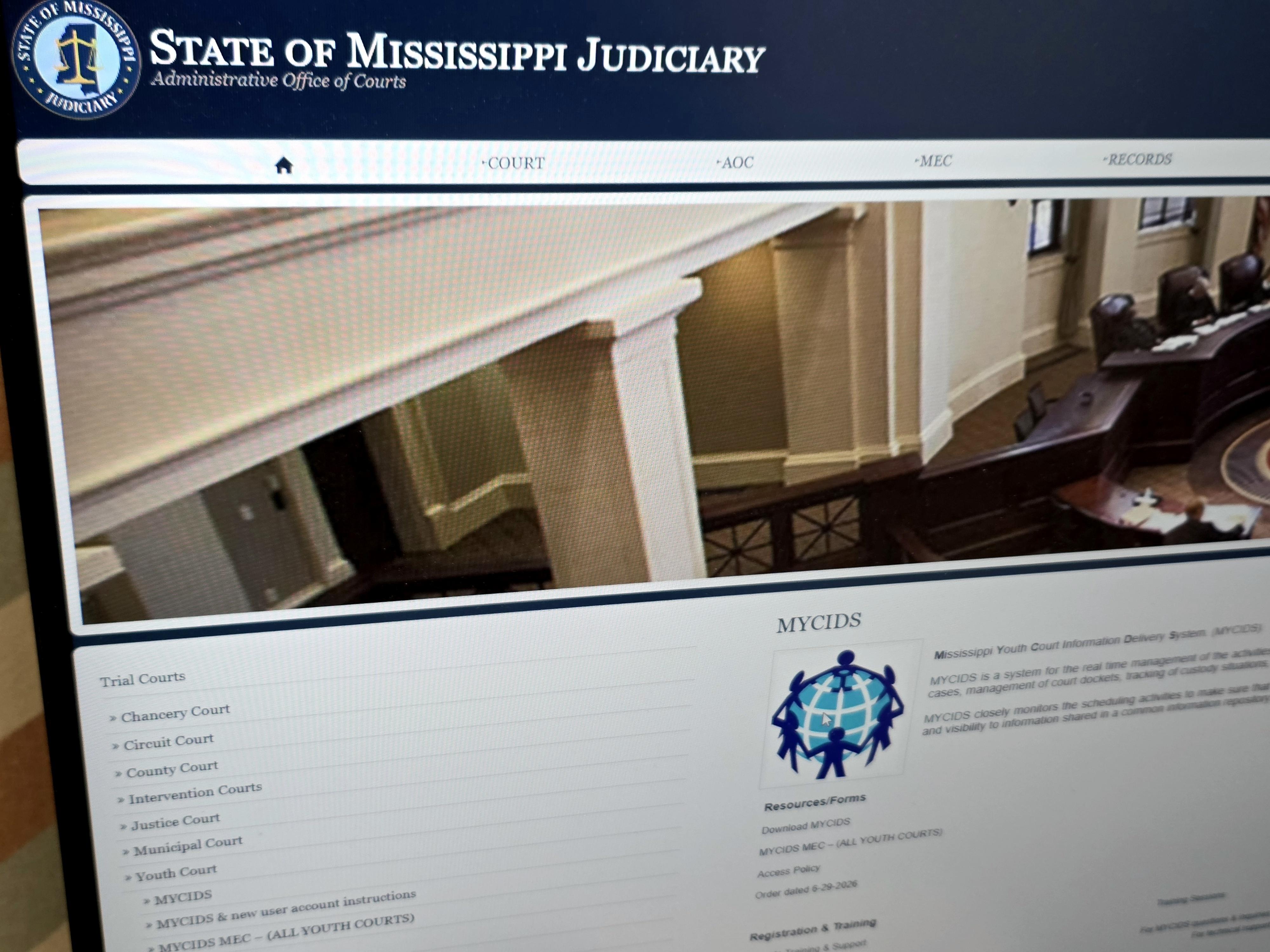
The law, which governed how youth courts operate, expired July 1 after lawmakers failed to act before a built-in sunset provision took effect. The lapse left uncertainty about whether attorneys could continue accessing case records through the state’s MYCIDS filing system.
Lawmakers passed HB 1315 in 2024 to study the MYCIDS system and determine whether it could be modernized or replaced. In that law, they included a repealer that expired July 1 of 2026, but no changes were made before it expired.
Days before the law expired, a coalition of law firms representing youth court attorneys in Mississippi filed a federal lawsuit against the Administrative Office of the Courts. They requested a temporary restraining order to preserve access to records.
After hours of debate before U.S. District Judge Henry Wingate and meetings over the weekend, both sides came to a temporary agreement. The deal maintains the status quo and allows attorneys to continue accessing MYCIDS through July 15.
Jaqueline Aranda Osorno is a senior attorney at the civil rights law firm Public Justice warned before the agreement that the system faced serious risks.
“These youth courts will continue to have hearings, but without access to documents, could just be making the wrong decisions, and that really impacts everyone,” Osorno said.
Graham Carner, local counsel for the plaintiffs, said the agreement should help prevent a breakdown in basic legal protections.
“The fundamentals of due process are notice, and the opportunity to be heard,” said Carner. “It would handcuff attorneys’ abilities to do their job defending their client’s rights, and especially those due process rights, that are so crucial in youth court cases.”
Speaking at the Neshoba County Fair, Mississippi Supreme Court Justice Jennifer Branning shared her concerns about the issue.
“I know this is an oversight. I know our legislature does support Mississippi’s children. But I am personally calling on and thanking in advance the executive and legislative branches for quickly resolving this problem,” said Branning.
Governor Tate Reeves has shared an interest in calling a special session of the legislature that includes modifications to youth court laws, but it’s not clear when that session would be called.
Attorneys on both sides of the case said in court they intend to continue studying the issue as they prepare to return to court in mid-July. Carner said this would allow them to better understand the complete ramifications of the repealed statutes.
“There are many stakeholders who could potentially be implicated, and I think there are a lot of conversations happening right now [about] what the impact may be, and what potential fixes might look like, whether they come from a court or the legislature,” said Carner.