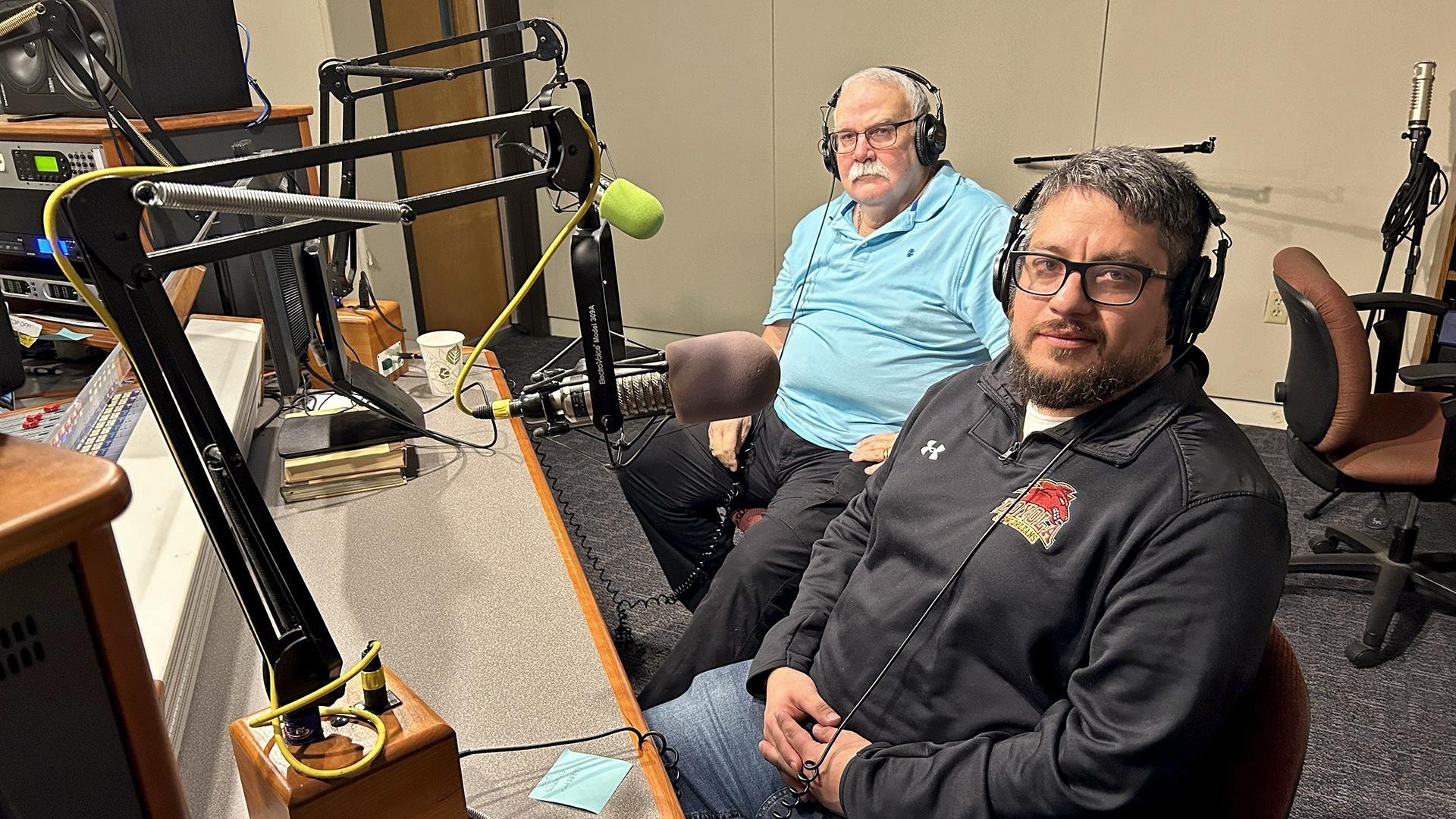
Ramon, you've been covering sexual abuse of children by members of the clergy for a long time now, going back to your days back at the Times-Picayune. Can you talk about what drew you to this coverage and how it's changed and evolved over the years for you?
It was really a tip about a case in particular at Jesuit High School, which, I just happened to be an alum from. I was very quickly able to verify the veracity of that tip, because there was a tape with the school's president at the time, who had taught me Latin while I attended Jesuit. It just made sense for me to write that story. It was about a survivor named Richard Whitman and his abuse that he survived on the campus of Jesuit.
That was probably the most locally intense reaction, I think, to any piece I've ever done. And from there, there was just like a flood of tips. I just stayed with it because I knew that there was a lot to cover that hadn't been covered. My instinct was that went a lot deeper than I could ever imagine.
It sounds like it started on a personal level for you and has just broadened. Can you talk about how deep it's gone since you've been chasing this?
I think that when you look at how that was like a drop in a much larger ocean, you know you've got no less than 80 cases. That’s priests and deacons who are labeled as credibly accused by the Archdiocese of New Orleans. I know that there are triple the amount of people who have actually been accused. When you put together the number of unsubstantiated, the statistics that we know of cases of that nature that are unsubstantiated — and that's not to say false, because it's not that they're proven false, it's just that there's not the evidence required to substantiate them one way or the other — I think that all the evidence available to me is that there are many people that aren't on that list that should be on the list. You're talking like triple the number, and that's a conservative estimate.
You've had some really significant outcomes in the cases that you looked at — thinking specifically right now about a recent one you’ve done with WWL’s David Hammer. Can you talk about the impacts of your reporting?
I think that the one that illustrates the strongest impact was Lawrence Hecker.
Just to set it up, Lawrence Hecker was a priest who had been, basically, forced to retire in 2002 for molesting children that he met through his work. Right before I started working with David, one thing I was able to figure out and establish was that he had confessed in writing to his superiors that with at least seven children that he met through work, had either molested them or harassed them. This was in the ‘60s, ‘70s, ‘80s, and this confession was made in 1999. He was sent off for an evaluation, he was diagnosed as a pedophile and the church, essentially, allowed him to return to work.
And then, the 2002 scandal in Boston erupts, and he retires. For 16 years, before continuing fallout from the revelations in 2002 worldwide, they revealed that the reason that he retired all those years ago was because he was strongly suspected of child molestation. That confession had been suppressed and the church had filed for bankruptcy, and it was supposed to stay secret. And I was just like, this is not going to stay secret.
One of the things that we got an idea of as [Hammer] was reporting that story, was to knock on Lawrence Hecker’s door and see what he says. So we walk up, it's an apartment complex and there's a gate and there's seven names on there. There's one that has tape over it, and I'm like, there's one name missing here, and I know that he's in here. So, let’s ring that doorbell. And he answers.
And he's just standing there answering our questions for 18 minutes about the note. “Do you remember this?” “Yes, yes I do.” “Is this is this accurate? Evidently, yes.” Evidently, like, “I wouldn't have lied,” you know? And his whole point, I remember, was that things were just different back then and it wasn't that big of a deal.