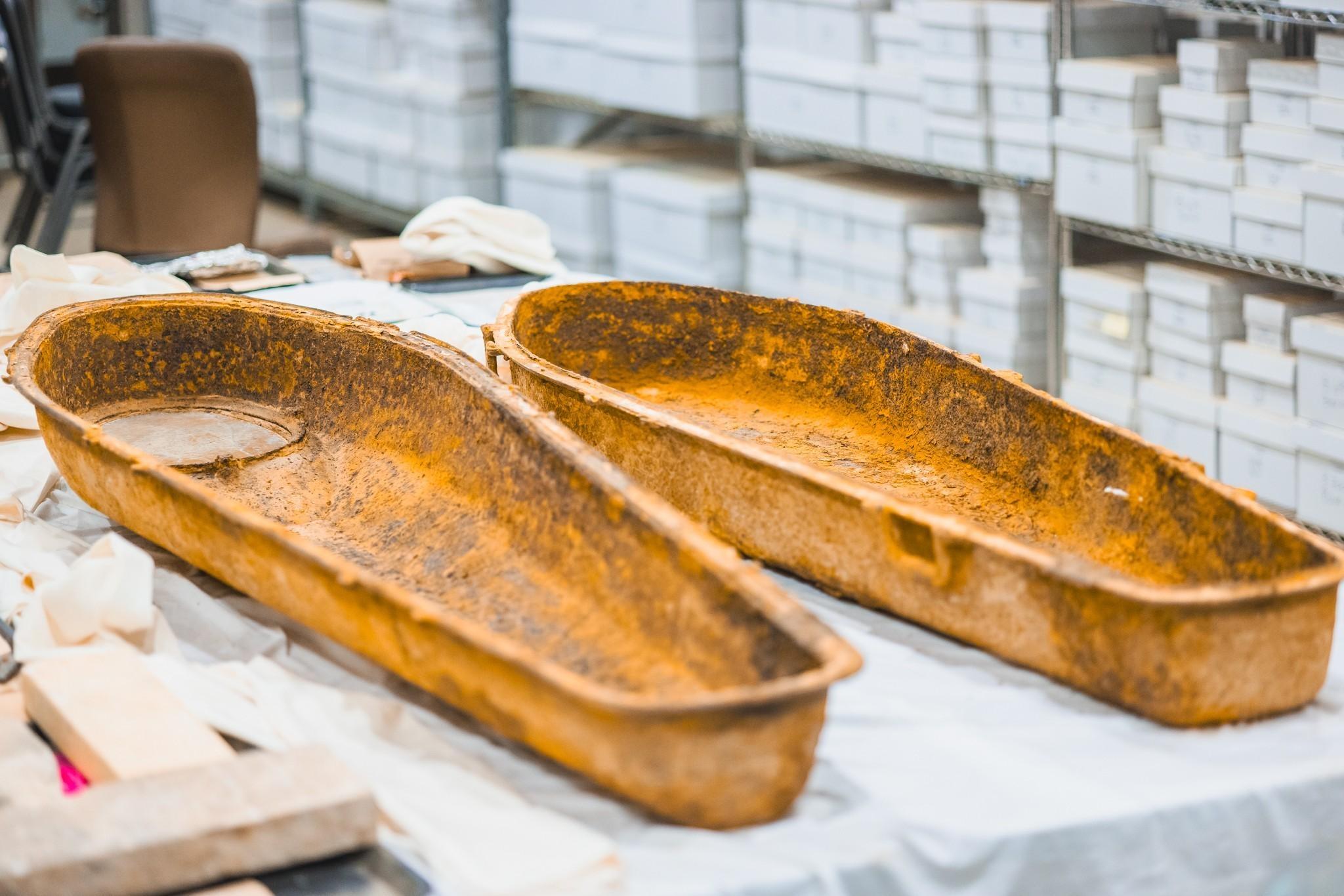
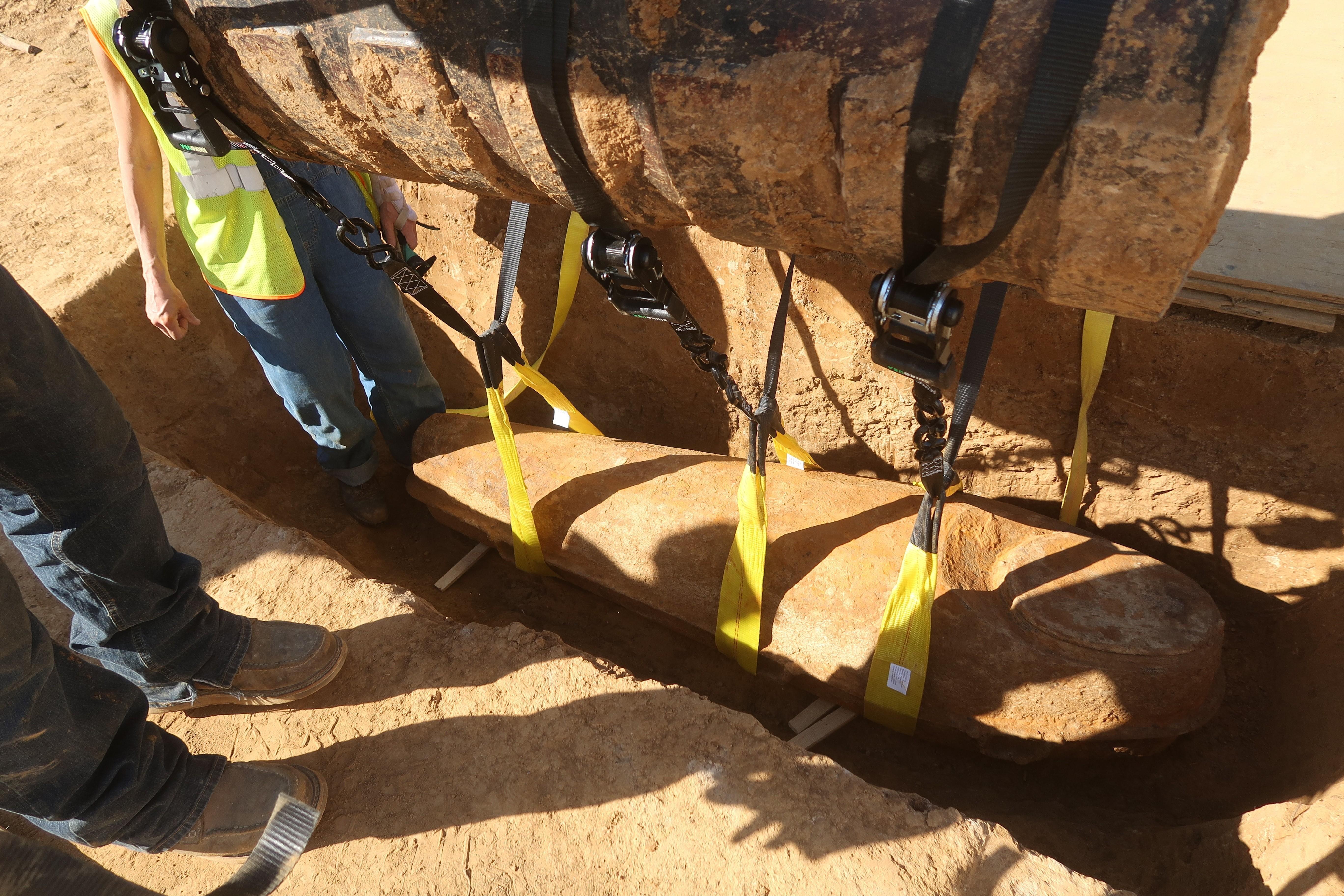
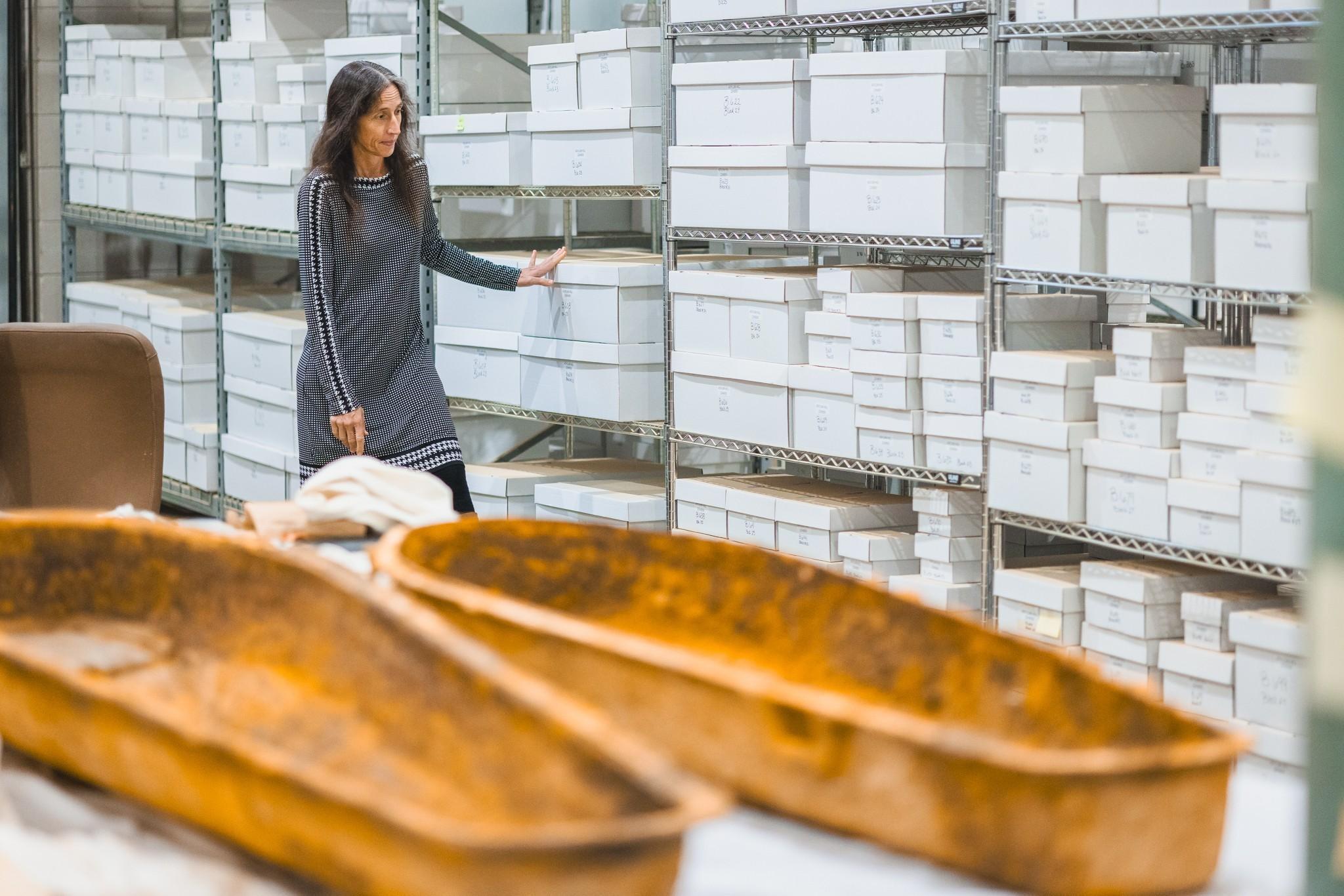
The cast iron coffin was sealed with 24 heavily corroded bolts and weighed nearly 200 pounds. It held the remains of a woman believed to be of European ancestry between the ages of 30 and 55.
Dr. Jennifer Mack, the lead bioarcheologist on the project who has worked at the site since 2022, said the discovery offers researchers their most promising opportunity yet to identify someone buried there.
“We’re really hoping that if this is a sealed casket, there would be superior preservation,” said Mack. “Which would allow for DNA results. So far, we have failed with all our DNA testing because the preservation, the soil here has just not been conducive to that.”
Officials said the woman’s remains were better preserved than most found at the cemetery, although she had lost all her teeth before her death.
“Teeth are the best source of DNA in skeletal remains of this age,” Mack said. “We still might be able to identify her based on a descendant story if a descendent comes forward.”
The project works closely with about 150 descendants who hope to locate relatives who died at the facility. Mississippi did not begin issuing official death certificates until 1912, which means as many as 4,300 people buried at the site between 1912 and 1935 may eventually be identified.
Archeologists estimate the casket dates from 1860 to 1880 based on its style. Records from the asylum do not begin until around 1905, but historical documentation shows that an 1865 cast iron casket cost about 44 dollars and 11 cents wholesale, including shipping and a protective box. A plain wooden coffin at the time cost about 2 dollars and 50 cents.