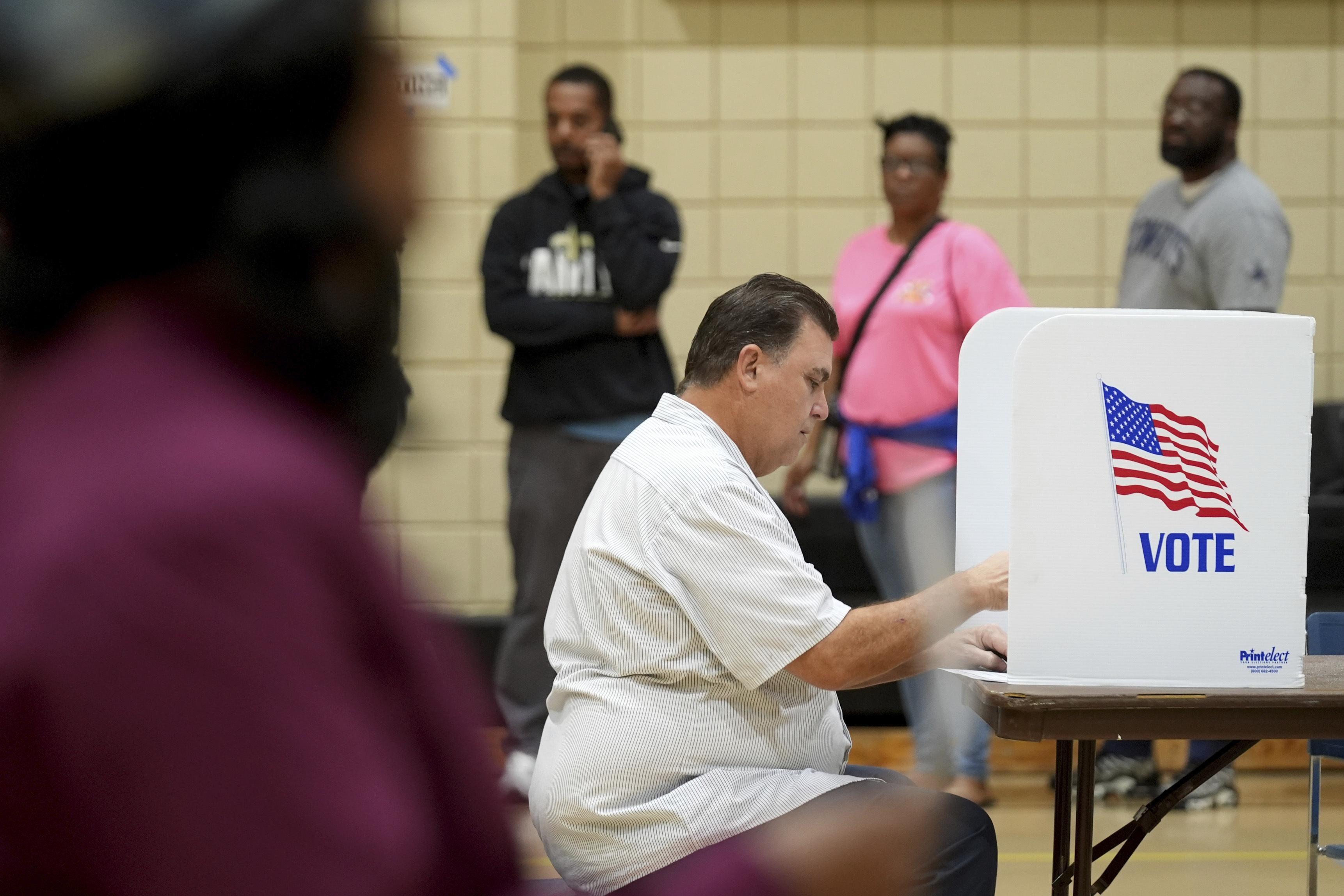
Supporters say the bill adds another layer of election security and could boost confidence in the state’s voting system. Opponents say it could create new barriers for eligible voters in a state where there is no evidence of widespread noncitizen voting.
Sen. Jeremy England, R-Vancleave, the chair of the Senate Elections Committee and the bill’s sponsor, said he does not think noncitizens are voting in Mississippi, and described it as a safeguard against the perception that fraud is taking place.
“If we have one election where one non-citizen is found to have voted in our elections, the integrity goes away,” England said. “You have more apathy that can enter the system. You have more distrust in the system, you're more likely to have people say, ‘I'm not gonna waste my time and go vote because it's not fair.’”
Under the bill, a voter registration application would be checked against Department of Public Safety identification records. If the applicant does not provide a driver’s license number and the state election system cannot retrieve one from DPS, the registrar would have to run the applicant’s information through the federal Systematic Alien Verification for Entitlements database, known as SAVE.
If either database indicates the person is not a citizen, the registrar must notify the applicant by mail and give them 30 days to provide proof of citizenship. The bill lists a birth certificate, passport, naturalization records or other federally recognized proof of citizenship among the acceptable documents.
The applicant would be marked “PENDING” in the Statewide Elections Management System if they do not provide proof of citizenship. A voter in pending status could still cast an affidavit ballot, but it would count only if they provided the required documentation within five days of voting.
The bill also reaches beyond new applicants. It would require the secretary of state’s office to run a yearly comparison of the statewide voter file against the SAVE database. Potential matches would be sent to local election commissioners, who would notify the voter and place that voter in pending verification status until they prove their citizenship. A voter could not be removed solely because of a SAVE match, and SAVE-based removals could not happen within 90 days of a federal election.
Lawmakers would receive annual reports from the secretary of state’s office detailing how many voters were flagged by SAVE checks and how many were removed from the voter rolls as a result. England said he would be happy to see the first report on the law come back with no voters flagged.
“I would not be surprised if the first report we get says there’s zero people that were removed for this reason,” England said.
England said critics have overstated how broadly the law would affect voters. He argued that most registered voters would never notice the change unless they were flagged for additional review.
Democrats and voting-rights groups say that new process could still burden eligible citizens, especially people who do not have easy access to documents proving citizenship.
Rep. Robert Johnson III, D-Natchez, the House minority leader, warned the SAVE database could wrongly flag eligible citizens, turning a rare or unproven problem into a new burden for voters.
“It’s a solution in search of a problem,” Johnson said. “Look, nobody can point to me one issue of voter fraud in Mississippi that is raised to the level of needing a law. None. I can’t even think of one.”
Rep. Cheikh Taylor, D-Okolona, who also chairs the Mississippi Democratic Party, echoed that criticism in a statement likening the citizenship checks to a “modern poll tax.”
"Republicans aren't solving a problem, they're creating one on purpose,” Taylor said. “There is no voter fraud crisis in Mississippi. There is a participation crisis, and instead of addressing it, they have made it worse."
Outside groups have made a similar argument. The Southern Poverty Law Center said the law could burden seniors, disabled voters and married women whose last names do not match their birth certificates. The Mississippi Black Women’s Roundtable said more than 647,000 women in the state could face problems because of name mismatches.
England pushed back on claims the SAVE database is error-prone and said lawmakers could revisit the statute if future reports show problems in how it is working.
If Gov. Tate Reeves signs the SHIELD Act, or allows it to become law without his signature, it will take effect July 1.