There are steps individuals can take to lower their summer bills. One is to make their home more energy efficient — like replacing the old, power-hungry AC unit or patching up the home’s insulation.
But renters don’t always have the option to modify their homes, and landlords can be reluctant to make changes that would mean higher rent — even if it saves renters in the long run. This is one of the reasons why lower-income Americans spend three times as much of their budget on energy than other households.
Another option is to do what Bogan did — nudge up the thermometer to use less AC. But the red needle can only be raised so much before it becomes dangerous, especially for those with health risks.
That’s why 18 states protect customers from having their power cut off when the temperature gets too high, according to Castillo. While Louisiana, Alabama and Mississippi do this for cold temperatures, they don’t have any protections for the summer months.
“That’s one policy solution that feels like a no-brainer,” Castillo said. “Let’s not cut off anyone’s power when we know the consequences are deadly.”
At least seven states are also testing a cap on how much low-income customers have to pay for energy based on their budgets, Castillo said. California, for example, has a pilot program where participants don’t have to pay more than 4% of their household income.
The popular Low Income Home Energy Assistance Program (LIHEAP) also helps cover expensive energy bills, but the program does not have enough funding to cover everyone eligible for the aid. It was also envisioned as a way of helping with winter bills, but the hotter summers mean more households are asking for assistance in the warmer months, too.
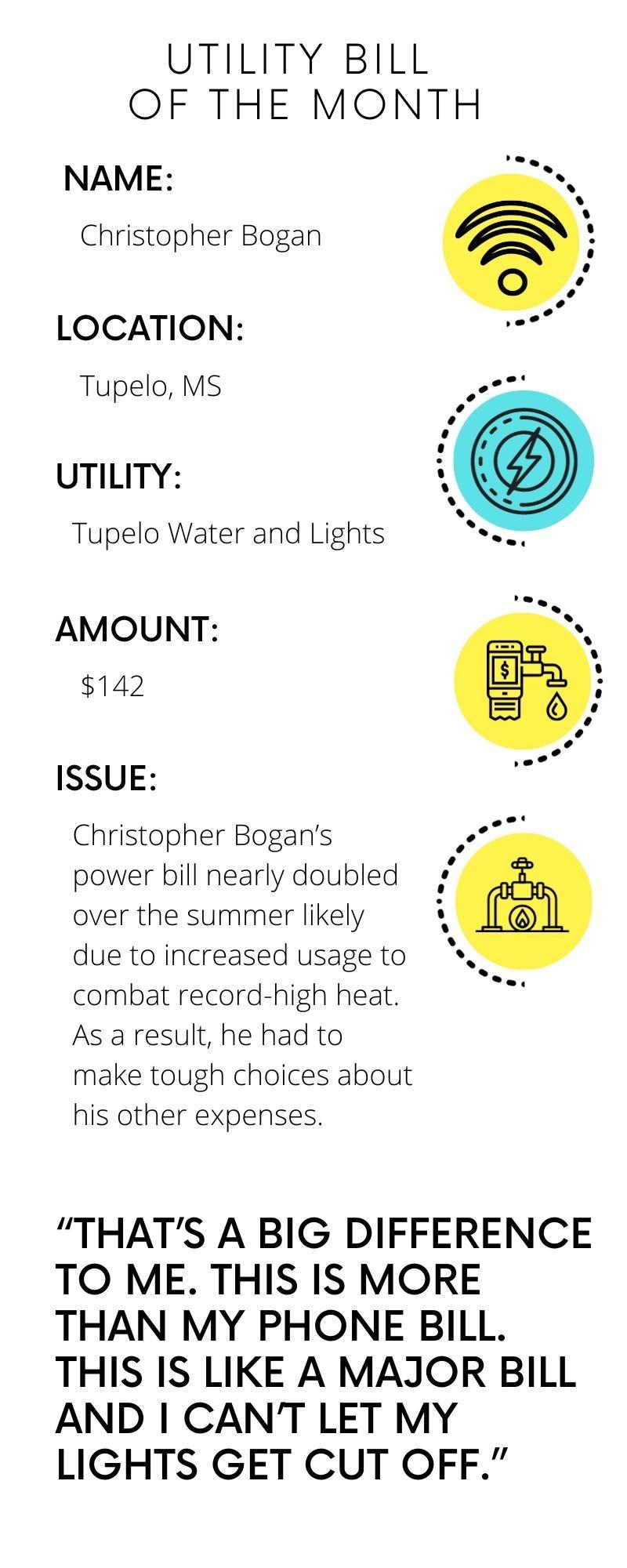
And it’s not just that summers are hotter — they’re longer. September set a new global heat temperature for that month. For Bogan, that means the official end of summer did not provide any relief — his power bill still came in above $140 last month.
“We don’t know what’s going on with the world right now,” Bogan said. “I need to be prepared for this.”



.png)