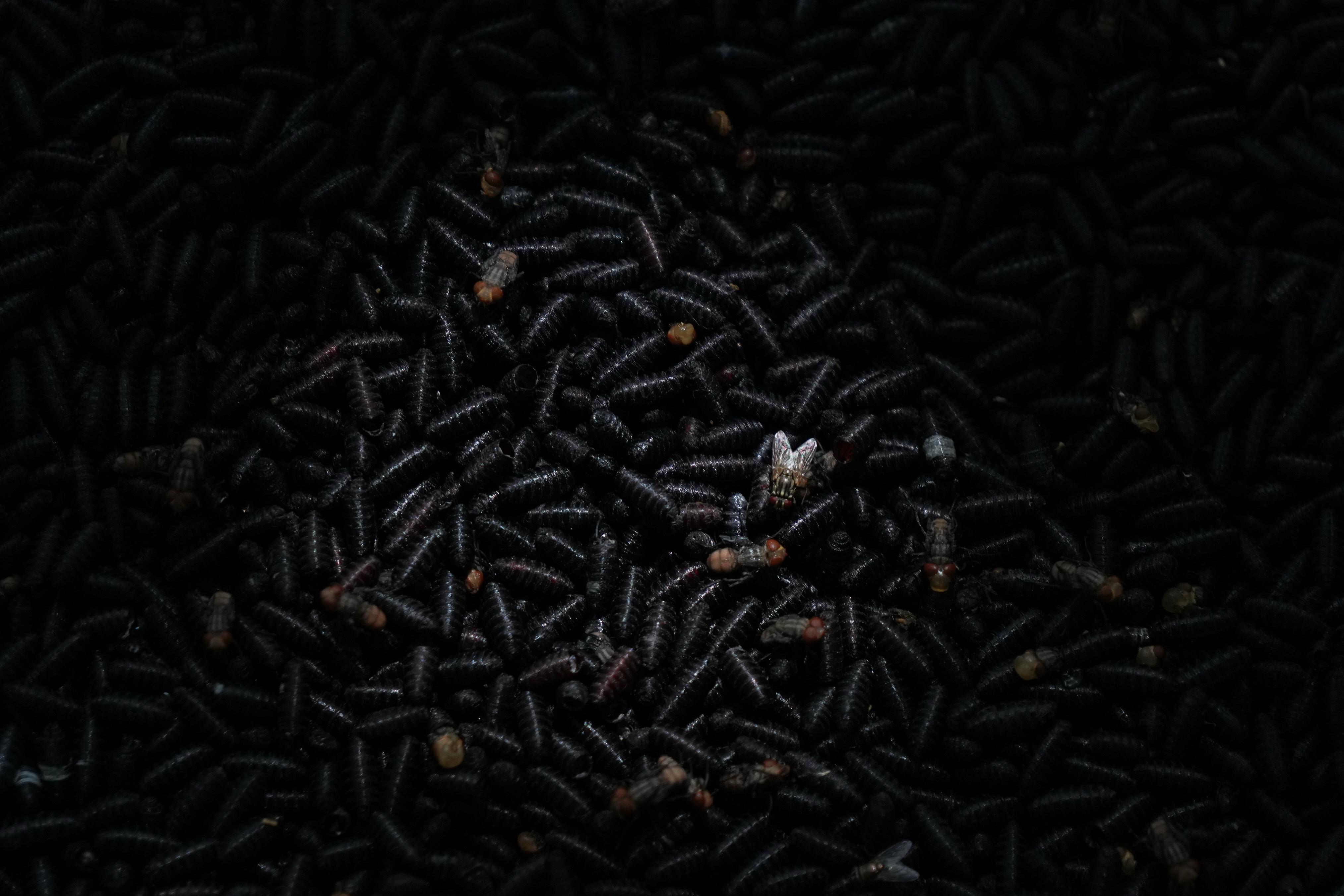
While there are no current detections in the U.S., the New World Screwworm has made its way through South and Central America in recent years, with the latest detected infection just south of the U.S.-Mexico border.
"Mexico reported eight new detections of New World Screwworm (NWS) late last week," said USDA Secretary Brooke Rollins during a Tuesday press conference. "One of those that was detected was a five-year-old goat in Coahuila, approximately 25 miles from the U.S.-Mexico border."
The NWS is a parasitic fly larva that primarily infects livestock and wildlife, but can also infect pets — and, in very rare cases, can infect humans.
"To be clear at the outset, the current risk to public health in the US is extremely low," said Rollins. "The real risk is obviously to our livestock and our wildlife population."
The screwworm burrows into the flesh of living animals. Treatment is possible, but some infections can lead to complications and death.
In Mississippi, suspected screwworm cases can be reported to the state Board of Animal Health by calling (601) 359-1170 or emailing msstatevet@mdac.ms.gov.
Rollins said that the USDA, over the last several months, has expanded its efforts to fight the spread.
"We announced our five-pronged New World Screw Room strategy last year, focused on detection, containment, eradication, preparedness and sterile fly production," said Rollins.
That includes introducing sterile flies into populations to prevent further breeding, as well as setting up fly traps and border detection programs.
"Even though we're not moving livestock through the border ports right now, we have detector dogs on the border at all the entrances to check all and everything that's coming across the border," said Rollins.
During the press conference, Rear Admiral Michael Schmoyer, with the USDA's Animal and Plant Inspection Services, said that data from over the last year shows the screwworm has been spreading mainly through infested animals.
"The fly is looking for food as quickly and open wound as it can get, and unfortunately, open wounds are pretty common," said Schmoyer. "Consequently, the fly itself doesn't move as much as the bigger problem: which is people moving the infested animals."
Should screwworms make their way into the U.S., Rollins said they were prepared to work with state partners to address infections.
"If we have a domestic detection, USDA and relevant state animal health officials will immediately put in place quarantines and movement restrictions to limit the pest spread," said Rollins. "We will initiate additional trapping and surveillance in the immediate area."
The NWS was eradicated in the U.S. by the late 1960s, although other populations remained elsewhere. The current resurgence began in 2023, with increased detections in Panama that spread north.
Last year, the department also suspended live animal imports through ports in Texas, Arizona and New Mexico. Right now, Texas is the department's main focus, with other border states relatively far from the latest detected infestations.
USDA Undersecretary Dudley Hoskins said reopening those ports could take time.
"It is about the system-wide assessment that we do in Mexico," said Hoskins during the press conference. "That's not just the movement of cattle: there's obviously horses, goats, hogs, any warm-blooded creature moving."
More information and visibility on those animals, as well as any other animal that could be crossing the border, is what Hoskins said is a baseline necessity for the department.
"That is, I think, ultimately what we need to see and to have that demonstrated for us to get to a port reopening," said Hoskins.
Although the NWS poses an infection risk, Schmoyer said the screwworm isn't contagious and it's not a food safety risk.
"It is however, a serious concern for USDA, our state partners, our producers, and because of the potential disruption it could cause to the U.S. Livestock industry if a detection is not quickly identified and treated," Schmoyer said.
According the Mississippi State University Extension, state livestock production was worth roughly $744 million last year — making it the fourth most-valuable agricultural commodity.