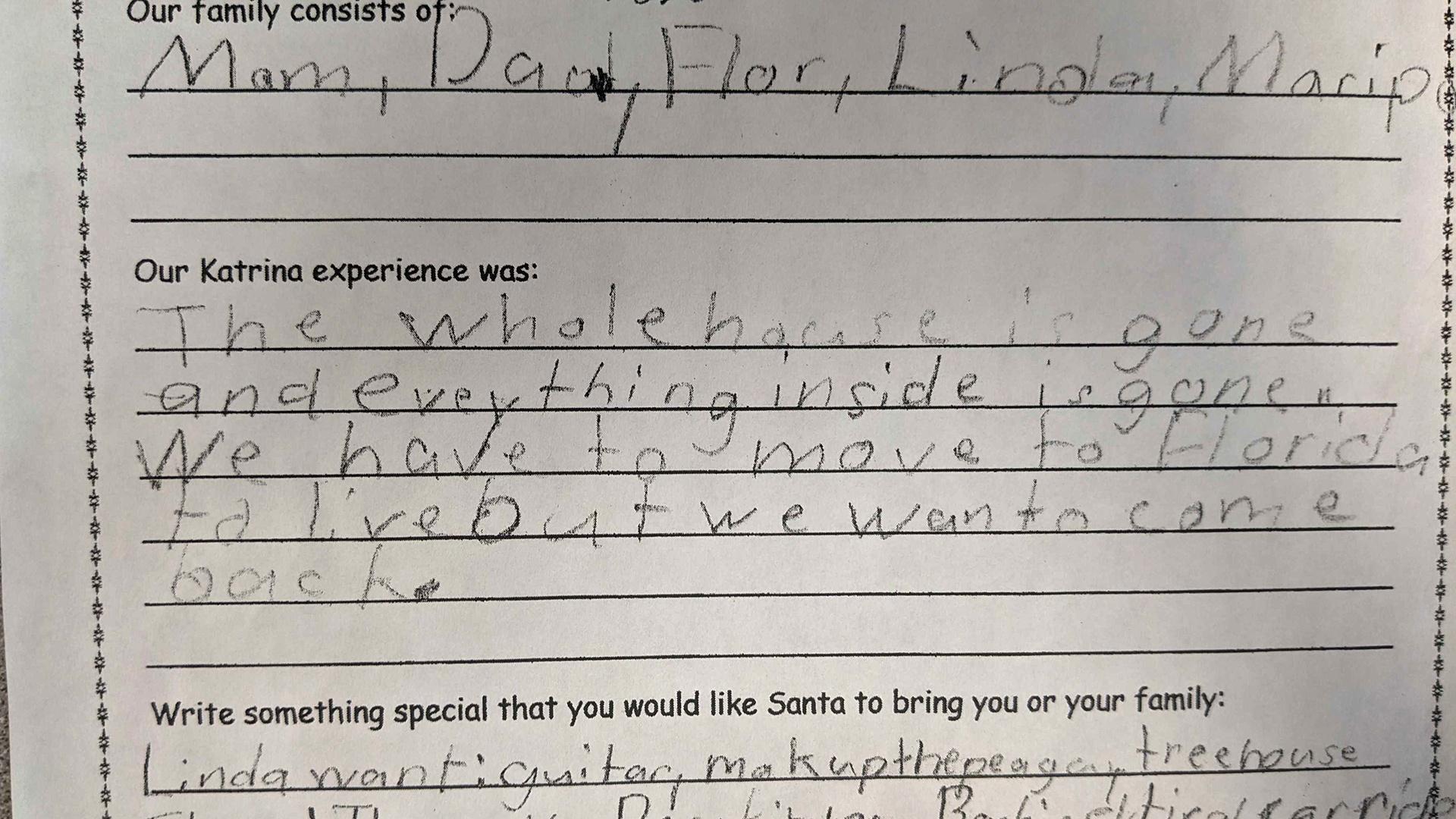
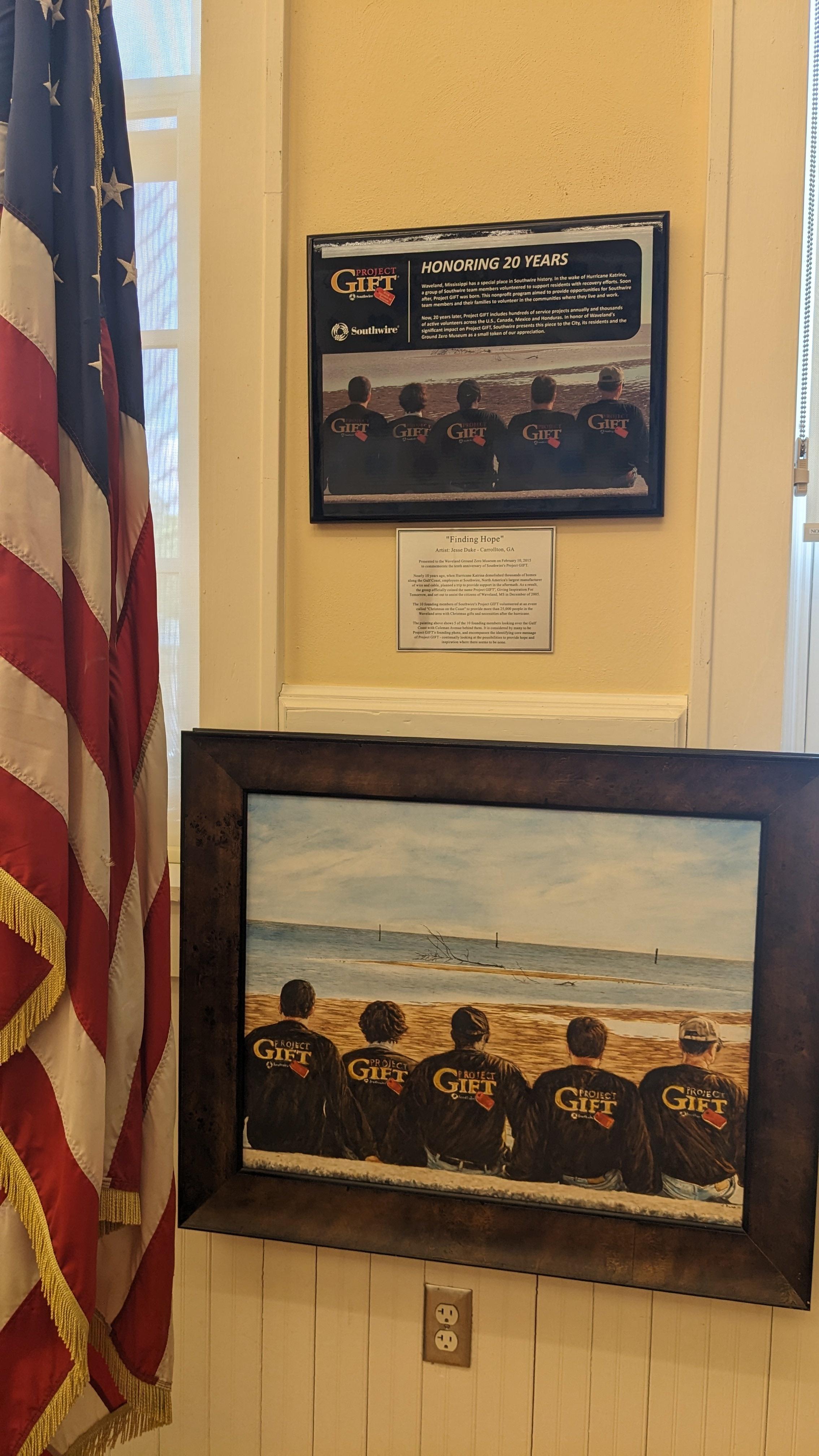
“They had no way to print these letters to give out,” said Pollard. “So what we did was we took that one copy back, and we provided the publication for three thousand plus letters and then took them back to them for them to give out in the community.”
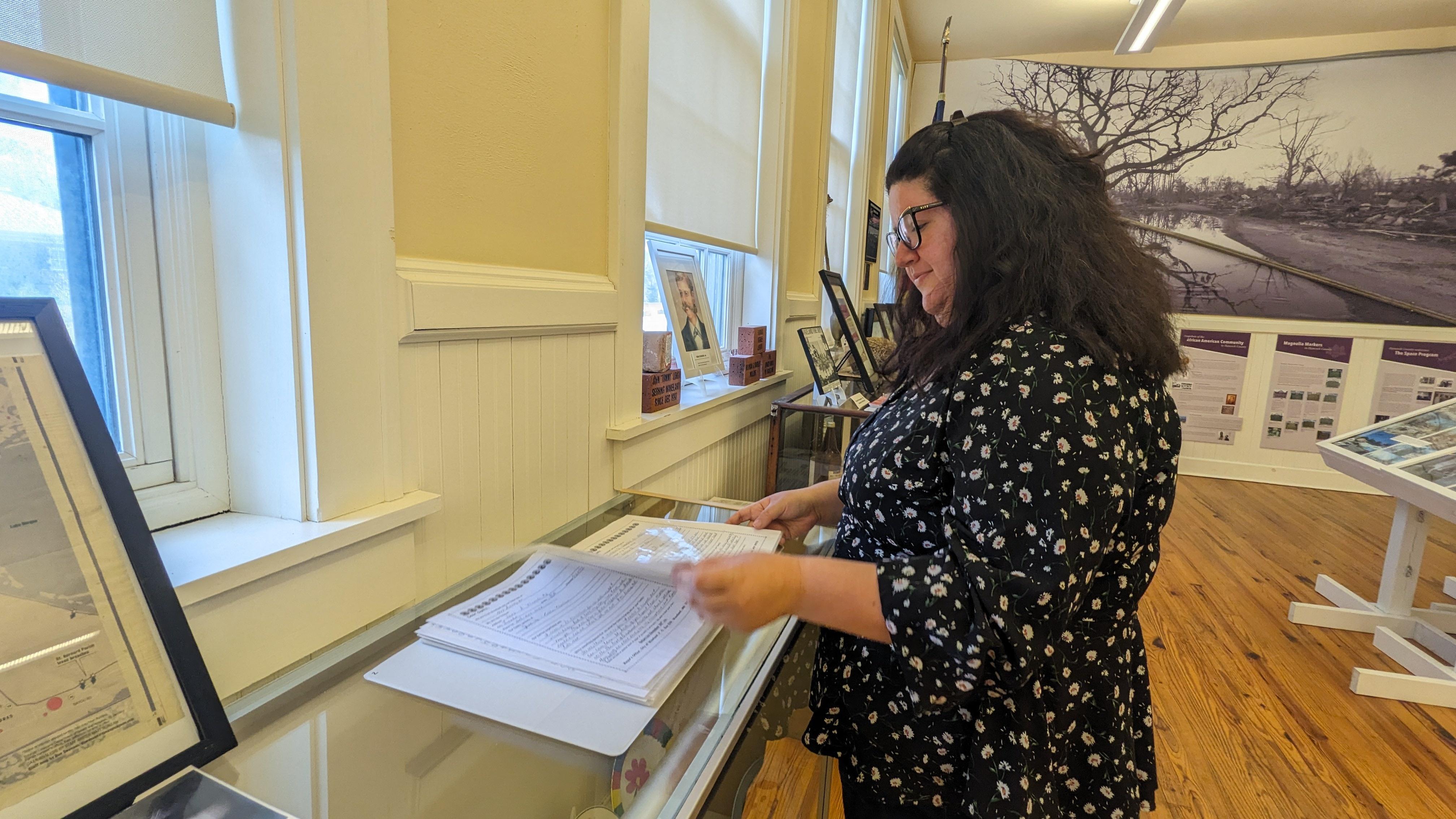
About a third of those letters were filled out, and those are all in the museum now.
Pollard got to see those letters documented at the museum when he visited earlier this year as part of the 20th anniversary of Katrina.
“In the bigger picture, it seemed small when you thought about us bringing supplies and bringing help,” he said. “The letters seemed small, but it seemed like something we could do.”
He hopes that the memories preserved through what Project GIFT started allow folks to remember the endurance and community on the coast — not just the hard parts.
“It was small at the time, but look at what it is today,” Pollard said. “These were kids, and now they're young adults, and Katrina will forever be in their memories. Hopefully, this makes it a little bit better.”
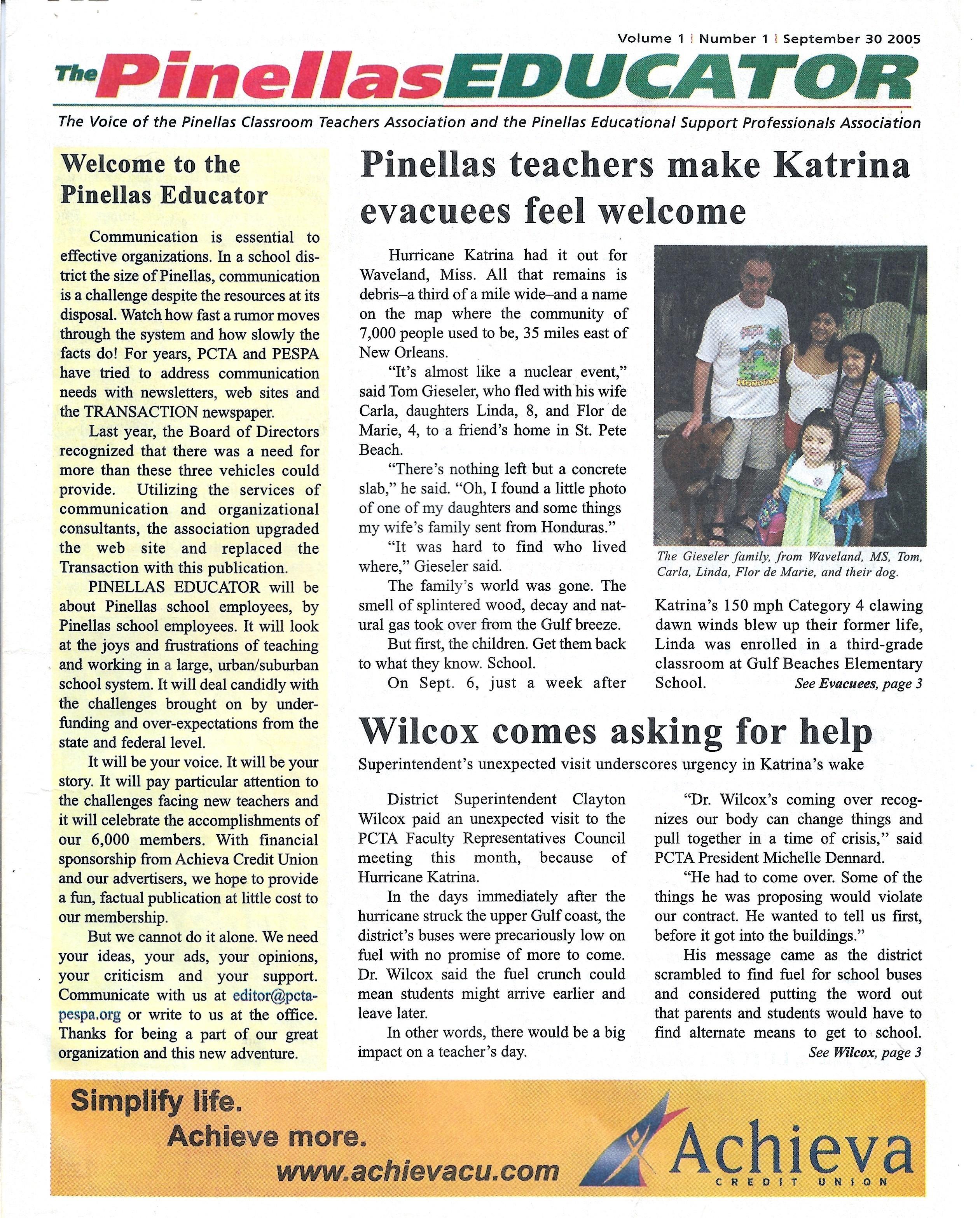
Better, Pollard hopes, for those kids who have grown up into adults like Linda Gieseler.
She’s got a daughter of her own now, who she hopes to take to the museum someday when she’s old enough to understand what Gieseler went through.
“I hope that she never goes through something like we did,” Gieseler said. “Each storm that comes through here, whether it's minor or major, I always take it very seriously because I don't want her to lose a home.”
Gieseler’s all grown up now, living in the area but with a home in Hattiesburg away from the water. But she still remembers herself, 9 years old, faced with a brand new life in a new place.
“I wish I could give her a big old hug, like my whole entire family then, a big old hug, saying ‘It's gonna be okay, everything's gonna come back, our life will be better,’” said Gieseler. “And it really has. Even though my dad is not here, I know he's looking over us, and he's really proud.
“We have a house now: that's what he always dreamed of. And now he has a granddaughter.”
This story was produced by the Gulf States Newsroom, a collaboration between Mississippi Public Broadcasting, WBHM in Alabama, WWNO and WRKF in Louisiana and NPR.