The HIV epidemic in Mississippi has not gone away.
The South accounts for over half of all new HIV diagnoses, according to the most recent data available from the Centers for Disease Control and Prevention.



The HIV epidemic in Mississippi has not gone away.
The South accounts for over half of all new HIV diagnoses, according to the most recent data available from the Centers for Disease Control and Prevention.

Shamira Muhammad
HIV rates in Mississippi remain high as advocates worry about the potential for more federal cuts

Mississippi currently rates fifth in transmission rates of HIV, with a diagnosis rate of 21 per 100,000 people, according to AIDSVu.
The state also ranks among the highest for people who die from the virus.
“We see manifestations of HIV that are almost unheard of in other parts of this country,” said Dr. Thomas Dobbs, Dean of the School of Population Health at the University of Mississippi Medical Center. “Advanced infections of the brain, Kaposi's sarcoma, skin cancer, I see those all the time. It's not because they're not preventable, it's because people are not accessing care.
Nearly half of Mississippians diagnosed with HIV in 2022 weren’t in treatment a month after. Dobbs believes health care deserts and gaps in knowledge about treatment options could be to blame.
“It's not that people in Mississippi have riskier sex behaviors. They don't,” he said. “And actually probably have less than a lot of the country. But it's because we're not engaging in these conversations. We're not identifying people who need to be tested, treated.”
President Trump has proposed that Congress cut $1 billion in domestic HIV testing, treatment, and prevention funding. This would include deep decreases to the ‘Ending the HIV Epidemic,' an initiative Trump created in his first term that also operates in Mississippi.
The program created goals for the use of PreP, a medication 99% effective against sexually transmitted HIV and 74% effective against infection through needle use. Federal and state partners wanted 50% of Mississippians at high risk of HIV on PreP by 2025.
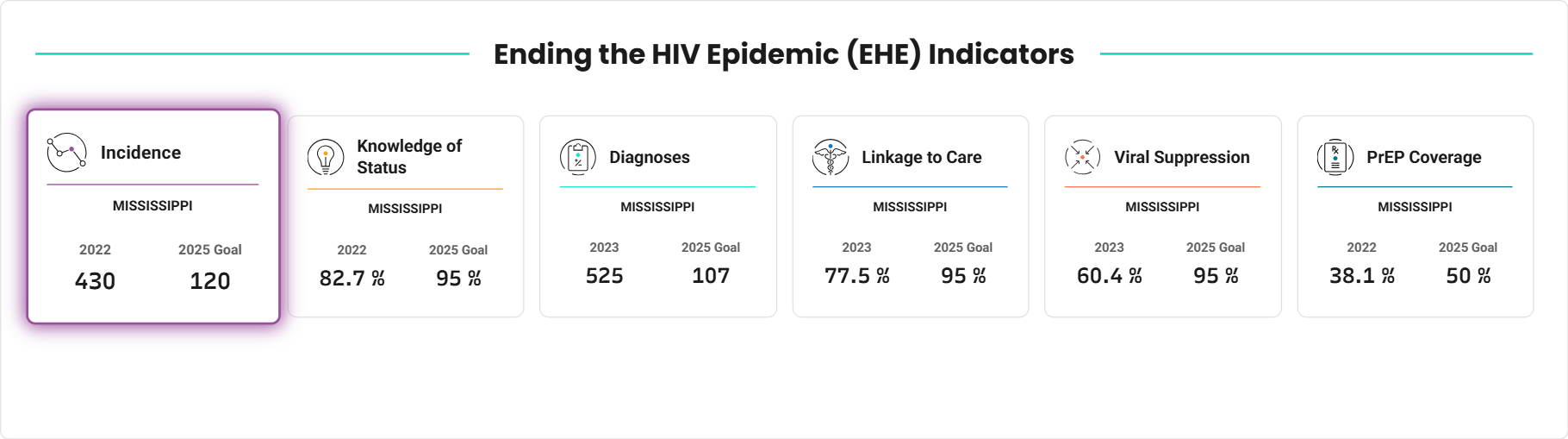
“We are very far from that goal, unfortunately,” said Dr. Dobbs. “We've had pretty stable, stubbornly immovable rates of new cases with mild fluctuations year to year, maybe just a very slight number of declines in cases, but we are very far from our goal.”
President Trump published a similar budget request last year that was subsequently rejected by Congress, but health experts wonder how lawmakers will respond in 2026.
“I'm concerned. Congress has maintained funding, and so at this point we're able to do what we have done,” said State Health Officer Dr. Dan Edney. “The Ryan White program is still appropriately funded. The ‘Ending the HIV Epidemic’ program is still properly funded. All of our surveillance work and our impacted treatment work is ongoing and I was really encouraged with the last budget appropriation that HIV STI testing and treatment funding remained in place.”
The Minority AIDS Initiative, which provides treatment to disproportionately impacted communities, and a housing program offered through the Ryan White Program would be shuttered under the proposed budget.
Black people make up the majority of the roughly 11,000 Mississippians living with HIV, according to the state department of health. According to the CDC, nearly 20% of people living with the virus in Mississippi don’t know they have it.
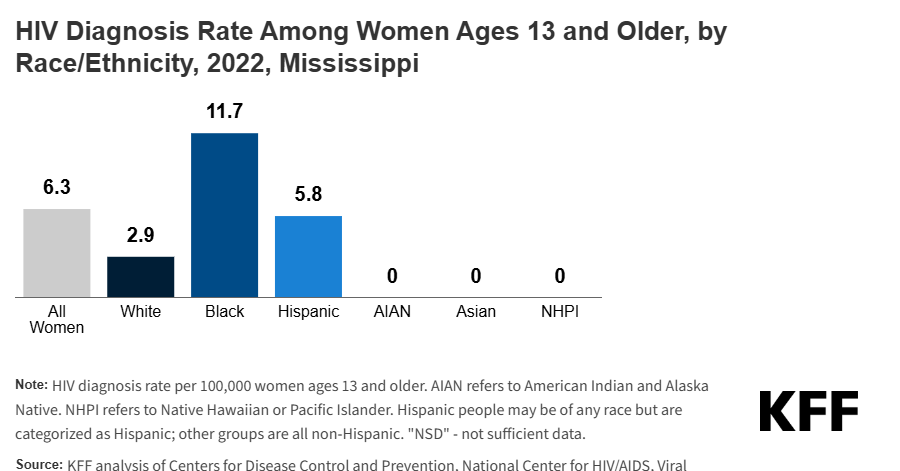
Black women’s HIV rate is nearly four times that of White women in Mississippi, according to KFF Health News.
At a community event in Jackson, HIV advocate Valerie Pinkston remembers the year, date and time she was diagnosed nearly 20 years ago.
“I was diagnosed in 2008, January the 2nd, at 1:25,” she said. “I remember it like it was yesterday.”
HIV is a chronic illness that can be managed, but has long been feared because it is so deadly without treatment. For several years after her diagnosis, Pinkston said she barely slept or ate.
“I went to a reservoir every night, got intoxicated and said I was going to drive myself in the water,” Pinkston said. “Everytime I did that, something tapped me on my shoulder and said ‘girl go home, everything is going to be alright.’”
Now, she is among 34% percent of HIV positive Mississippians whose viral load makes her undetectable. Antiretroviral medications work to suppress the virus, making it almost impossible to transmit it to others.
The medication, however, can cost patients around $554,000 over the course of their lifetime, according to the CDC. Through federal funding, including the Ryan White Program, SAVE HIV Funding reports that these investments have helped to save billions in health costs by preventing new infections.
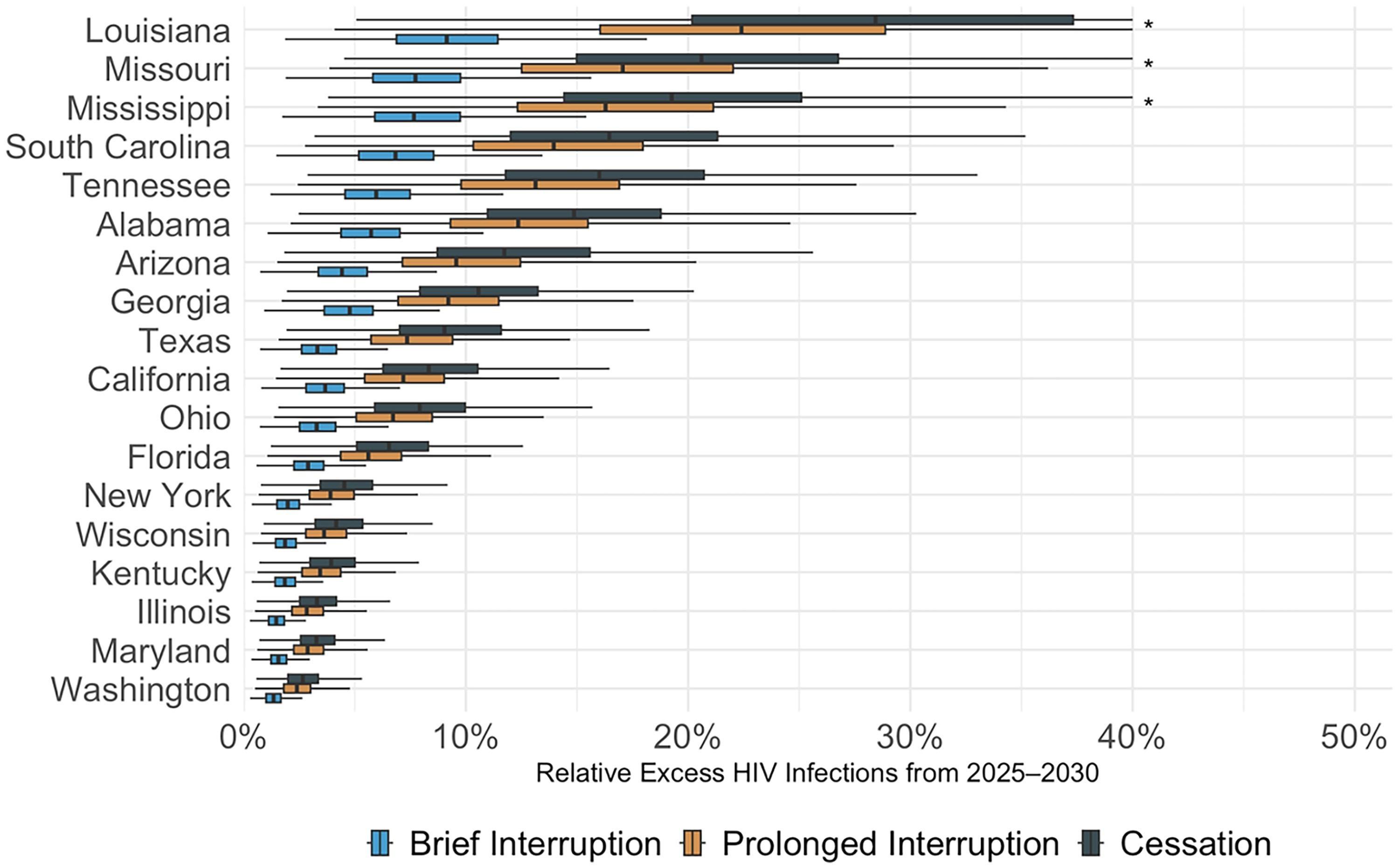
Earlier this year, researchers at Harvard and John Hopkins Universities found that Mississippi HIV infection rates would rise 10% even with slight budget decreases for testing and treatment.
Last year, county health departments and non-profits saw losses from Department of Government Efficiency (DOGE) cuts.
That impacted folks like Rashad Pollard, a PreP coordinator with My Brother’s Keeper in Jackson. Another clinic he’d worked at for seven years was forced to close because of cuts.
“We weren't just laid off. It was a service that's no longer provided,” he said. “I believe with that happening, it's gonna take a big impact on the community because now these people don't have anywhere to go and receive free testing. I believe we'll begin to see numbers rise again because of that.”
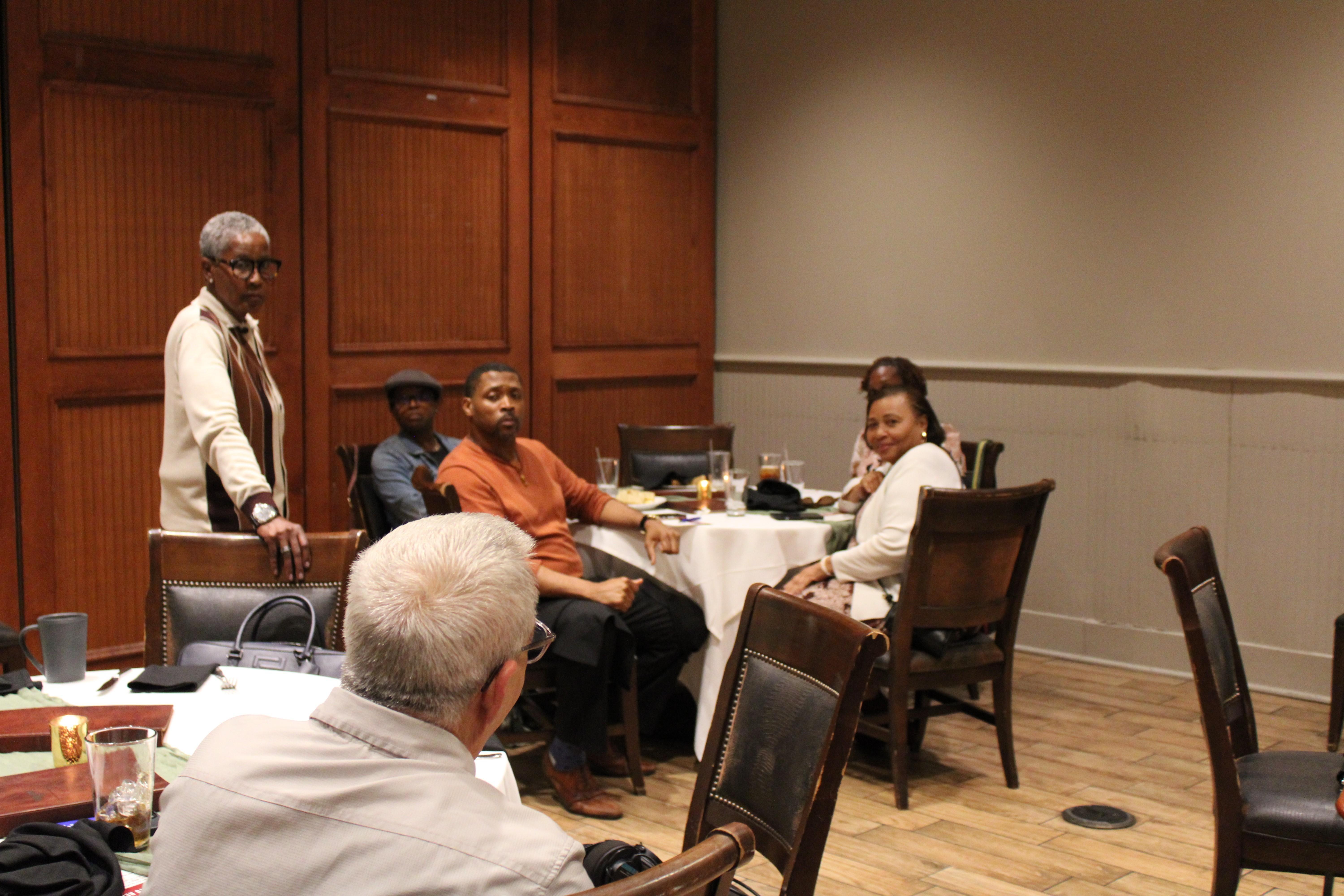
Juanita Davis is the director of Care4Me Services and has been working in HIV prevention and treatment efforts for 40 years. Davis said her clinic, which used to test about 1200 people a month, lost federal grants last year. Staff was cut, events became smaller and she was sharply limited in the amount of condoms she could hand out.
“When there's limited education and prevention efforts in our community, we are doomed,” Davis said. “We need to fix this. We need to fix it. I worry about the staff that I have because I know I can't keep doing this. I've got to stop. But I don't want to leave them without, just like I would want my community to be without.”
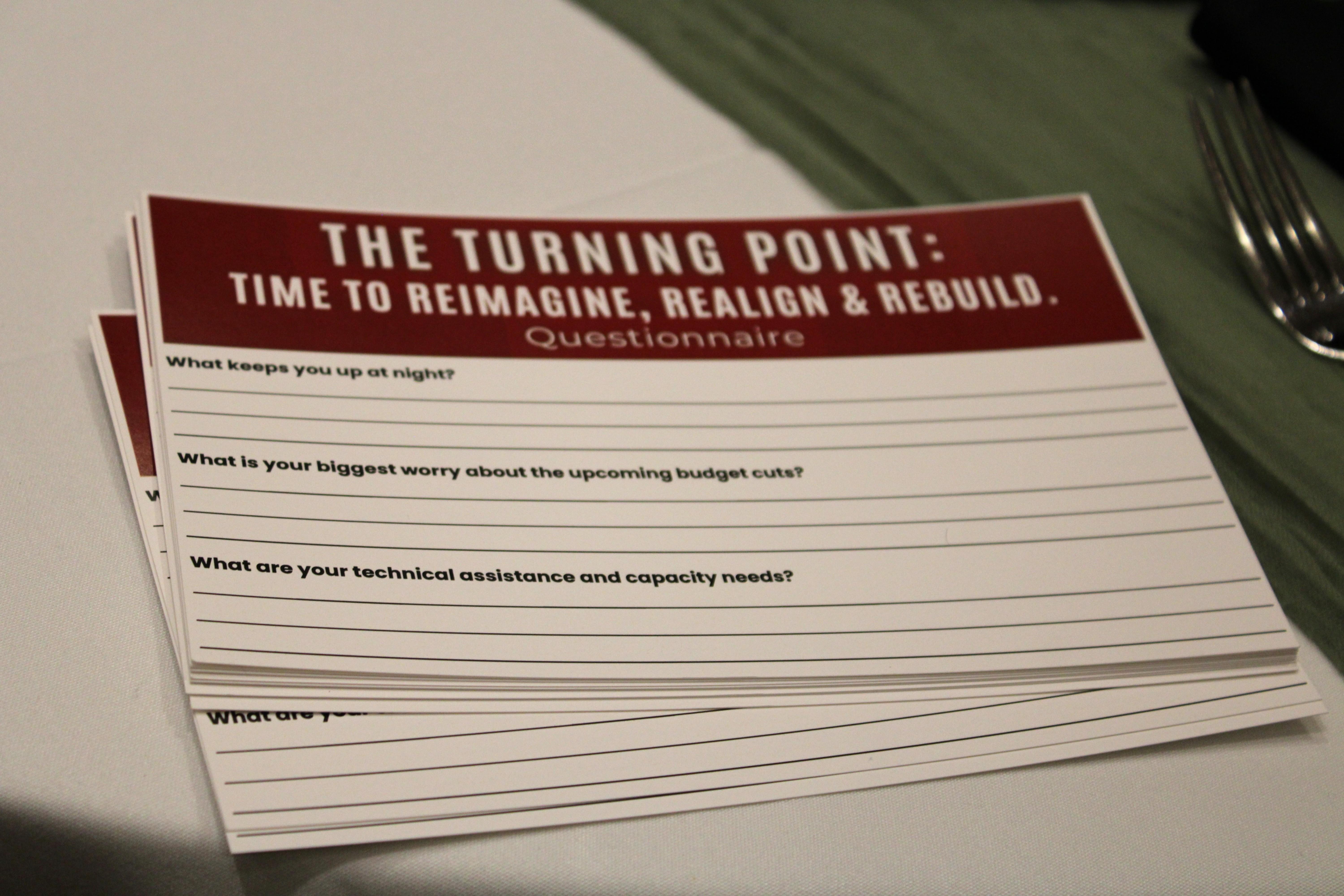
Davis worries about the people she can't help who call her for transportation to appointments and other assistance.
“They're calling me and I can't give them the services they need because I don't have the staff that I used to. So it's just a real downhill situation,” she said. “If our rates were as high as they were prior to all of this, imagine what they're going to be now.”
Most Mississippians living with HIV are young, gay, Black men, according to AIDSVu. Many health experts believe an essential element in fighting the virus is by keeping HIV-negative people negative.
Last year, Dr. Amy Nunn, the executive Director of the Rhode Island Public Health Institute, received an email from the federal government informing her that $844,000 in remaining grant funds would not be sent for a PreP clinical trial involving HIV-negative men of color she was leading, citing the study’s use of ‘DEI.’ The trial was intended for three U.S. cities, including Jackson, with troubling rates of the virus. Nunn likened the program’s aggressive care approach to the Ryan White program.
“It's a huge public health asset. We don't have a program like that for HIV-negative people to help them stay HIV-negative,” she said. “This approach basically provides similar kinds of services for HIV negative people to help them stay on their HIV prevention medications and stay HIV negative. It's especially important in places like Jackson and Washington where Black men have a one in two chance of contracting HIV by the time that they're 50.”
Researchers on the trial joined a lawsuit, causing the grant money to be reinstated. But, Nunn believes the damage is already done, calling the funding delay a ‘tremendous disruption.’
“Mississippi and then some other places where we're enrolling, including in Washington DC, had to lay people off because of the funding cuts,” she said. “In Mississippi, even the clinic closed where we were doing the study.”
Another Jackson clinic was opened, where two men are now enrolled. But Nunn's Jackson trial was intended to serve 100 men.
“It'll ripple through a generation if we suddenly don't have scientists that are interested in helping the communities that have the biggest disease burden,” she said. “That's something that keeps me up at night and makes me worry.”
Valerie Pinkston, the HIV advocate living with the virus, is concerned about what the Trump administration's cuts will mean for the morale and access to care for HIV-positive people.
“The impact that it has had has been tremendously going the wrong way,” she said. “I just feel like they know. If we don't take medications, we die.”
According to UNAIDS, providing HIV care globally saves $7 for every dollar spent.
Dr. Dobbs, the Dean of Population Health at UMMC, believes without community outreach mechanisms, individuals won't understand the risks of HIV or how to access care.
“It's an investment in prevention. It's an investment that is gonna be cost effective in the long run,”he said. “If we could find a way to make sure that we have very strongly supported, engaging community organizations, it's gonna benefit everybody.