Northern Mississippi is still recovering from a brutal storm that hit last month, coating the region in ice, sleet and freezing rain.
Weeks after winter storm, neighbors work to recover in northern Mississippi


Northern Mississippi is still recovering from a brutal storm that hit last month, coating the region in ice, sleet and freezing rain.

Elise Catrion Gregg
Weeks after winter storm, neighbors work to recover in northern Mississippi
Although power has been largely restored and crews continue to clear downed lines and fallen trees, full recovery is expected to take time. In the meantime, many residents are still trying to bounce back from the storm's initial impact.
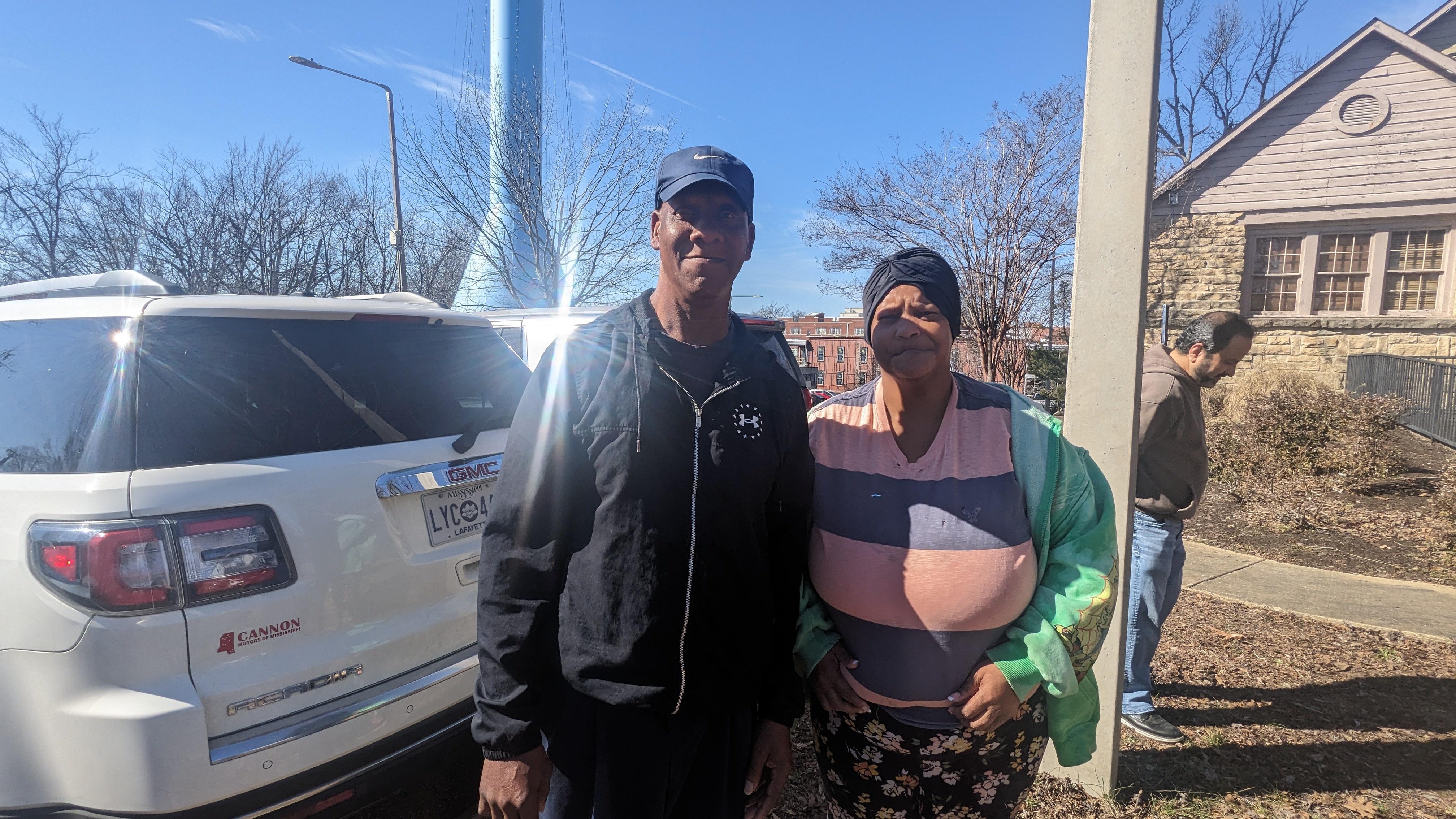
"We was out of power about two weeks and some," said Kenneth Austin, who moved to Oxford with his wife, Charlene, about two years ago.
They stopped by the town center to get water, clothes and some washing powder from the Second Responders, a collection of local nonprofits and charities working together to help folks recover.

The Austins are back to work now and moving along — it’s been tough, but they say neighbors and friends in the area have all helped one another out in cutting through trees and getting debris out of yards.
"It could be worse. We've seen a lot worse," said Kenneth. "We've got a friend who still don't have power — she's been out about four weeks now."
Cecilia Perez lives in Lafayette County, about a ten minute drive from Oxford. She said she and her family were without power for about three weeks.
"We had kids in the house: it was hard," Perez said. "All my food was spoiled and everything, milk and everything."
She said her husband, a roofer, has started working again, but he wasn't able to work for three weeks because of the storm.
"We're still struggling a little bit, behind bills and the rent, water bill and stuff," Perez said. While they receive SNAP benefits, she said they won't get them for a couple more weeks.
Learn more at https://www.mpbonline.org
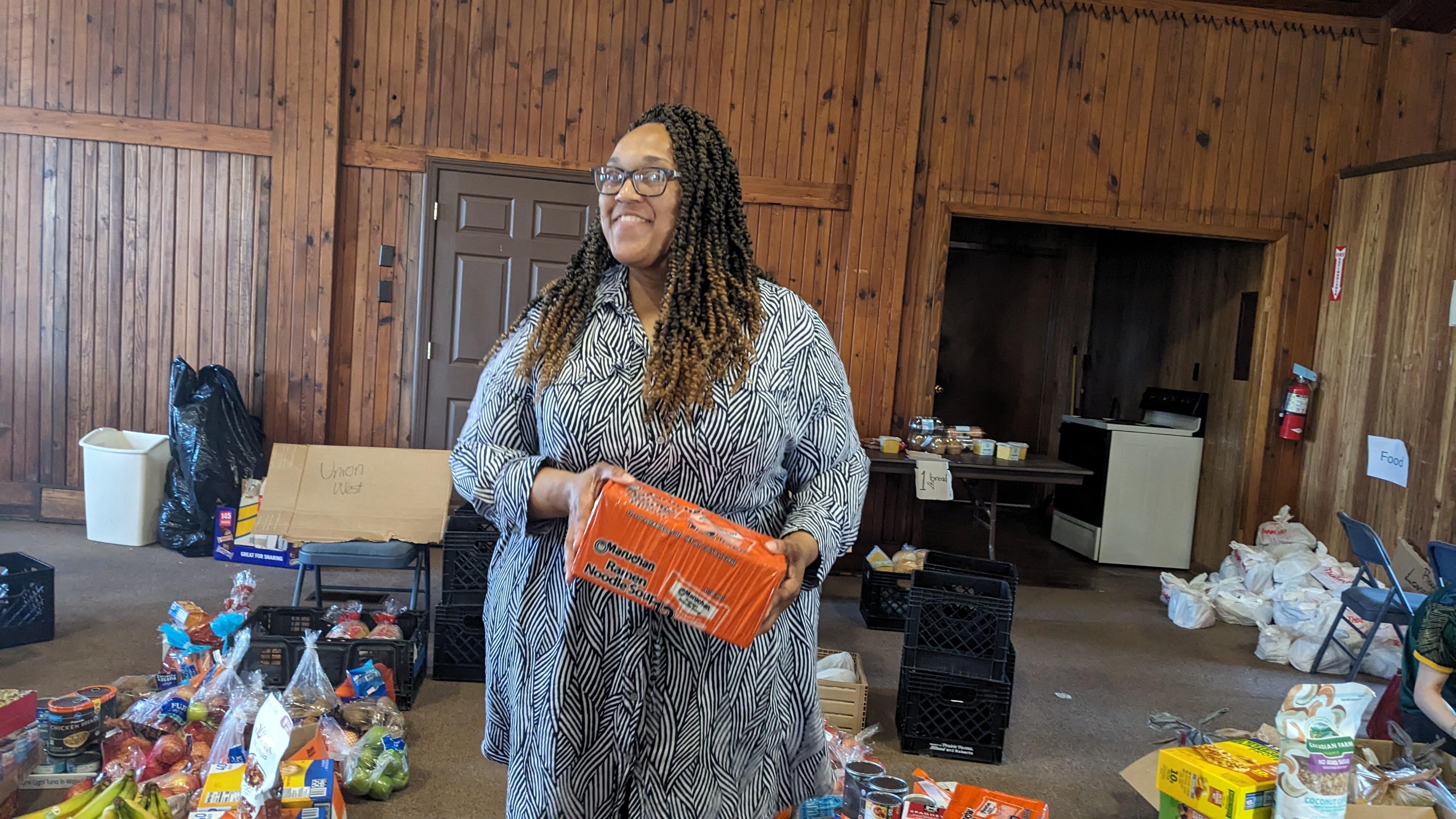
Inside, it’s busy with volunteers organizing food and other donations to deliver out to churches in the county. It’s a lifeline for folks further away from Oxford who can’t make it into town.
"We have not experienced a crisis on this level in Oxford that we've been here for and felt just that sense of urgency," said Betsy Chapman.
She's the director of Oxford Community Market and has coordinated much of the Second Responder effort. When the storm hit, she quickly messaged other people who do nonprofit work in Lafayette County and Oxford to see how they could respond to immediate needs.
That led to the creation of the Second Responders. They work with local government and charities to help the community, but also try to fill in the gaps that those bigger agencies and organizations can't.
"We as community organizations, we can't do the work of first responders and our city leaders who are working on utilities, but we can step in and provide real quick," she said, listing things like food, water and blankets as immediate resources for people in need.
For Chapman, it's also about providing people with more than just material goods to keep going.
"What we offer to people was things that help them be fed, but also help them know they are not neglected, they are not overlooked," Chapman said. "They're cared for, and hopefully give them a little bit of hope and morale that they can get through this."
Shanika Wardis one of their regular volunteers. She lives out in the county and said it’s been especially rough out there — a tree actually went down across a road close to her home, leaving her stuck for several days.
"Being kind of trapped on my road in those initial days, it was going across to check on your neighbor, make sure you can get them out," said Ward. "Seeing who needed first aid, seeing who was without resources already."

The community work has definitely kept her busy, even when she didn’t have power.
"It never really registered that I don't have food in my refrigerator," she said. "I went home to cook spaghetti on Monday and opened up the fridge and was like, 'Oh, yeah, I don't have anything in here: I gotta get to the store.'"
Ward also runs a nonprofit, Empower Advocacy Oxford, which helps underserved and at-risk people in Lafayette County. The people she's hearing from, she said, may be a sign of how widespread the storm's impact will be.
"What I also saw was a lot of people reaching out to me, to my non-profit, saying 'I need some assistance,'" Ward said. "A lot of these were working class people who typically don't need any assistance and [are] thriving from day to day. "
After Ward and all the other volunteers finish packing and organizing donations, it's time to load up the vans for deliveries. From town center, it’s about a 15 minute drive to their first stop on the delivery route: West Springhill Missionary Baptist Church.
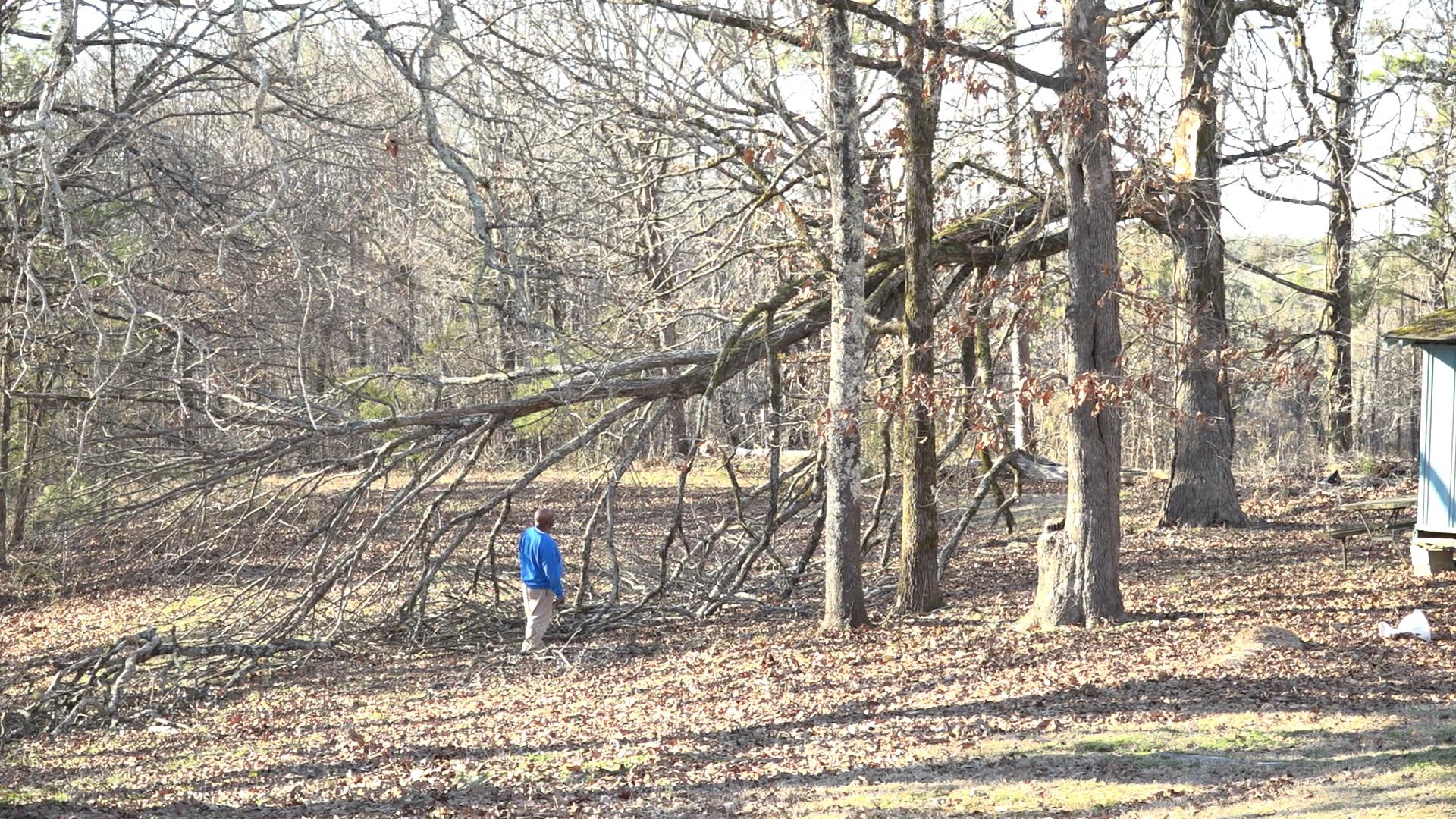
Driving along some of the county roads, shoulders on both sides are piled high with tree limbs and debris.
Learn more at https://www.mpbonline.org
Just down the road from the church are the Certions, Sheron and WC. They were here for the 1994 storm as well.
"It's more damage this time than it was the last time," said Sheron.
They went without power for about a week and had their water cut off for several days.
But they said that they were fortunate because there were only tree limbs down around the yard — nothing like their neighbor across the street, whose shed roof was slammed into by falling limbs.
Even during the storm, though, they didn't let much stop them.
"I didn't come out the door because all this was ice, so I stayed in," said Sheron, waving her arms across her whole doorstep and walkway.
"He had to bust it up, and it wasn't melting," she said, pointing to WC.
Learn more at https://www.mpbonline.org
Like most people in the area, they got to work as quickly as possible to help one another. WC actually ended up with a few stitches.
"Bent down too low and hit the side of the tractor lift," said WC, who had eight stitches on his head. "Within seven days, take them out. I ain't had no pains or nothing like that."
About 12 miles away is stop number two, Union West Baptist church.
Congregants Samy and Lisa El-Feraly live nearby. Their yard is tree-free — but they live behind Lisa’s 84-year-old mother, who had limbs down all across her yard and one tree even uprooted by the storm.
Learn more at https://www.mpbonline.org
"This is what she woke up to — and she kind of suffered a lot more damage than maybe some other folks," said Samy.
They’re still waiting to get some limbs and trees cleared. In the immediate days after the storm hit, Lisa saw ice just lingering in their yard, freezing the pond by their house.

"Then when you looked at the limbs you saw just how thick the ice was," said Lisa. "Looking out the window from my porch and…you could see the limbs just falling."
The El-Feraly’s, like many other folks in the area, say recovery wouldn’t be possible without their communities and the support of volunteers like the Second Responders, who came from all over the area to help out.
In fact, one Second Responder, Edy Dingus, actually drove all the way from Memphis that day. She moved there six months ago, after living in Lafayette County since 2005.
Learn more at https://www.mpbonline.org/news
She’s acted as a one-woman show in Tennessee, remotely helping coordinate and connect people with Second Responders.
"It seemed like the best use of my time was staying glued to my phone, to receive mutual aid requests, to design different flyers to get the word out about supplies and resources in the area," she said.
Dingus, like many others in Oxford and Lafayette County, is also really proud of the people she still considers her community.
But, to her, that’s only one side of the story.
"I feel, and I don't think I'm alone in feeling, that state leadership really failed in North Mississippi and the Delta and folks that were incredibly hit by Winter Storm Fern," said Dingus.
Not everyone shares that feeling — a lot of folks said they thought community response was enough.
But Dingus hopes that next time, better government preparation means there won’t be as much mess for communities to clean up. In the meantime, she hopes that neighbors uplifting each other continues through recovery.
"What that gave rise to, I think," she said, "is an opportunity for communities to step in and hold one another, and support one another through this effort."