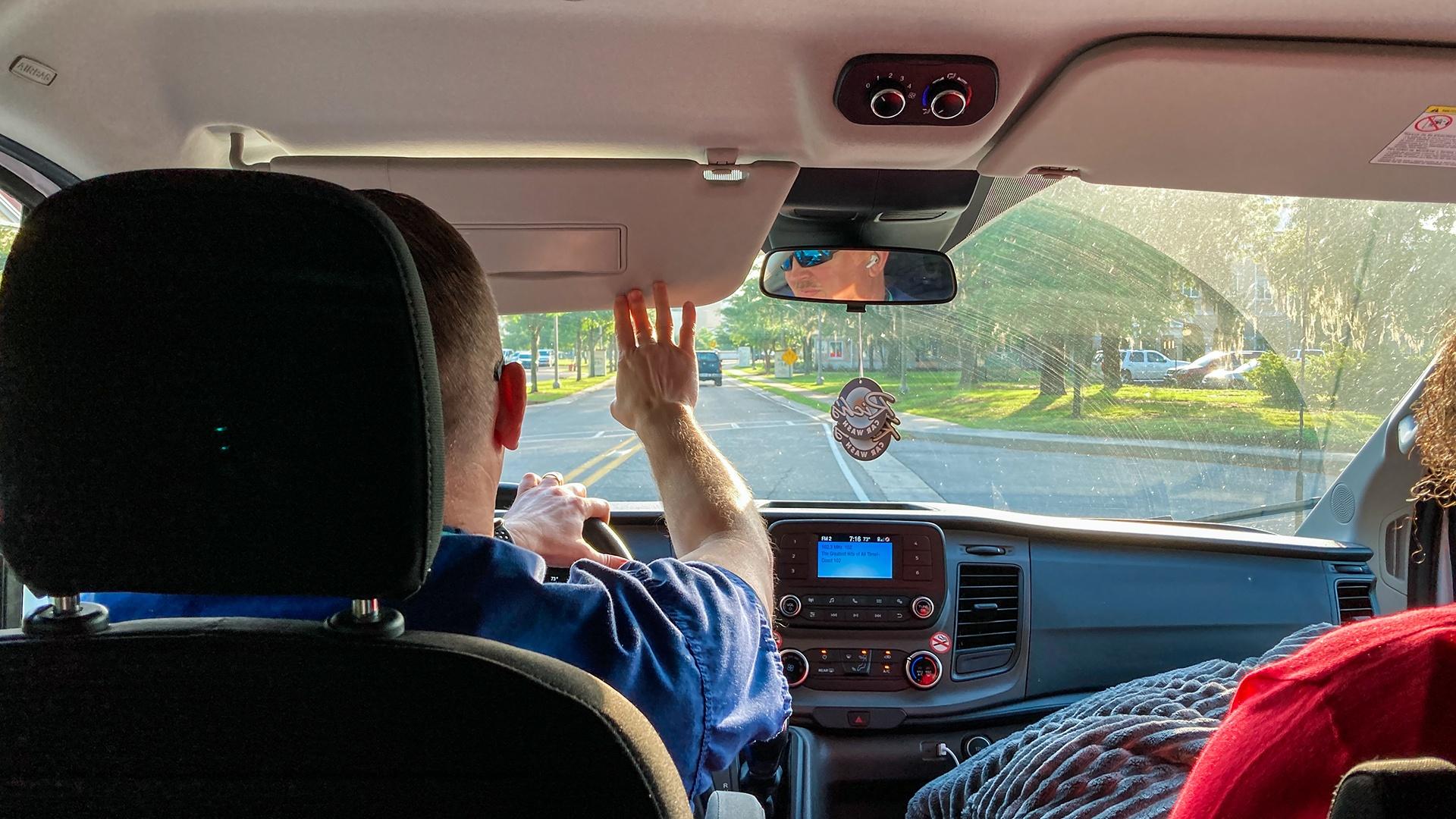
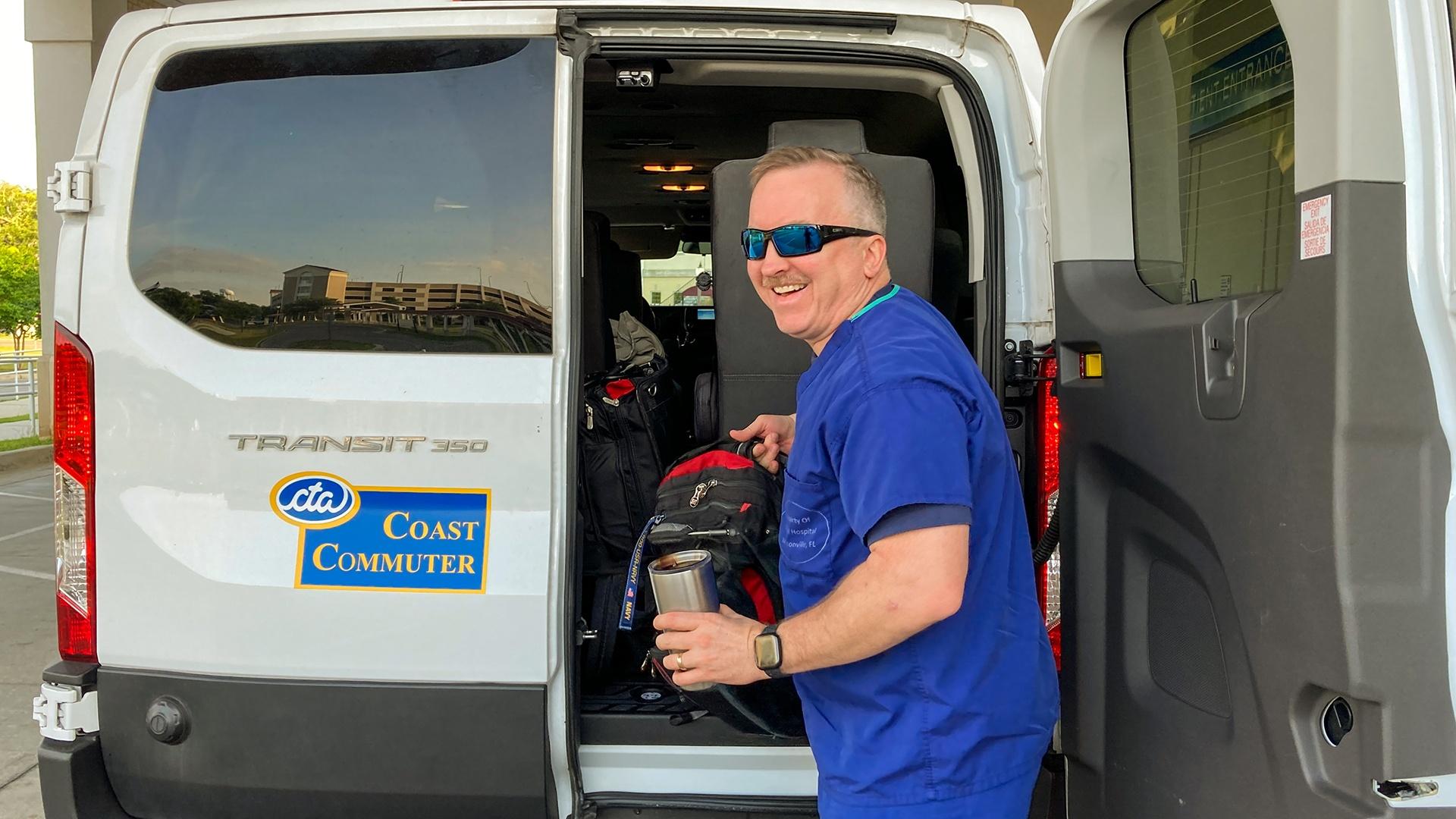
From the employers, to the riders, to environmentalists hoping to see more cars off the road, vanpool advocates argue this type of ride-sharing benefits everyone involved.
Working with Enterprise gives Coggin’s small state transit agency access to the larger resources available to a private company like Enterprise. The company can obtain needed vehicles for Coggin that have been hard to find lately. When it was time to scale down during the pandemic, he didn’t have to worry about idling vehicles costing taxpayer dollars to maintain since they were owned and cared for by Enterprise.
“It’s a win-win, high-impact for everybody,” Coggin said.
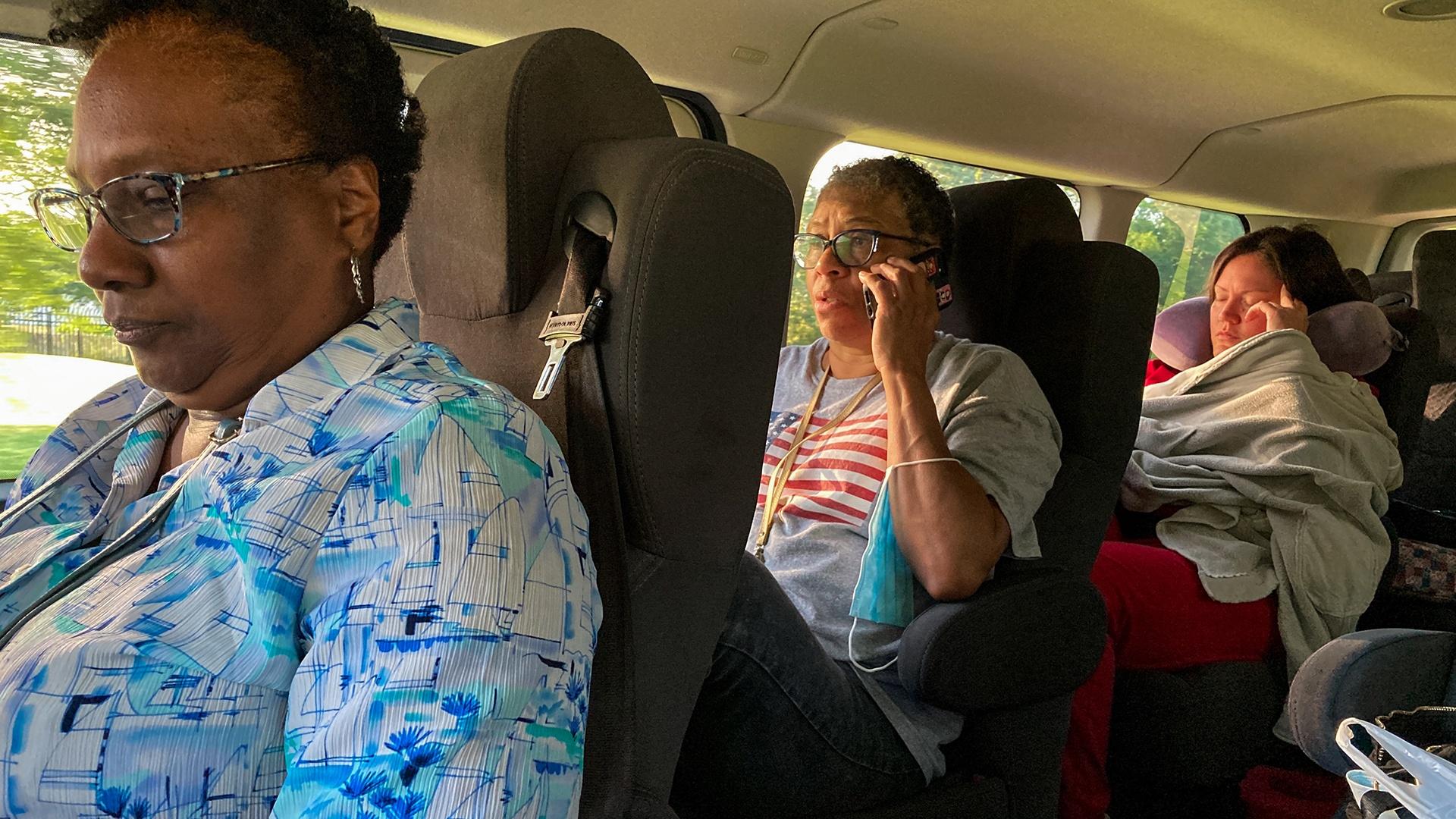
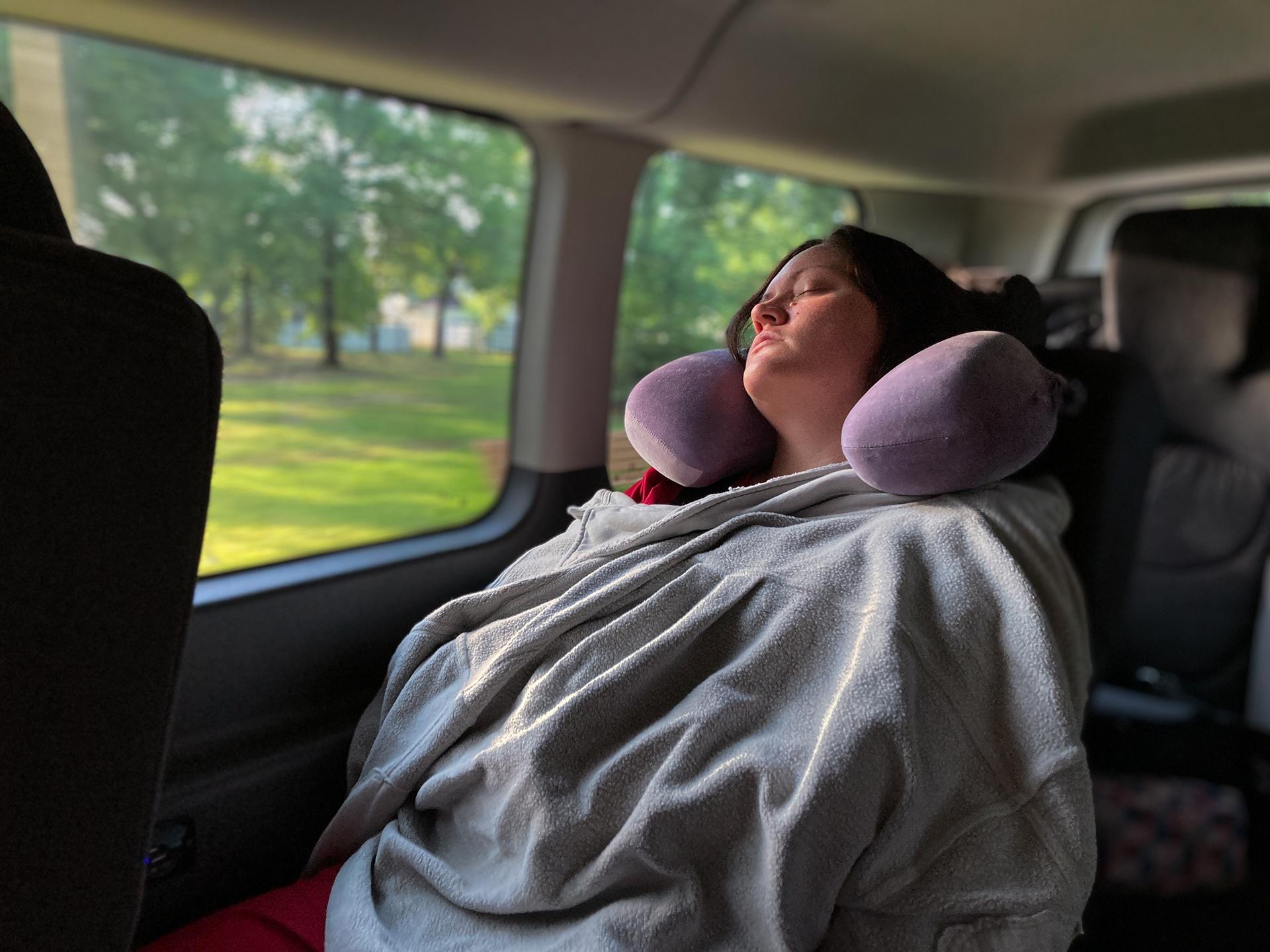
For riders, vanpooling means avoiding those high-gas prices, or at least splitting them between other co-workers in the van. It also lets everyone but the driver do what they want on the trip, from chit-chatting to catching up on lost sleep.
On the employer side, it’s easier to recruit workers from far off when the long commute is less strenuous and less costly. This has been most impactful when recruiting workers in rural areas, some with no other way to get to the job site.
The Chamber of Commerce of West Alabama has been considering vanpooling to get workers to a Mercedes-Benz automobile manufacturing plant from places like Greene County in Alabama’s Black Belt, where many people lack access to a car.
“It is the most positive contribution and step in the right direction in this rural transportation conundrum that I’ve seen in a while,” Steve Jones, the director of the Transportation Policy Research Center for the University of Alabama, said.