Your Page Title

World Sickle Cell Day highlights community, care and hope for Mississippi families

Email share
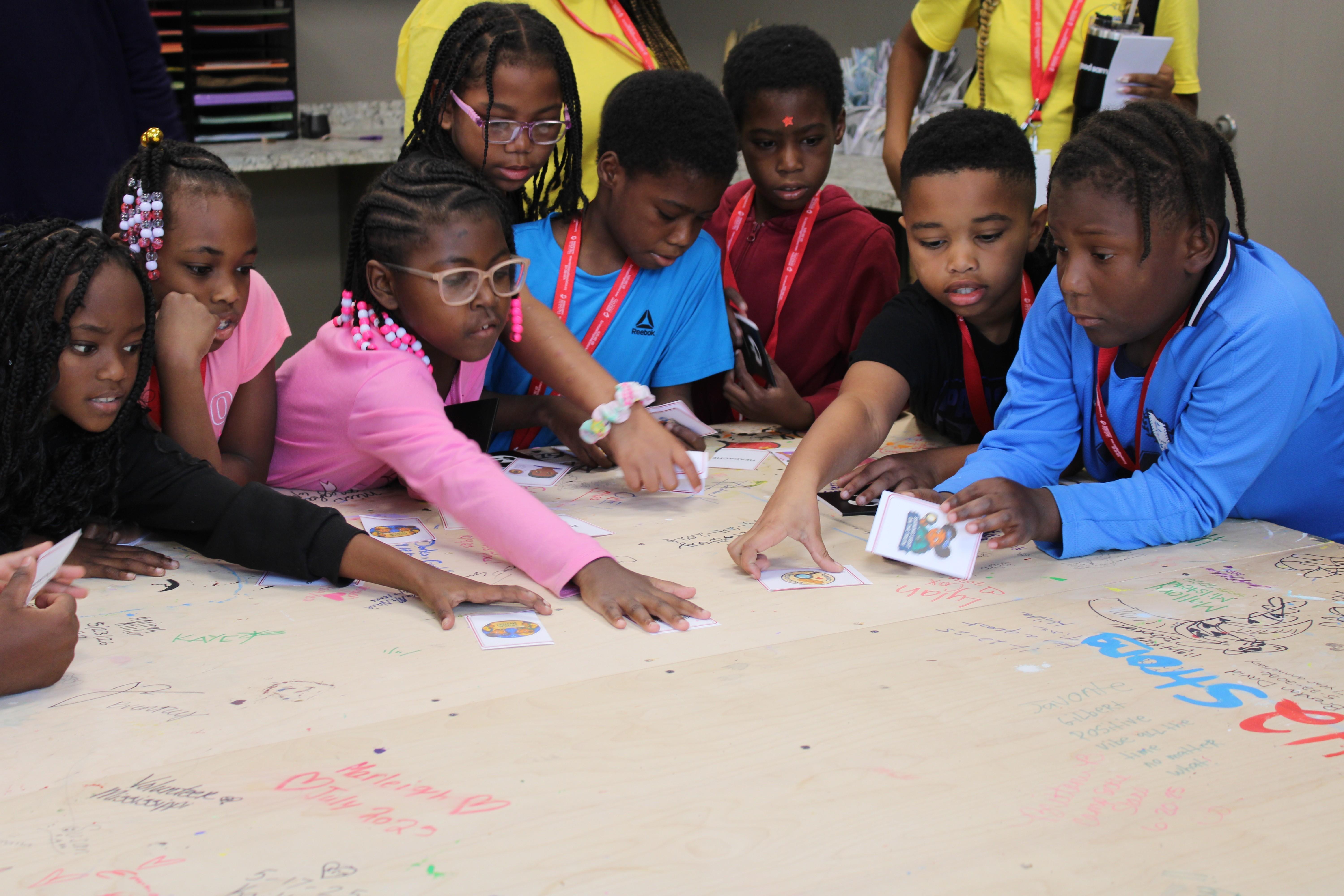
Camp Sickle Stars campers are seen playing an activity.
(Tiara Jackson/MPB News)

The sound of children laughing echoed across Camp Kamassa as campers hurried between the basketball court and waterfront. While summer camp often brings lifelong memories, Camp Sickle Stars hosted by the Mississippi Sickle Cell Foundation offers something many of its campers rarely experience: a week surrounded by children who understand exactly what it's like to live with sickle cell disease.

As Mississippi observes World Sickle Cell Day, families, physicians and advocates are raising awareness about the inherited blood disorder while reminding those living with it that they are not alone. For nearly three decades, the Mississippi Sickle Cell Foundation has brought children from across the state together through Camp Sickle Stars, a summer camp designed specifically for children ages 6 to 14 living with sickle cell disease.

Tiara Jackson

World Sickle Cell Day highlights community, care and hope for Mississippi families

00:0000:00

Courtney Davis, director of Camp Sickle Stars, said the camp allows children to experience the same activities as any other summer camp while providing an added layer of medical care and understanding.

"So Camp Sickle Stars is a four day, three night summer camp for children ages six to 14 in the state of Mississippi that have sickle cell disease,” said Davis. “We bring them out to a campsite... for what people would consider a normal camping experience."

Throughout the week, campers fish, swim, canoe, participate in arts and crafts, play sports and explore the outdoors, while doctors, nurses and counselors remain on site to address any pain or complications associated with sickle cell disease.

For Davis, the camp offers something many children do not often find elsewhere.

"I think for them it's like refreshing and relieving to not feeling that stigma or not feeling the embarrassment of ‘I have to rest, I have to sit down, I drink water,’ because the people at this campsite already know that."

Rather than limiting campers because of their diagnosis, Davis said every activity is designed to encourage children to discover what they can accomplish safely.

"We tailor them because of sickle cell, but we don't limit it because of the sickle cell,” said Davis. “You just have to worry about having fun."

Davis understands the camp's impact personally. Diagnosed with sickle cell disease at birth, he first attended Camp Sickle Stars in middle school before eventually returning as a counselor and now camp director.

"To come together and feel like 'I'm around my people.' They understand. That is what kept me coming year after year."

That same sense of belonging keeps campers like 13-year-old Brynin Johnson returning each summer.

Growing up in Gulfport, Johnson said she rarely met other children living with sickle cell disease until attending Camp Sickle Stars.

"When I found there was a camp for a lot of kids who have sickle cells, it was really important for me to come here,” Johnson said. 

11-year-old Roderick Stutts said camp has helped him build friendships with children who understand the daily challenges of the disease.

"I usually don't hang around them because I never find anyone with sickle cell until I came here," Stutts said. 

Filer image
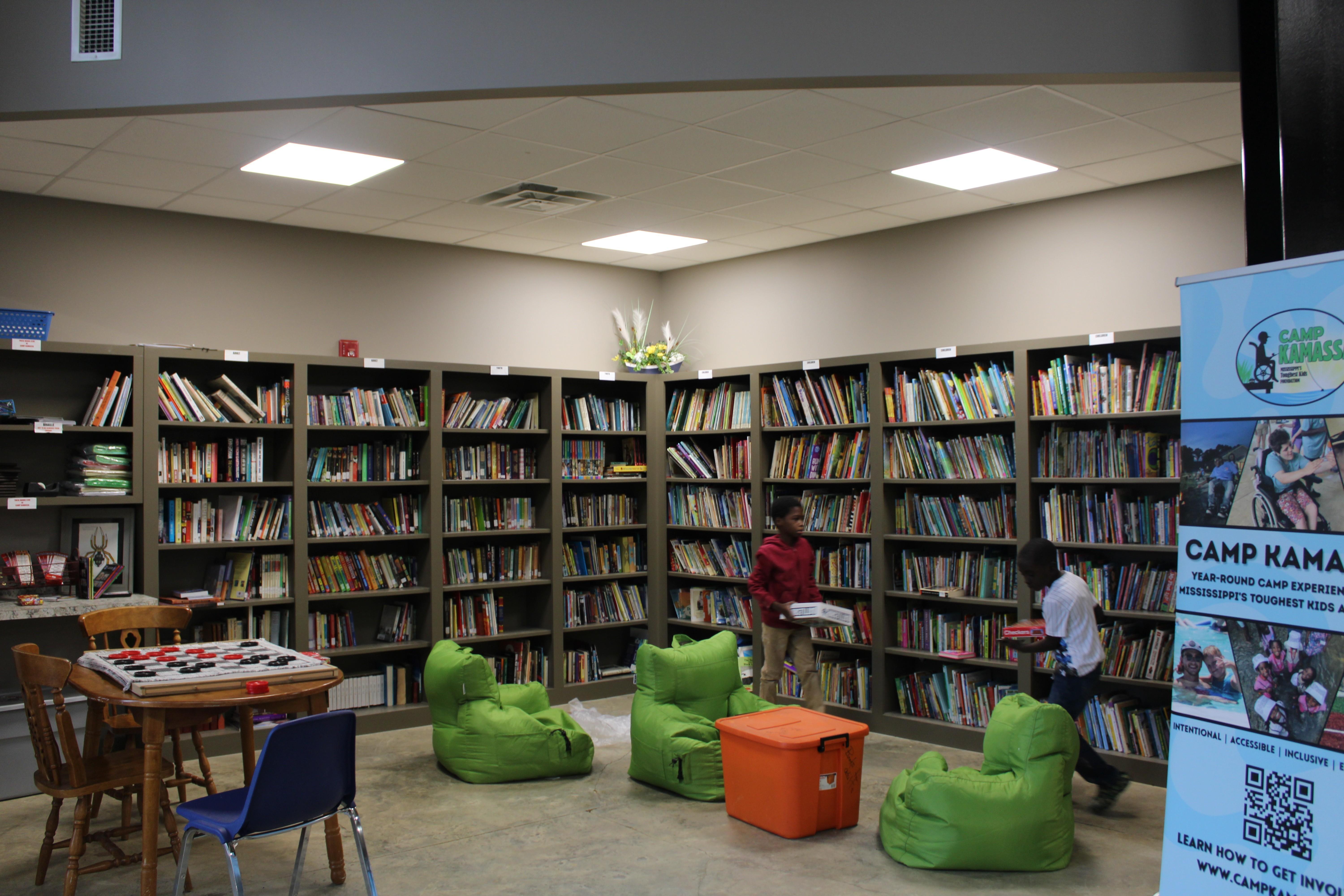
Campers are seen in the library section with board games in their hands. 
(Tiara Jackson/MPB News)

While the camp feels like a typical summer adventure, a team of physicians and nurses quietly work behind the scenes to keep campers healthy.

Dr. Catherine Gordon, a pediatric hematologist-oncologist at the University of Mississippi Medical Center, volunteers at camp each year alongside nurses who care for many of the campers throughout the year.

"We love coming out because we get to see them having fun. At the hospital they're frequently hurting,” said Gordon. “So this is amazing to get to come out and spend time with them just being kids."

According to the Centers for Disease Control and Prevention, sickle cell disease affects an estimated 100,000 Americans. The Mississippi Department of Health reported about 1 in 500 Black or African American babies is born with the disease. Mississippi is home to an estimated 3,000 to 4,000 people living with sickle cell disease.

At camp, Gordon said hydration, rest and close monitoring are just as important as medication because dehydration, illness and temperature changes can trigger painful sickle cell crises.

She said increased education could also improve medical care across the state.

"We tell our patients, 'You frequently will know more about your disease than the doctor that you come into contact with.'"

Because few physicians specialize in pediatric hematology, Gordon said many families become their own strongest advocates when seeking treatment.

She said research continues to improve treatment options through medications and gene therapy, but additional funding remains critical.

Beyond supporting research, Gordon said donating blood is one of the most meaningful ways people can help those living with sickle cell disease. Many patients require frequent blood transfusions throughout their lives.

That message is echoed by the Mississippi Sickle Cell Foundation.

Founded in 1996, the organization has spent nearly 30 years providing educational programs, scholarships, awareness events and Camp Sickle Stars while serving families across Mississippi.

Janine Tate, chairwoman of the Mississippi Sickle Cell Foundation, said Camp Sickle Stars remains one of the foundation's most meaningful programs because it helps children realize they are not alone.

"Growing up as a sickle cell patient, you can feel isolated and alone. And when you come to camp, it gives you more people and more friends that you can have for long lasting terms."

In recognition of World Sickle Cell Day, the foundation partnered with Mississippi Blood Services to host a blood drive in Flowood, encouraging residents to donate blood for patients who rely on regular transfusions.

"If you can't do monetary, we always tell people to donate blood,” said Tate. “And the last thing that you can do is always pray for someone with sickle cell disease."

Filer image
Jaden Nixon (right) with his family. 
(Courtesy of the Nixon Family)

For Dr. Larry Nixon, that advocacy is deeply personal.

The anesthesiologist has spent more than two decades advocating for greater awareness and research after learning his son, Jaden, was born with sickle cell disease.

"When I found out, I was kind of shocked because all my life I didn't think I had the trait."

That diagnosis led Nixon and his family to establish an advocacy organization focused on education and the search for a cure.

"We were focused on bringing awareness about we want a cure,” said Nixon. “It's reasonable to think that we should have one."

Although treatments have improved, Nixon believes public awareness still lags behind.

"Every opportunity that you have to get behind and to support it... there lies the voice."

He also hopes more people recognize that patients deserve compassion and respect.

"It's affecting another human being. Because people make it about African American disease in their mind, they don't think it's worthy,” said Nixon. “Remind them that this is a patient first, not a Black patient, but a patient that's worth their respect and shouldn't be riddled with the assumptions you may have about them.” 

His son, Jaden Nixon, now 24, has carried that message into adulthood.

Living with sickle cell has meant learning how to manage pain, medications and hospital visits while becoming his own advocate.

"It obviously hasn't been easy. I deal with a lot of pain and a lot of crises," said Nixon. “In some cases I have to go to the hospital. Going to the hospital has caused me to miss school sometimes and just miss out on various life things.”

He credits healthy habits with reducing many of those painful episodes.

“I started going to gym when I got to college and I think when I got to college, surprisingly, that's probably been like the healthiest I've been,” said Nixon. “I think it's because I started being more conscious about taking care of my body and I started working out. I started becoming a little bit more physically fit. I've had less pain crises."

Working in health care has also revealed how much education is still needed.

“I had to be a little bit more of a more advocate when I was at Xavier just because I don't think I might have met maybe one other person on campus that had sickle-cell disease,” Nixon said. “I've worked and did rotations at hospitals and I've met doctors that knew about sickle cell but they didn't know exactly how the pain affected the patient.”

For Nixon, World Sickle Cell Day is about ensuring no family feels invisible.

“Use the data to teach people about what the disease is. We have social media, the number one issue with the disease is just people not knowing about it,” said Nixon. “When I complete nursing school, I will be in that hospital environment where I probably will run into sickle cell patients. So I just think just me even doing that can even help spread more awareness about the disease and me being a sickle-cell patient myself, I can have that direct contact with other sickle cell patients and help them navigate their life through the disease.”