In the U.S., there’s a serious problem with fertility care access. The issue is tied to two factors — cost and location — that feed off of each other.
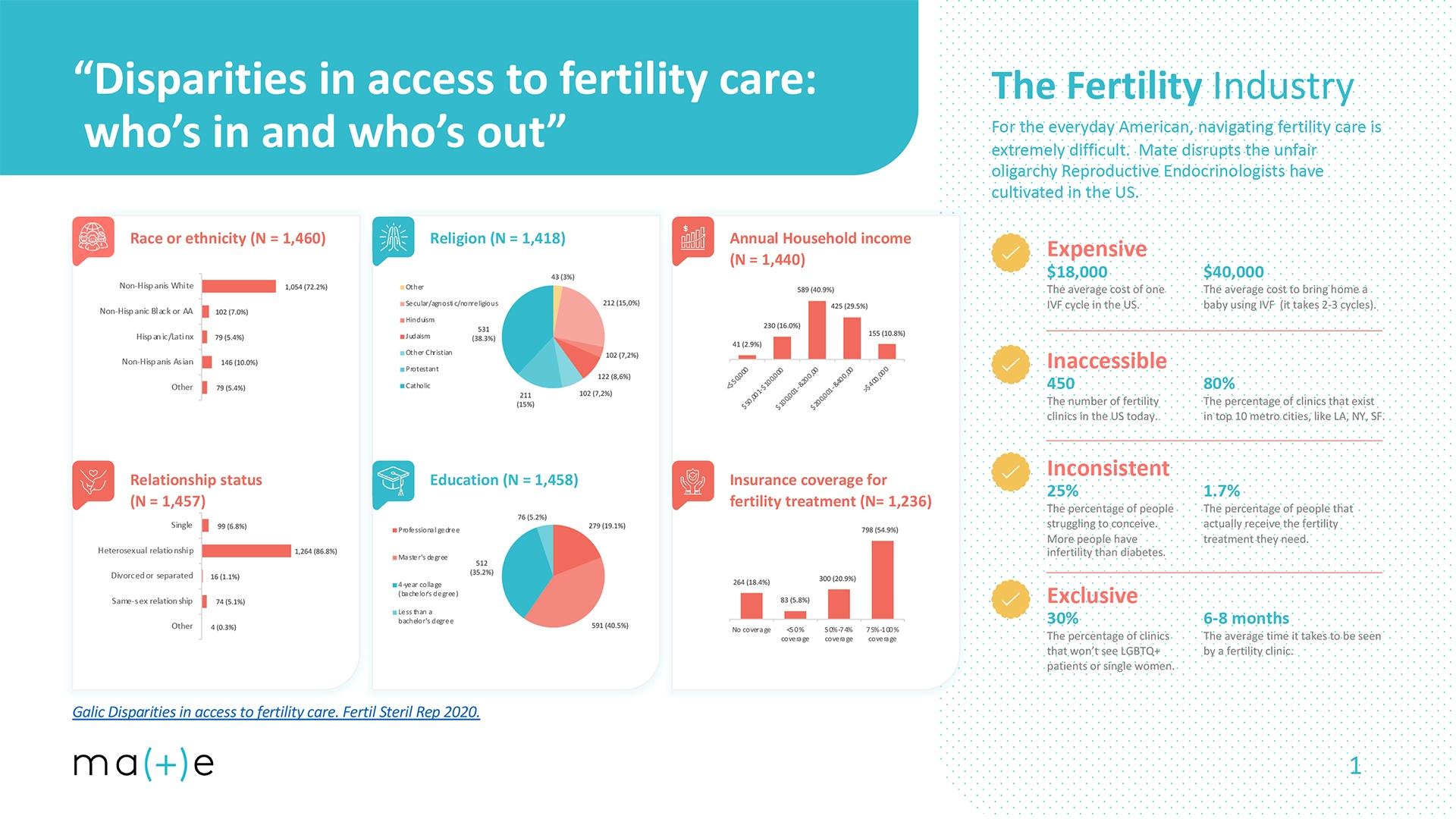
More often than not, fertility treatment is not covered by public or private insurers, leaving patients paying upwards of $10,000, depending on the service — leaving fertility care out of reach for many.
The high cost of care has in turn driven most clinic locations to be concentrated in “high net-worth” areas where people are more likely to afford the expensive, specialized care. As a result, 80% of fertility care clinics in the country are located in New York City — 30% in just Manhattan alone.
Traci Keen, the founder of Mate Fertility, a company that helps OB-GYNs build out IVF labs and teaches them to offer other services, said this has led to vast “fertility deserts” in the U.S. where people just don’t have geographic access to treatment.
“You don’t have to go more than a little ways to find what we consider to be a fertility desert,” Keen said. “When we look at the rural South and the Gulf States, that only increases. When you look at the different levels of access to care on any front, it’s going to be even more exaggerated when it comes to fertility because of the costs.”
At 42 years old, Keen is the same age as the relatively-new fertility industry — she actually went to college with Elizabeth Carr, the first IVF baby born in the U.S. But since its inception, not much has changed.
“That’s just how the industry was built,” Keen said. “And as the need has increased — because we know that infertility rates are going up, we know that LGBTQ families want to do family building, we know that certain demographics of the population experience infertility at higher rates — those have not been adapted to or accommodated to.”