Your Page Title

As nighttime temps rise in New Orleans, so do calls to Louisiana’s 988 hotline

Email share
Comments
Caption
Credit

Healthcare workers are a superstitious lot. Mention that it's "quiet" in an emergency room, and someone will warn that you've just cursed the shift. Full moons are said to bring out the strangest cases.

Drew Hawkins | Gulf States Newsroom

As nighttime temps rise in New Orleans, so do calls to Louisiana’s 988 hotline

00:0000:00

At Louisiana's 988 Suicide and Crisis Lifeline, counselor Sherrard Crespo had her own belief: when hot summer nights settle over the state, the phones start ringing. 

"You definitely remember things about when the weather gets awful, that the calls increase," Crespo said. "It's not just kind of my inner thoughts. You are reacting to something external."

Filer image
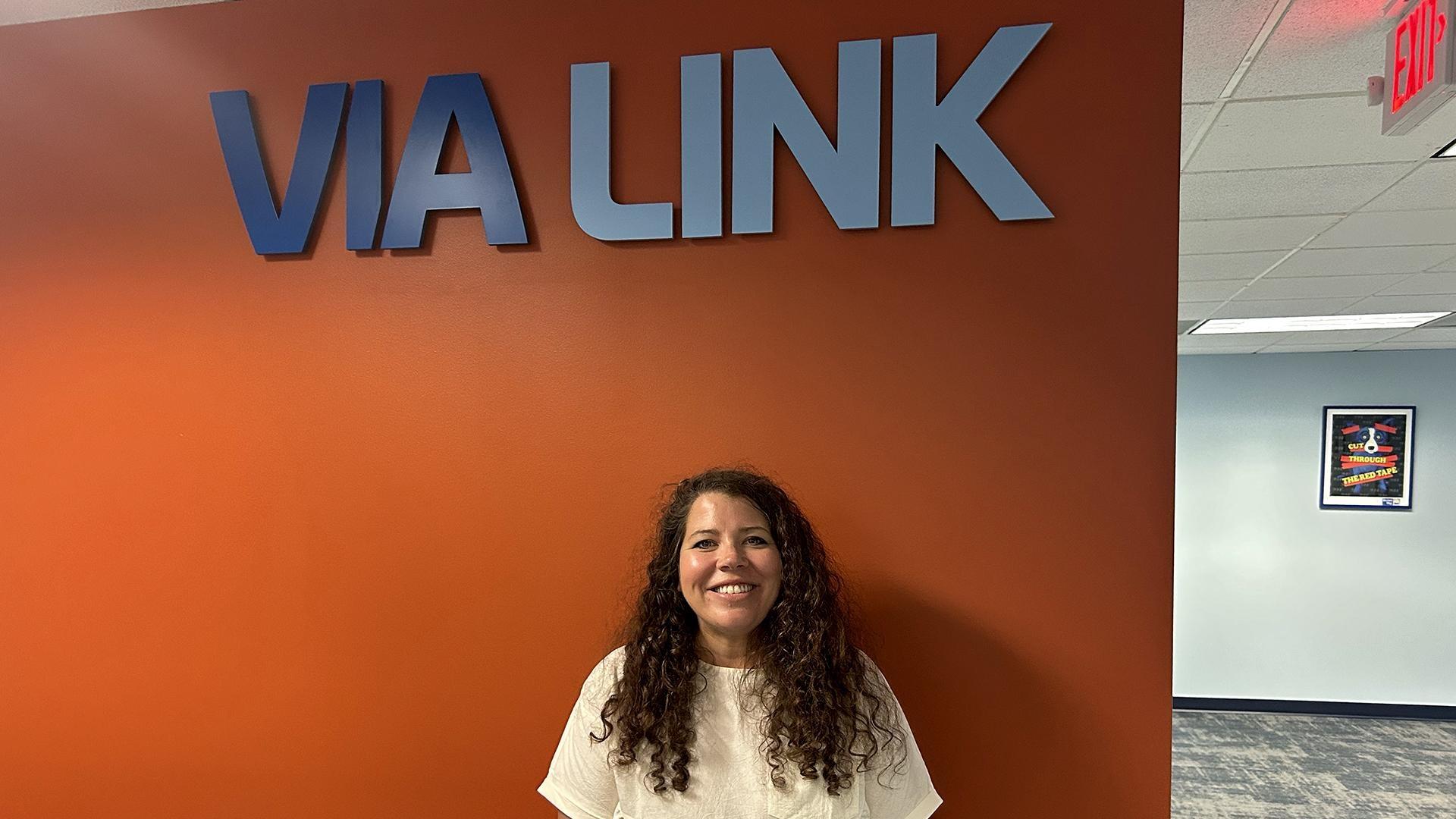
Sherrard Crespo stands in the VIA LINK office in Metairie, Louisiana, on Friday, June 5, 2026. Before becoming the company’s vice president of external affairs, Crespo worked as a counselor, taking crisis calls from across the state. 
Drew Hawkins/Gulf States Newsroom

Unlike many hospital superstitions, this one is backed by evidence. 

Medical journal PLOS Mental Health published a new study in February that analyzed nearly 12,000 calls to the Louisiana hotline and found suicide-related calls rose sharply following unusually hot nights. 

Researchers measured heat relative to each area's own climate rather than one statewide cutoff — a night that counts as extreme in Shreveport isn't the same temperature as an extreme night in New Orleans. For example, the 90th percentile for nighttime heat in New Orleans is between 64 and 66 degrees F, while Shreveport is around 60 degrees. 

The hottest nights in the five-year dataset were clustered from June through September, and the study found that calls increased 19% after nights in the 90th percentile for heat, 55% after nights in the 95th percentile and 166% after the most extreme nighttime heat. 

The findings add to growing evidence that climate change isn't only increasing physical health risks but also intensifying mental health crises, as Louisiana experiences warmer nights, higher utility bills and growing barriers to keeping homes cool. 

The research, led by Sophia Ryan of UNC Chapel Hill and Appalachian State University, was conducted in partnership with VIA LINK, the Metairie-based nonprofit that operates Louisiana’s 988 crisis line, which provided anonymized call data. 

"We're capturing people in the middle of it," Ryan said. "Not after the crisis. During it." 

For mental health, nighttime temperatures have the most impact. A hot night closes the window the body needs to recover after a hot day. 

Since 1970, the average summer minimum temperature — a proxy for overnight heat — has gone up nearly 6 degrees in New Orleans, and annual average temperatures in Louisiana are nearly 3 degrees warmer. 

Extreme heat stresses nearly every system in the body, said Mostafijur Rahman, an environmental health scientist at Tulane University who studies heat in climate-vulnerable communities. It raises heart rate and blood pressure, disrupts sleep and triggers oxidative stress. 

Over time, that cascade of impacts has been linked to cardiovascular disease, respiratory illness and neurological disorders. 

“Exposure to high heat can also affect our mental health because it disrupts our sleep, it disrupts our psychological response and outdoor activities,” Rahman said. “So that can affect our mental health as well.” 

Researchers say those effects can compound existing mental health struggles, especially when people are unable to escape the heat, afford air conditioning or get adequate rest at night. 

Crespo, who is now VIA LINK's vice president of external affairs after years of taking crisis calls herself, said the findings validated what counselors were hearing. Callers described a kind of mounting desperation, Crespo said, worrying about how they'll sleep, whether they can keep the air conditioning running, where they'll go if they can't.

"When you have no hope in finding relief," Crespo said, "and you're already someone cycling through suicidal ideation — that can only make it worse."

Disconnections and energy burdens

Researchers say one of the clearest takeaways wasn't simply that heat affects mental health. It was that many callers were in crisis because extreme heat collided with basic needs like housing, electricity and air conditioning. 

The study found that crises tied to unmet basic needs rose nearly 60% on the hottest nights, the sharpest jump of any theme researchers tracked. That finding lands at a moment when Louisiana households are being squeezed on multiple fronts: hotter nights, higher electric bills and a less reliable grid. 

Residential electricity prices rose 7% in 2025 alone, and more than 1 in 5 American households now spend over 6% of their income on energy, according to a January report from the consumer advocacy group PowerLines. 

Entergy Louisiana customers are also paying an average of about $20 extra a month in storm-recovery charges tied to hurricanes dating back to 2012, a bill that runs through 2026. 

Louisiana has a rule meant to prevent utilities from cutting power during dangerous heat. Under a 2007 Public Service Commission (PSC) order, electric and gas utilities can't disconnect residential customers when the National Weather Service issues a heat advisory — generally a heat index of 105 to 115 degrees, or nighttime lows above 80 degrees for two straight days. 

KD Minor, community solutions manager for the Alliance for Affordable Energy, the state's consumer advocate for utilities, said that threshold hasn't kept pace with the climate it was written for. 

The PSC order only applies on the specific day a heat advisory is issued, meaning it only lasts for the day an advisory is triggered and not for the duration of it — not the broader, seasonal moratorium on utility disconnections that Minor argues the state needs. 

"That's too loose a guideline. It needs to better consider the conditions we're in currently,” Minor said. “If we consider these services to be necessary to life, we should not be disconnecting folks when it's too hot,” Minor said. 

Reliability is a separate problem layered on top of cost, Minor said, pointing to Entergy New Orleans data showing more than 300,000 distribution-related customer interruptions in 2025, nearly half of which were the result of equipment failures. 

There’s also “energy burden” — the ratio of income spent on energy costs. A household that spends more than 6% of its income on energy is considered “highly burdened.” 

New Orleans has one of the highest energy burdens for low-income households of any city in the country, according to a report from the American Council for an Energy-Efficient Economy. 

Half of New Orleans’ low-income households spend more than 9.8% of their income on energy bills — nearly three times the national average. A quarter of them spend more than 18.9%. 

"Prices are going up, and reliability is actually going down. That's the most infuriating part,” Minor said. 

That burden is likely to grow, Minor said. Louisiana has approved gas plants to power new data centers even as advocates warn the costs of that buildout could land on residential ratepayers. 

"We're acquiring these assets to meet speculative need or an imagined need even, and looking to shift those costs to people who quite literally cannot afford them,” Minor said. “We need to have an honest conversation about what it means to acquire all these new customers or these new loads on our grid that, again, is unstable." 

VIA LINK operates both 988 and Louisiana's 211 information line, so counselors can point callers toward cooling stations, water distribution or utility assistance — when those resources exist. 

That gap is part of why Crespo sees the study as an advocacy tool, not just an operational one. 

“Showing studies like this, which can then be used to show, to advocate for policy and funding changes of, ‘We need cooling stations, we need extra utility assistance when it's the summertime,’” Crespo said. “This is a public health issue at this point.”

‘This isn’t just our opinion’

The study also found that children were calling at higher rates than adults during extreme heat events. 

School being out of session compounds the effect — removing counselors, teachers and daily peer contact from young people who may have been supported by those connections. 

Journal of the American Medical Association research found the greatest reductions in youth suicide in states with the highest 988 engagement — suggesting that young people reaching out during moments of crisis, including heat-driven ones, might be the intervention that matters most. 

"They're affected by how the adults are reacting around them," Crespo said. "And it's hotter than it even was when you and I were younger." 

Ryan, the study’s lead author, said the clearest policy application is treating heat waves the way Louisiana already treats hurricane season: with staffing surges built ahead of time. 

VIA LINK already monitors call trends closely and scales up staffing for hurricane season. Integrating temperature forecasts into those same protocols, Ryan argued, is a natural extension. 

“When it's hot out, we need to have the staff available to support the increase in calls," Ryan said. 

Lawmakers could also consider policies to keep air conditioning running during extreme heat, Ryan said, including prohibiting utility companies from turning off the power ahead of periods with higher temperatures — a relatively low-cost intervention compared to the public health costs of doing nothing. 

For years, Crespo and her colleagues noticed the same pattern whenever oppressive summer heat settled over Louisiana: more people reaching out in crisis. The value of seeing what she and her colleagues have long observed, confirmed in a peer-reviewed journal, comes down to credibility — the kind that moves budgets and shapes policy. 

"It was amazing to say: look, this is very real," she said. "This isn't just our opinion." 

If you or someone you know is struggling, call or text 988 to reach the Suicide and Crisis Lifeline.

This story was produced by the Gulf States Newsroom, a collaboration between Mississippi Public BroadcastingWBHM in Alabama, WWNO and WRKF in Louisiana and NPR.