Your Page Title

At a Mississippi anti-redistricting rally, voters say the ‘headwinds suggest that a storm is here’

Email share
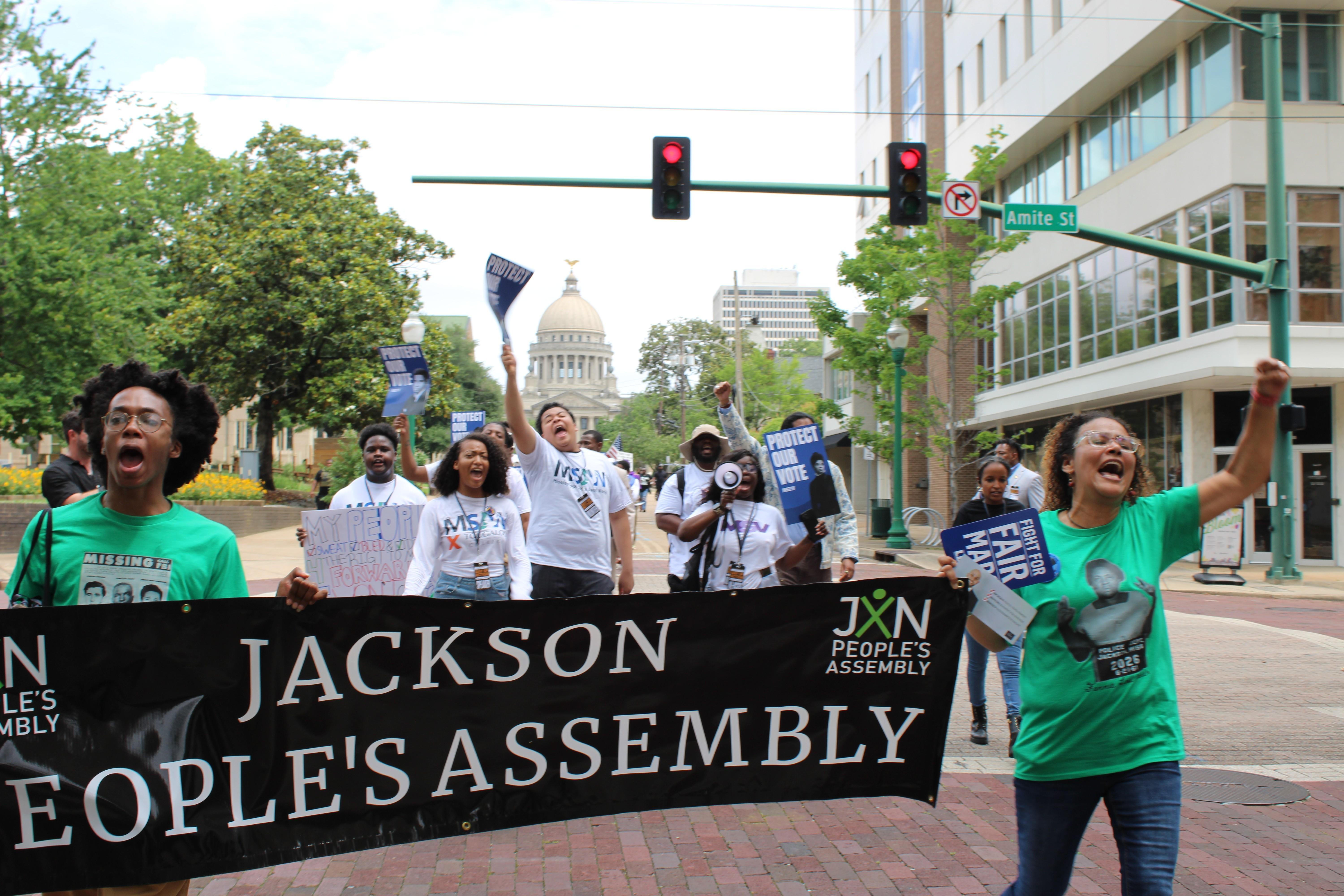
Marchers rally in downtown Jackson, May 20, 2026.
(Shamira Muhammad, MPB News)

Bus after bus and van after van rolled up to the War Memorial in Jackson last Wednesday. Mostly older, Black Mississippians spilled out. The weather forecast had threatened rain. A deep heat foreshadowed the storm to come.

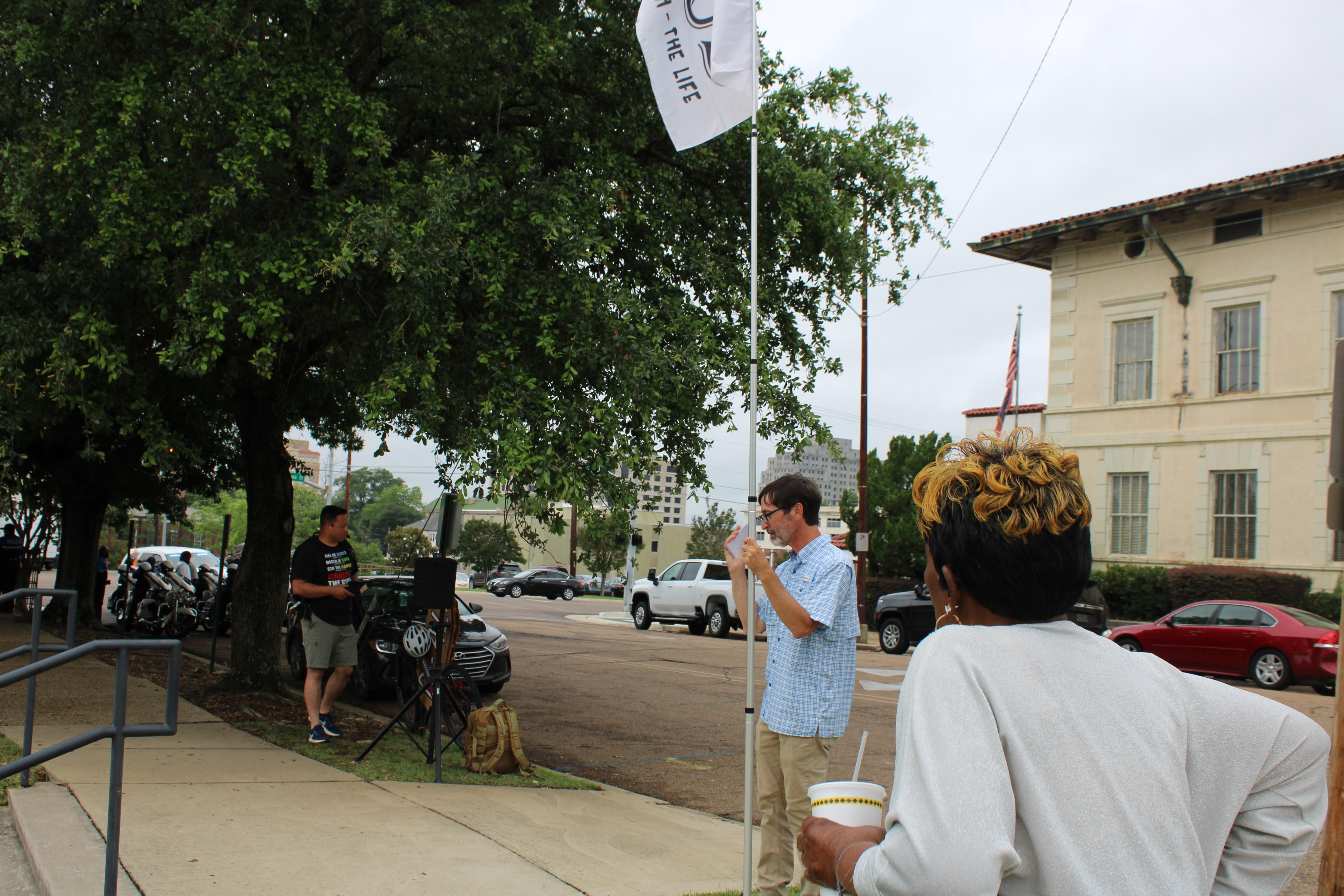
Wearing shirts speaking out against “Jim Crow” and apparel encouraging voter participation, the attendees walked past a waiting pair of counterprotesters. Two men on a loudspeaker spoke out against abortion and organizing around “Black" identity. One woman nodded and whispered “Amen” when the men spoke about religion. Other attendees listened with mild curiosity as they walked toward the entrance of the War Memorial building.

Shamira Muhammad

At a Mississippi anti-redistricting rally, voters say the ‘headwinds suggest that a storm is here’ 

00:0000:00
Filer image
An attendee listens as two counterprotesters speak outside the War Memorial in Jackson May 20.
(Shamira Muhammad, MPB News)

Inside the auditorium, Mississippians and residents of nearby states rallied, preparing to organize against any potential redistricting efforts. Local politicians, organizers and activists laid out the reasons for the crowd’s upcoming march through Jackson’s streets, while spoken word artists and musicians tried to crescendo the crowd’s cacophony into a pre-rally fete. 

Outside the building, EMS workers, members of the fire department, and local and Capitol police officers stood watch. Security detail from the New Black Panther Party stood nearby as the march through downtown Jackson was just about to begin.

Filer image
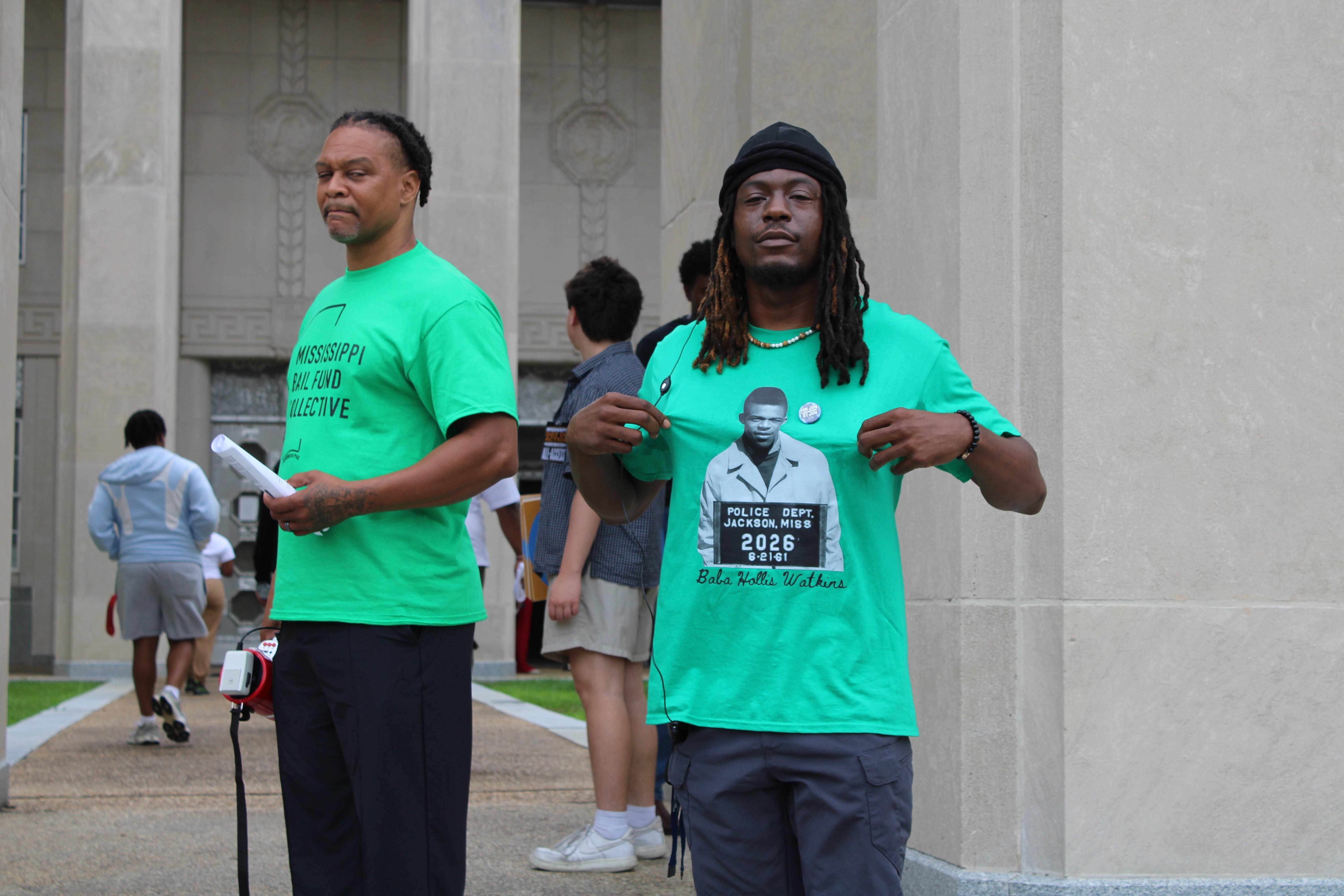
An attendee wearing a t-shirt featuring Civil Rights activist Hollis Watkins. 
(Shamira Muhammad, MPB News)

Just next door, a special session would have just been beginning at the Old Capitol. The U.S. Supreme Court decision last month in Louisiana v. Callais severely weakened section two of the Voting Rights Act of 1965. A Louisiana district was deemed unconstitutional after it was found that it disenfranchised White voters. Ongoing redistricting cases throughout the country that had been stalled due to the outcome of this decision were now in need of reconsideration. 

In the weeks leading up to the session, a patchwork of nonprofit organizations around the state had announced their aim to hold a protest rally. They claimed that the special session was meant to block the rights of the nearly 40% of Mississippians who are Black.

However, the Fifth Circuit Court of Appeals vacated a judicial redistricting case to a lower court. This decision meant that the state’s judicial map could continue to be used. Mississippi’s governor cancelled the session. But a protest rally went ahead on schedule.

Filer image
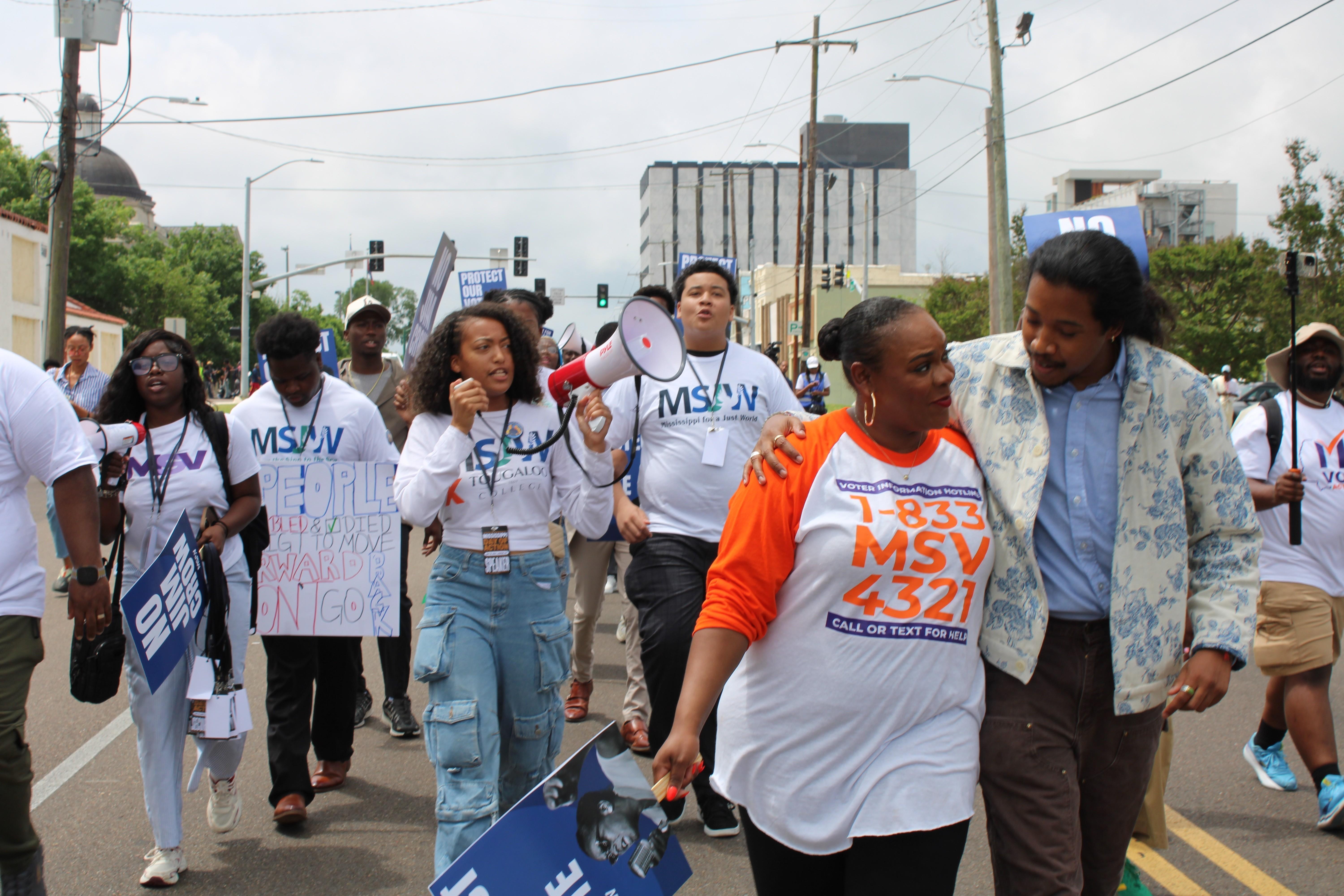
Tennessee state representative Justin Jones hugs MS Votes director, Arekia S. Bennett-Scott. 
(Shamira Muhammad, MPB News)

Organizers and voters said they wanted to take advantage of the momentum that redistricting efforts have drawn around the country. Tennessee recently redrew their congressional map, eliminating a majority-minority Democrat-led congressional district. Louisiana has already moved to eliminate a majority-Black House district.

State officials in Mississippi, including Governor Tate Reeves, State Auditor Shad White and Agricultural Commissioner Andy Gipson have expressed public support for having the state’s second district redrawn. Gipson has endorsed the Republican candidate for the November elections. 

Mississippi’s second district is currently represented by incumbent Congressman Bennie Thompson, the only Democratic and Black member of the state’s congressional delegation. Thompson, who’s been in office since 1933, has rejected calls to redraw his district, previous telling MPB previously his willingness to join forces with organizations and citizens to decry what he views as intentional racial gerrymandering.

Thousands of people stood in the line outside of the War Memorial Auditorium last week to do just that. Spurred by masses of rallies dotting the south, including in Alabama and Tennessee, a multigenerational cohort set out to mobilize against what many believe will be an eventual redistricting effort in Mississippi. 

The state’s Supreme Court has only had four Black justices in its history. A state legislative map that was redrawn to abide by section two of the Voting Rights Act produced more than one dozen Black and Democratic held seats during a special election. Attendees feared any redistricting efforts would diminish future Black representation and voting power. 

Blocks of public figures, Mississippians and, even, residents of Alabama, Louisiana and Tennessee marched from the Old Capitol to the city’s convention center. Tennessee State Representative Justin Jones led the convoy, speaking on loudspeakers alongside Mississippi Votes representatives, former Jackson Mayor Chokwe Lumumba and dozens of everyday citizens. Two female members of a New Black Party security detail led the convoy.

The heat remained unforgiving, but the storm stayed at bay during the mile-long walk. Protesters chanted and sang. Organizers ran back and forth along the line, checking on older marchers along the way. Packs of water bottles were split open and passed out up and down the line to rally goers dripping with sweat. 

Jones, the Tennessee representative, said now was the time for Southern solidarity. 

“We have governors like Tate Reeves and Governor Bill Lee in my state who are trying to turn back the clock of history and trying to bring us back to Jim Crow,” he said. “Now, it's time for us to rise up as a generation to take on these new George Wallace's and Bull Connors and let them know that we will not go back. It's time to lift up our voices collectively in Southern solidarity and to say that if they come for one of us, they're coming for all of us. So, we will be unintimidated, unafraid, and it's our time now.”

New Republican-led maps in the region have not been without their challenges. Federal judges in Alabama have blocked a redrawn congressional map that that state’s legislature recently passed. 

Filer image
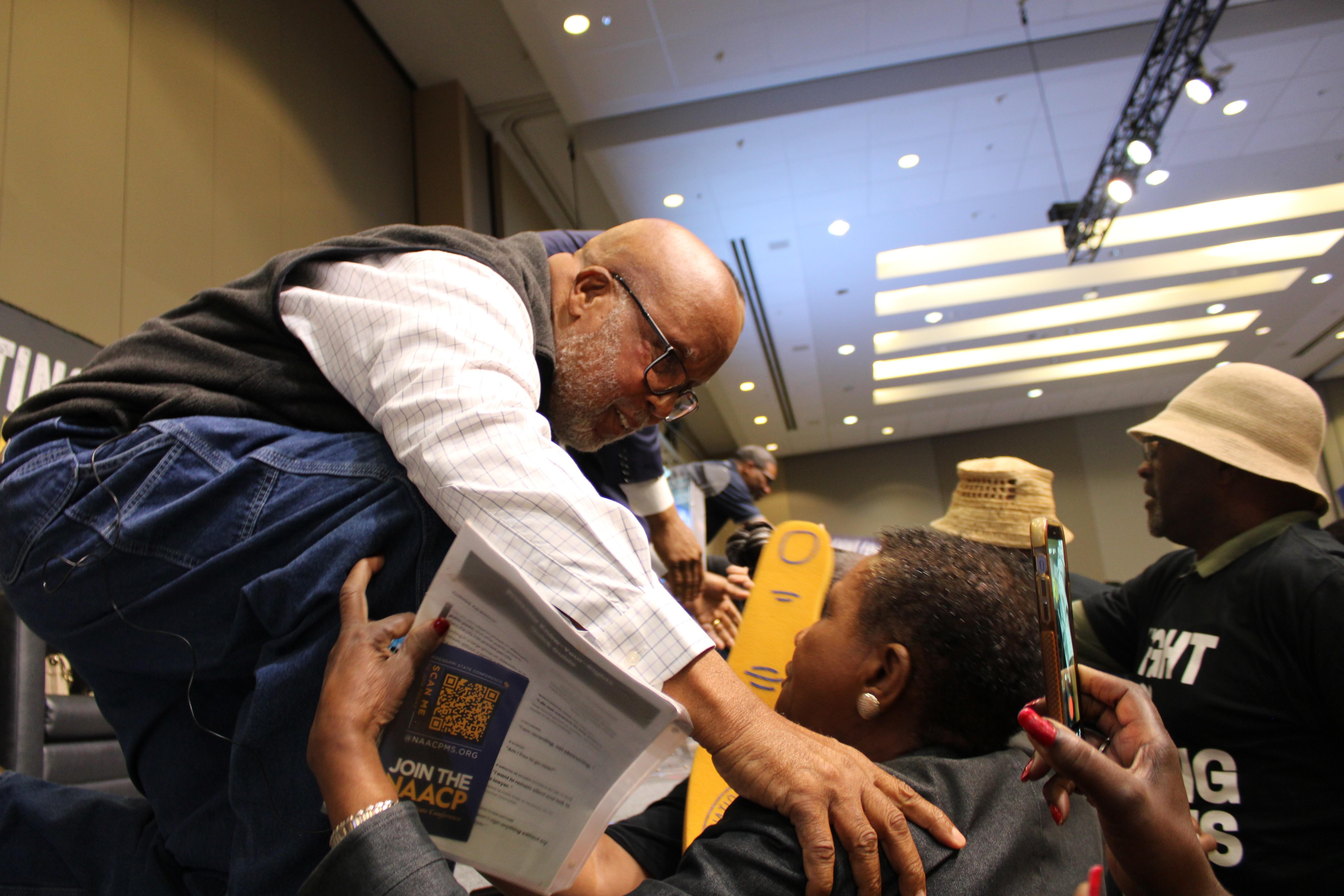
Congressman Bennie Thompson greets supporters May 20, 2026.
(Shamira Muhammad, MPB NewS)

“I think the special session [in Mississippi] didn't happen because they have to engage in a little bit more sophisticated thinking about how to do this. They don't want to redraw the maps in such a way that it diminishes Republican power,” said Eddie Glaude, an MS Now contributor, Princeton professor originally from Moss Point. “They want to do it in such a way that they achieve their aims and ends. We don't need to wait for it to happen in order to respond. We need to be prepared as these headwinds suggest that a storm is here.”

Glaude believes the examples of moves to redraw maps in neighboring states, as well as Georgia and Florida, gives Mississippi anti-redistricting voters a chance to strategically mobilize. Mississippi’s population is nearly 40% Black, a fact some believe means would ensure the existence of at least one majority-Black district.

“I think Mississippi has always been the canary in the mine. It has always kind of distilled the country's blind spots, the country’s hatreds, and the country’s possibility,” said Glaude. “It makes sense to me that the state prepares to engage in a Mississippi plan to disenfranchise and diminish black power, that it certainly becomes the kind of concentrated example of what's happening in the country. Because Mississippi is a metaphor for America. It's always been.”

After marchers arrived at the convention center, the array of voters in attendance listened to speakers, including Congressman Thompson, who called President Trump “a convicted felon” and spoke against Gov. Reeve’s comments calling his representation of the second district a “reign of terror.” Some attendees approached the state to shake Thompson’s hand, thanking him. 

Organizers and attendees alike are hoping to use the summer to boost voter turnout in November. 

Louis Smith, 69, drove from Vicksburg to rally, still stunned with the Supreme Court’s Callais decision.

“When I heard this, to be honest, I simply couldn't believe that they made a ruling and especially in America 2026,” he said. “I'm gonna be honest. I simply can't believe it. I simply felt that we were a better country.”

Krishawna Whatley-Jamison of Lexington’s mother was active in the Civil Rights Movement. Using stark language, Whatley-Jamison said she’s desperate to preserve the promise of her own granddaughter’s future. 

“I don't want my grandbaby in somebody's kitchen running from 'massa.' Because see, that's where we get,” she said. “The only cotton I want to pick is out of a bag to clean my face. I'm not trying to go to nobody's field. I don't want that for my sons. I don't want that for my daughters. People may think that, oh, you know. It's not gonna be that bad. Baby, it's bad right now.”

Whatley-Jamison believes current issues, including inflation, the cost of gas and, potentially, the loss of Black political representation, could exacerbate the condition of life for Mississippi’s Black population for years to come. 

“What you don't know about is doomed to repeat itself,” she said. “This is the repeat itself part of it. I don't want it to be repeated 20, 30 years down the road. It has got to stop here.”

Jackson State University student Malik Alexander found out about the rally from a mentor. He now wants to work toward bringing awareness to more young people like himself ahead of the midterms.

“Honestly, people who don't show up, sometimes they may feel like they, oh, I'm not needed in this space or I shouldn't be here, but no, we need everybody here,” he said. “I told all my people at JSU, pull up. We gotta pull up, y'all in the city of Jackson, you ain't doing nothing right now, why you not here?”

As the rally wound down, attendees and speakers reached for umbrellas as a storm began to come down in force.