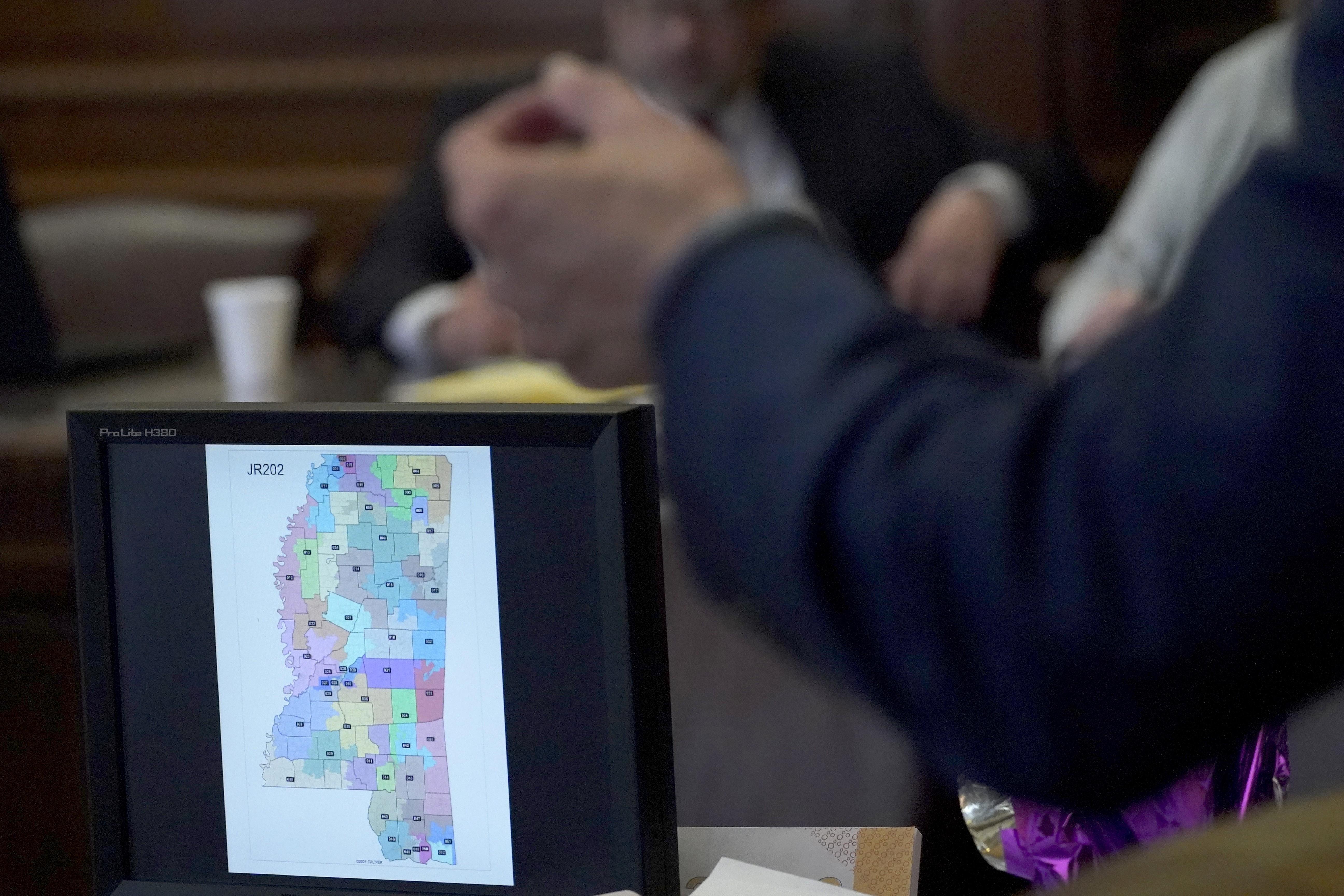
Amir Badat, lead attorney for the plaintiffs and founder of Badat Legal, said the ruling was disappointing but not unexpected given the U.S. Supreme Court's recent interpretation of the Voting Rights Act.
"We were disappointed, obviously," Badat said. "A lot of work went into this case, not only on the part of the legal team, but from the plaintiffs and the community in DeSoto County who advocated for years for more fair representation."
Badat said the district court relied heavily on Louisiana v. Callais, which he believes fundamentally changed how Section 2 claims are evaluated.
For decades, courts focused primarily on whether district maps produced discriminatory results. Badat said the U.S. Supreme Court's new framework requires plaintiffs to prove lawmakers intentionally discriminated when drawing district boundaries — a much higher burden that he argues is rarely possible to meet.
"People don't regularly come out and say they're trying to discriminate against Black people by drawing these lines," Badat said.
Despite the loss, Badat said community leaders will continue organizing ahead of the next census and future rounds of redistricting.
"The fight is not over," he said. "Even if it's not in the courts, we have to keep fighting."
Jade Craig, an assistant professor at the University of Mississippi School of Law, said the ruling signals how courts may approach similar cases moving forward.
Craig said the decision reflects the practical impact of the U.S. Supreme Court's ruling by making successful Voting Rights Act challenges significantly more difficult.
"It is almost impossible under the new standard," Craig said, explaining that plaintiffs would effectively need direct evidence showing lawmakers intentionally sought to weaken Black voting power.
He said the implications extend beyond DeSoto County because county boards, school districts and other local governments throughout Mississippi could now face fewer legal obstacles when drawing political boundaries.
"This case really shows people that this problem ... has an impact that is much greater than congressional districts," Craig said.
Craig also warned the ruling could serve as a model for other jurisdictions across the South.
"It essentially represents a template that other local governments can follow," she said.
In a statement following the ruling, the DeSoto County Board of Supervisors said the court's decision affirmed that the county followed the law throughout the redistricting process and considered public input before adopting the maps.
Board President Jessie Medlin, who has served on the board since 1992, said the redistricting process is often difficult but defended the county's approach.
"I have served on the Board since 1992 and have been through redistricting before. It is never an easy process, but our goal has always been to follow the law and adopt a plan that fairly represents the people of DeSoto County. We are grateful for the Court's ruling and will continue working to serve residents," Medlin said.
Although the case has ended at the district court level, voting rights advocates say the broader debate over representation is far from settled. With another census less than a decade away, organizers say they plan to continue encouraging civic participation, pushing for fair representation and preparing for the next round of redistricting, even as the legal path for future challenges becomes increasingly narrow.