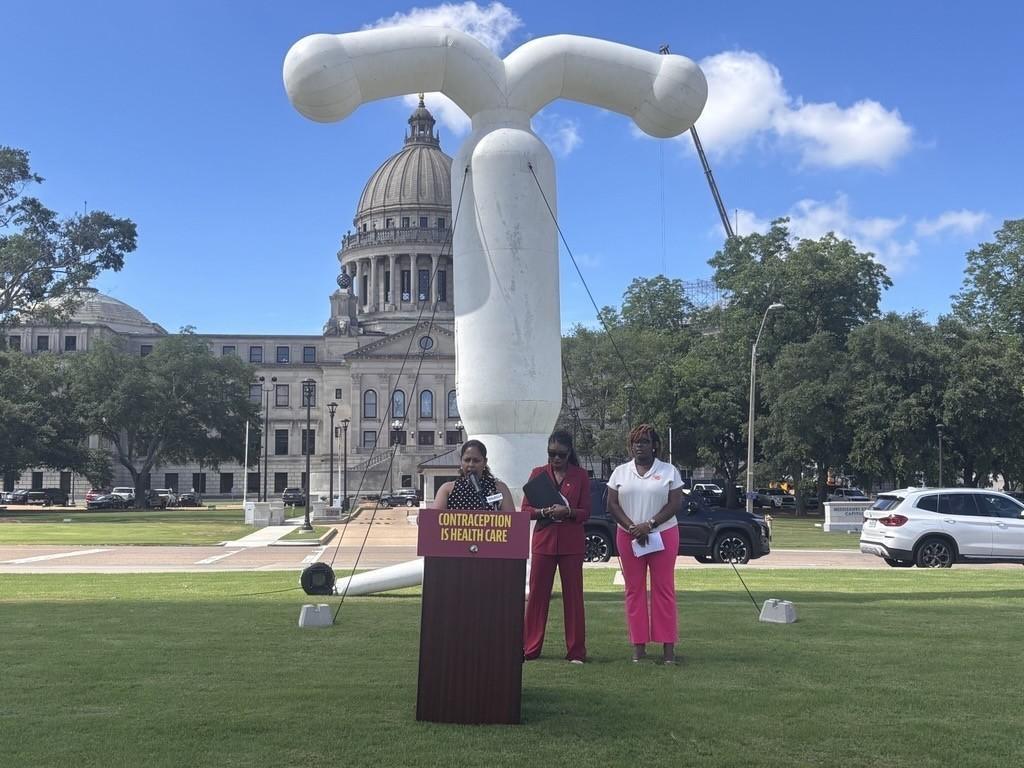
The event commemorated the 1965 Griswold v. Connecticut ruling, which established a constitutional right to privacy and struck down a state law banning contraceptives for married couples. Advocates said the anniversary comes at a time when many are concerned about the future of reproductive rights following the U.S. Supreme Court's 2022 decision overturning Roe v. Wade.
"That decision was more than about birth control," said state Sen. Kamesha Mumford, D-Jackson. "It was about privacy, dignity and the right for people to make informed decisions about their bodies."
Mumford warned that rights once viewed as settled should not be taken for granted.
"We are here to remind Mississippians that no rights are set in stone," she said. "We must remain vigilant. We cannot take our rights for granted, even the ones that we feel are a guarantee."
The event featured advocates, lawmakers and healthcare supporters who argued that contraception is a critical component of reproductive healthcare and family planning.
Jalyn McElroy, founder and executive director of The PUPA Project, said many Mississippians still face barriers to obtaining reproductive and menstrual healthcare resources.
"The right to contraceptive is not separate from the menstrual health fight," McElroy said. "All of this comes together and falls underneath the reproductive justice framework."
McElroy said her organization works to provide free menstrual products, emergency contraception and educational resources to residents across the state. She said increasing awareness is key to helping people make informed healthcare decisions.
"We believe that no one should have to struggle or show a certain need to receive help," McElroy said. "We just want to make sure that everyone has the resources, supplies and information that they need."
She also emphasized the importance of education for young people.
"If girls understand what's going on with their bodies and understand the phases of their menstrual cycle, that can help break cycles of misinformation," McElroy said.
Several speakers pointed to Mississippi's ongoing maternal and infant health challenges as evidence that healthcare access should remain a priority.
State Rep. Zakiya Summers, D-Jackson, said contraception plays a role in broader health care outcomes and personal decision-making.
"Contraception is much more than preventing pregnancy," Summers said. "For many women, access to contraception is access to better health and a better quality of life."
Summers noted that birth control is often used to treat medical conditions, regulate hormones and improve reproductive health outcomes.
"Mississippians know what is best for themselves and their families," she said. "Government should not be in the business of taking rights away."
She also connected the issue to civic engagement and public participation in government.
"I have less rights than my mother did," Summers said. "And my children will have less rights than I have if we don't do something about it and we don't fully participate in this political process."
Later, she urged residents to stay involved in legislative discussions surrounding healthcare and reproductive rights.
"This fight that we're up against is about protecting our freedom, our health, our families, our future and our democracy," Summers said.
Americans for Contraception co-founder Chris Fleming said the organization has supported legislation in multiple states to protect contraceptive access regardless of future court rulings.
"Settled law is no longer truly settled law," Fleming said. "What we do as Americans for Contraception is introduce legislation that codifies the right to contraception at the state level."
Fleming said the oversized IUD is designed to spark conversations about reproductive healthcare and encourage public engagement.
"It is a wonderful conversation starter," he said. "People see it, ask questions and start learning about why access to contraception matters."
State Sen. Joey Fillingane, R-Sumrall, said he does not believe Griswold v. Connecticut is in immediate danger of being overturned.
"I don't personally foresee Griswold v. Connecticut being overturned," Fillingane said. "It certainly doesn't appear to me that it's in any danger of being overturned."
Fillingane said he supports the use of contraception to prevent pregnancy while maintaining his opposition to abortion.
"I have no problem with contraception if women want to take those or men want to use those to prevent a pregnancy from happening in the first place," he said.
After its stop in Jackson, "Freeda Womb" continued its national tour with scheduled appearances in Birmingham, Alabama, and several cities in Arizona as organizers continue advocating for expanded protections for contraceptive access.