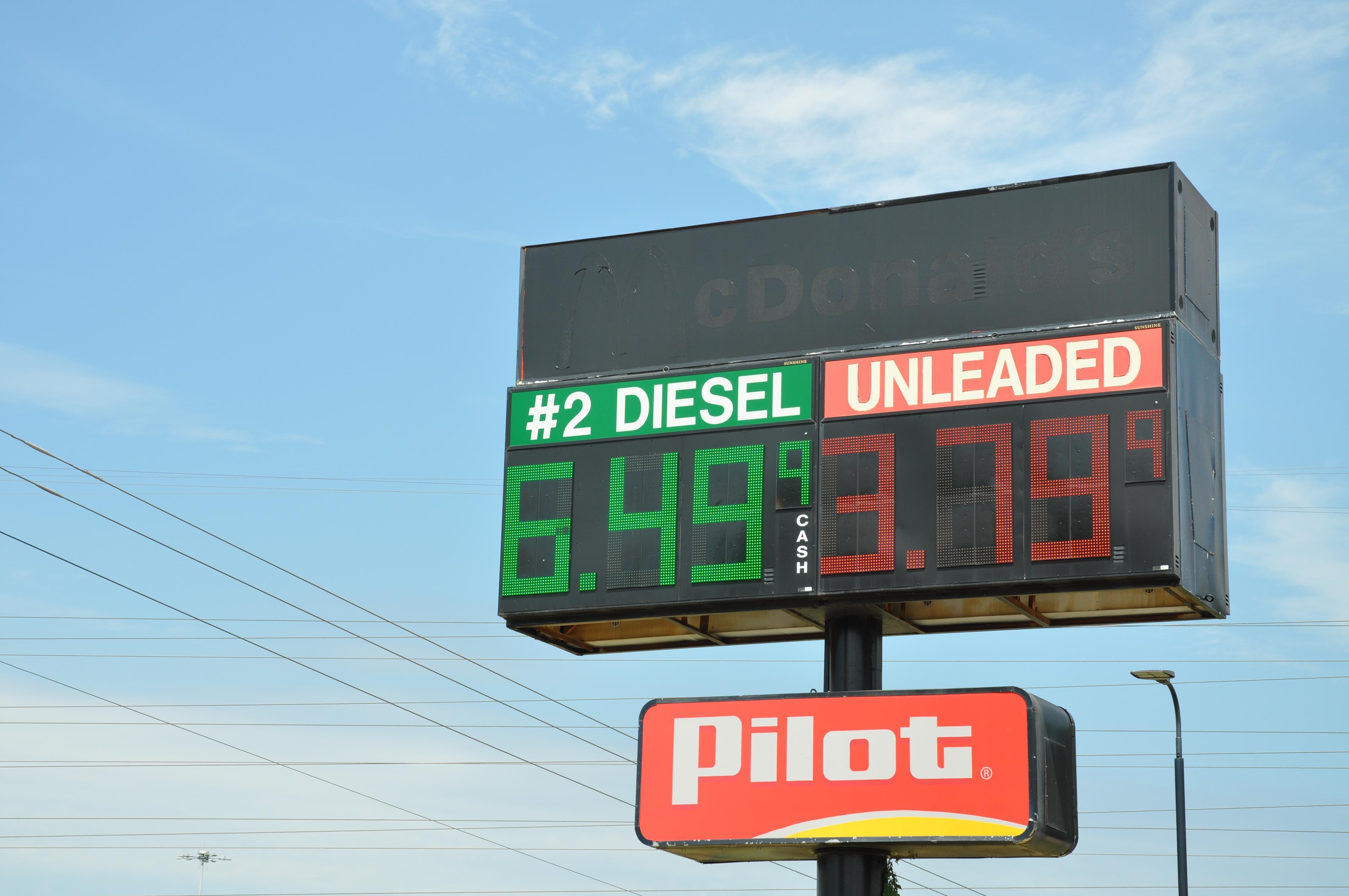
"Compared to the same time last year, we're up over two dollars more expensive in terms of diesel fuel," said Will Maples, a professor agricultural economics at Mississippi State University.
The high costs are hitting everyone, but farmers and loggers face additional challenges.
"It's a major impact on producers, especially our row crop producers," said Maples. "[It] takes diesel to run all the big machinery, especially this time of year with harvest coming up."
The diesel prices hit transportation for producers as well in getting crops to market and in moving timber.
David Livingston, executive director of the Mississippi Loggers Association, says crews are seeing an extra $11,000 to $16,000 every week in expenses.
"That ranges from $570,000 up to $750,000 annually of what extra fuel cost is," said Livingston. "There's no small business that can absorb that amount of extra expense and be sustainable."
Neighboring states like Arkansas, Alabama, and Louisiana have called states of emergency to issue relief. Those measures include allowing farmers and loggers to use tax-exempt dyed diesel. That's diesel normally reserved for off-road vehicles and equipment; exemptions allow them to use it for on-road vehicles.
"If we're allowed to drop back and use off-road or get some type of a tax rebate on that, it will save us 54 cents per gallon," said Livingston."You got guys running between 2,000 and 3000 [gallons] — you just do the math on it."
Other states, like Georgia, have suspended their state gas tax. Livingston said adjusting weight limits for transporting timber could additionally help loggers.
"I'm trying to push towards allowing us to get a weight increase up to 95,000 pounds so that we can haul a little bit more payload to help ease that pain of the high fuel costs," said Livingston.
But, Mississippi has yet to issue relief measures. That has a regional effect, even in states with measures in place, said Toni McAllister, executive director of the Louisiana Loggers Association.
"My western loggers who cross state lines or my northern loggers who cross state line are able to utilize this discount," said McAllister. "We have many loggers that cross state lines into Mississippi that aren't able to utilize this discount just because Mississippi has not jumped on board."
Those loggers could be fined for that, starting at $1,000 plus additional taxes.
"It seems to be in everyone's interest for Mississippi to go ahead and mirror [fuel relief measures] so that you don't have, number one, an enforcement issue," said Agriculture and Commerce Commissioner Andy Gipson.
Gipson has called for fuel relief measures including dyed diesel exemptions and fuel tax suspension. The commissioner said he's spoken with Governor Tate Reeve's chief of staff about issue those measures.
"I can't speak for the governor, but maybe there's some question about whether he has the authority to do it and I think all of us in Mississippi would say, if there's any doubt, just call the legislature back," said Gipson. "I've talked to a number of legislators who are ready, willing, and able to come in for a one-day relief program to help commerce keep flowing here in Mississippi."
"It's a critical time and the longer we wait, the more desperate the situation becomes."
Discounted fuel may help for now. But, that's at the state level said Maples.
"If somebody runs that dyed diesel on a federal, public road...unless the IRS comes out and says it's okay...they are still obligated to pay that federal tax," said Maples.
Maples said that an end to the conflict is the best bet for restoring some order to the industry.
"The Ukraine-Russia conflict spiked these markets back when it started and now with the Iranian conflict," said Maples. "It's just a lot of geopolitical stuff that a farmer in the Delta is not going to be able to solve, be able to determine, 'When this is going to end and when's my optimal time to start booking fuel again?'"
Agriculture brought in about $9.51 billion last year, with forestry being the second-top commodity in the industry.