Your Page Title

Screwworm detected in the U.S. for the first time in decades as beef prices remain high

Email share
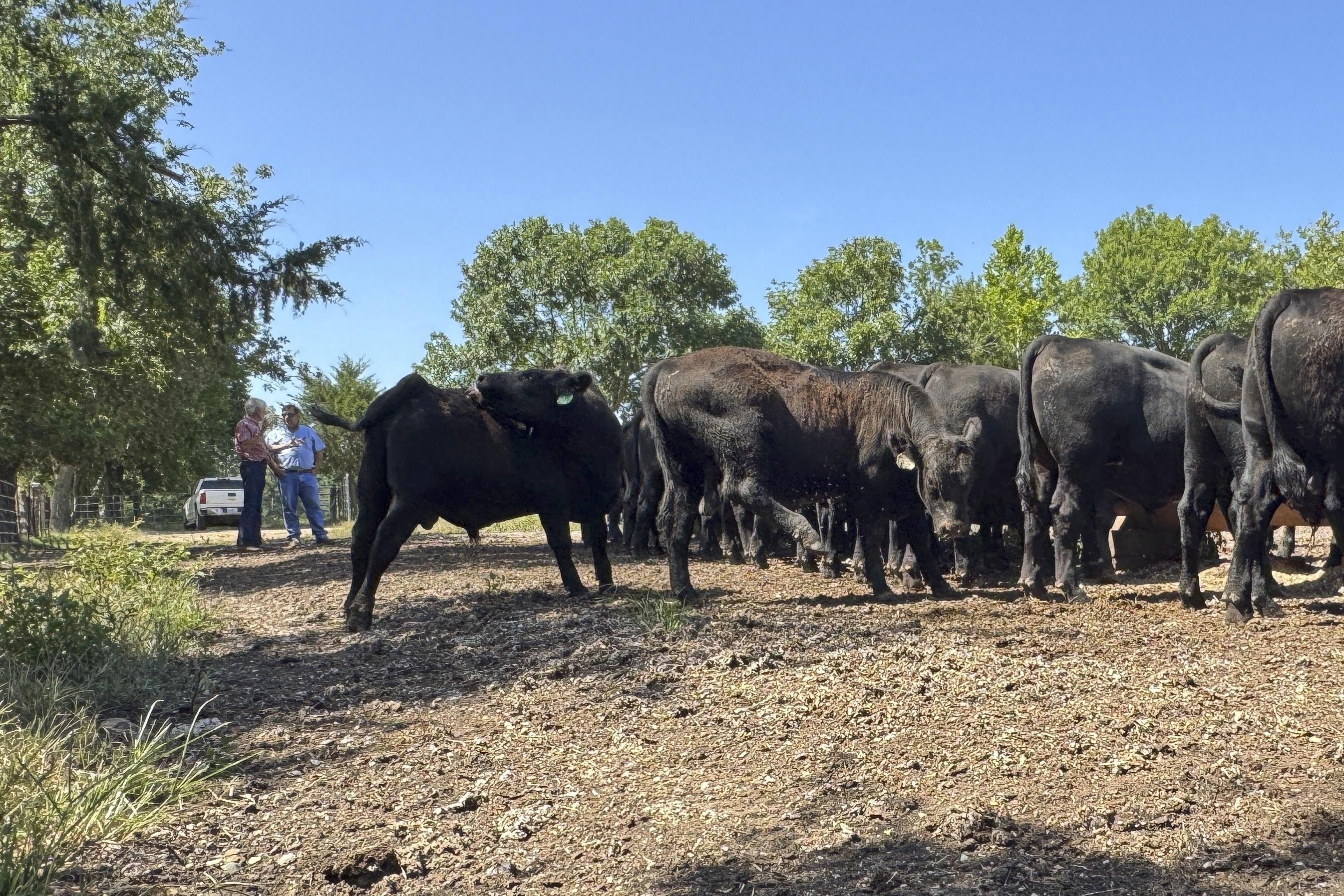
Cattle farmer Bill Howard, left, talks with the Executive Vice President of the Mississippi Cattlemen's Association Andy Berry, right, while his bulls feed at his farm in Canton, Miss., Tuesday, July 22, 2025. 
(AP Photo/Sophie Bates)

The New World Screwworm, a parasite that feeds on livestock, has been found in the U.S. for the first time since a minor outbreak in 2016 and since widespread cases were eliminated in the 1960's

Elise Catrion Gregg

Screwworm detected in the U.S. for the first time in decades as beef prices remain high

00:0000:00

The U.S. Department of Agriculture intially reported two new domestic cases of screwworm infections in Texas earlier this month, with another Texas case and one infection of a dog in New Mexico identified on Sunday. 

The screwworm is a fly that lays its eggs in the wounds of animals like livestock, said Ole Miss biology professor Timothy Menzel, who specializes in the study of insects.

"The eggs will hatch relatively quickly," Menzel said. "And the larvae begin to feed and that makes the wound worse, which attracts more flies."

"Once an animal becomes infected with larvae, it kind of snowballs from there and you get more eggs being deposited by other flies." 

Livestock are most commonly infected, as with the three cases in Texas. But, pets and other wildlife are also vulnerable. 

Fortunately, Menzel says, the pests aren't likely to make their way to Mississippi quickly, if at all: the cases in Texas are roughly 700 miles from Mississippi and the flies don't typically migrate far on their own. 

 "Their spread is gonna be dependent upon the movement of the host that they are using," said Menzel. "So, if the hosts stop going from one side of the border to the other, then the movement stops."

The USDA stopped live animal transport the U.S.'s southern border last year, though infected wildlife still pose a risk for further spreading the pest domestically. Plans to slow the spread include continued monitoring as well as using a sterile fly program and other measures. 

If something does seem wrong with a pet or livestock, though, you can report suspected screwworm cases to the Mississippi Board of Animal Health at 1-888-722-3106 or (601) 359-1170. 

The Mississippi Department of Agriculture and Commerce says that signs of an infection could include draining or enlarging wounds, and maggots in places like an animal's nose, ears, genitalia or naval area of newborn animals. 

Menzel emphasized that it's not a major risk to humans, though, with infections occurring rarely

"Some basic precautions [are] making sure that you don't go out with open wounds and using some insect repellent, which might prevent the female from landing on you in the first place," said Menzel.  

And, the pests aren't a food safety risk, either, per the USDA and Mississippi Commissioner of Agriculture and Commerce Andy Gipson.

"The New World screwworm is an invasive pest, not an infectious disease," Gipson said in a press release from MDAC. "This is an animal health issue, not a food safety issue. Our meat supply is safe to eat."

Screwworm, drought and local issues make for tough cattle-keeping conditions

But, Mississippi State University agricultural economist Josh Maples says it could impact the already-high costs of beef by further exacerbating supply issues and making it harder to keep livestock.

"It's another thing that's going to drive a production cost it's gonna In particular, drive up management time, because you've got to be looking at these cattle all the time," Maples said.

Elise Catrion Gregg

Mississippi beef prices remain high amid widespread drought

00:0000:00

As of April, the Bureau of Labor Statistics put the average price of ground beef at $6.89 per pound, with the USDA putting the Southeast region in a roughly similar price range

"On the demand-side, I really don't expect a huge shock," from screwworm detections said Maples, with demand for beef still high. 

Instead, it's more likely to make it harder to expand and support already-dwindling herds

"[Screwworm monitoring] drives up management time, drives up management cost, drives up production cost," Maples said. "This could be just yet another thing that kind of delays that recovery that that we thought we might see in the cow herd, which would lead to more calves being born, eventually more beef being produced."

"Long-term, this is tighter beef supplies, depending on how long and how big the screwworm problem gets."

But, the price of beef has been high for some time.

Andy Berry, executive director of the Mississippi Cattlemen's Association, says those prices are largely driven by weather conditions hitting both the region and the entire country.

"Primarily, the higher cattle prices, the higher beef prices that we see today is a direct result of drought and herd sell-off, not only here in Mississippi and the Southeast, but all the way across the country," said Berry. 

And he says some other large-scale issues, like the war in Iran, play a smaller role in pricing.

"I'm not going to say that the war doesn't have an effect on maybe some transportation costs, maybe a little higher diesel that we're just now starting to see, which really doesn't factor into the pricing today," said Berry. 

While beef prices were high even before the war, the cost of things like feed or packaging could increase over the next few months in response.

But for Mississippi, Berry says the biggest issues are many of the more local ones: for example, an explosion at a Yazoo City chemical plant several months ago has made it harder to get products like fertilizer closer to home.

"So we're not able to have ammonium nitrate produced here in Mississippi," said Berry. "That really affects our fertilizer prices probably more so than the Iran War in terms of nitrogen."

And following that was January's winter storm, which Berry says caused additional problems for ranchers and farmers in the north part of the state.

"We had infrastructure problems with our fences, barn collapsing and things like that," said Berry. "So that started the year off, and then drought has been the biggest issue."

In Berry's view, though, Mississippi is in a better position than other, more arid states, like Texas or Oklahoma, to handle drought. 

"Even with this severe drought that we had earlier this year in Mississippi, the rains we've had the last couple of weeks have just replenished our forage," Berry said.  

Ultimately, much of it is an issue of supply and demand, Berry and Maples both said. 

"We're still in the really tight supply as part of this thing and that is the major factor that is affecting the beef prices," said Maples. "But consumer demand has been absolutely unbelievable for beef and so, it's really a perfect storm, if you will, for high beef prices."