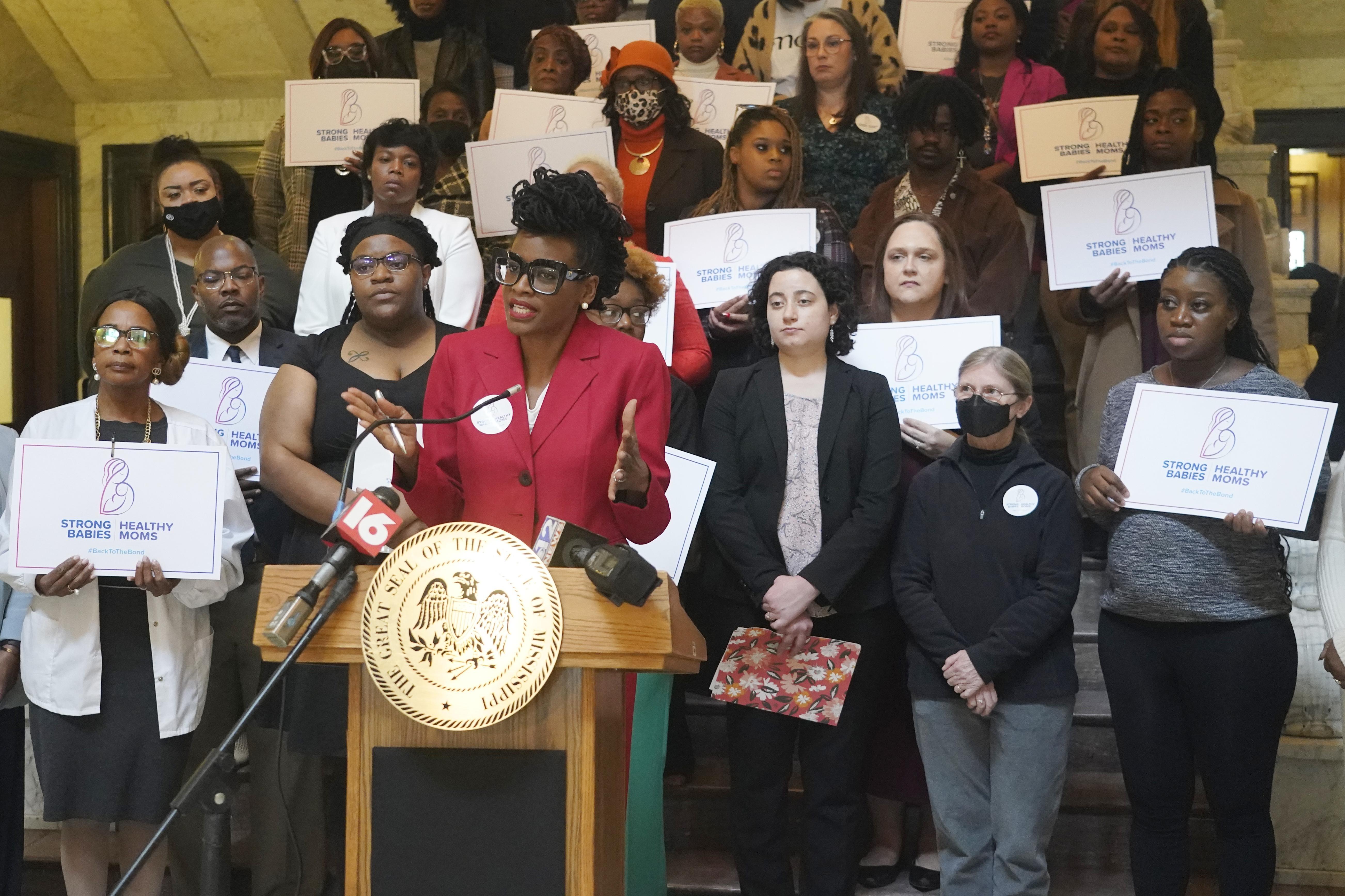
Jillian Harper-Peavy, director of Healthy Moms, Healthy Babies, suggested state incentives such as medical education cost assistance and stipends to recruit OB-GYNs, nurse-midwives, and specialists to underserved areas.
“Being open-minded to birth centers, to having more nurse midwives and midwives involved, doulas being a part of the equation,” she said.
Dr. Nakeitra Burse, founder and executive director of Jackson-based Six Dimensions, emphasized that Medicaid policy must also serve as a cornerstone for reform, pointing to the state's postpartum coverage extension.
“Medicaid expansion for Mississippi mothers really means everything,” Burse said.
Burse added that care cannot end after the standard six-week postpartum checkup, as life-threatening conditions such as preeclampsia, cardiovascular disease, and diabetes can manifest long after delivery.
Jalyn Owens, mother of a 3-year-old girl, stressed that active listening from healthcare providers and adequate community resources are vital for maternal and infant safety.
“By the time when you get pregnant, you're already signing up for your life being at risk,” Owens said. “That’s the reality. You're putting your life at risk to bring another life into the world.”
Advocates maintain that true success will ultimately be measured by tangible improvements in maternal and infant survival and health metrics.