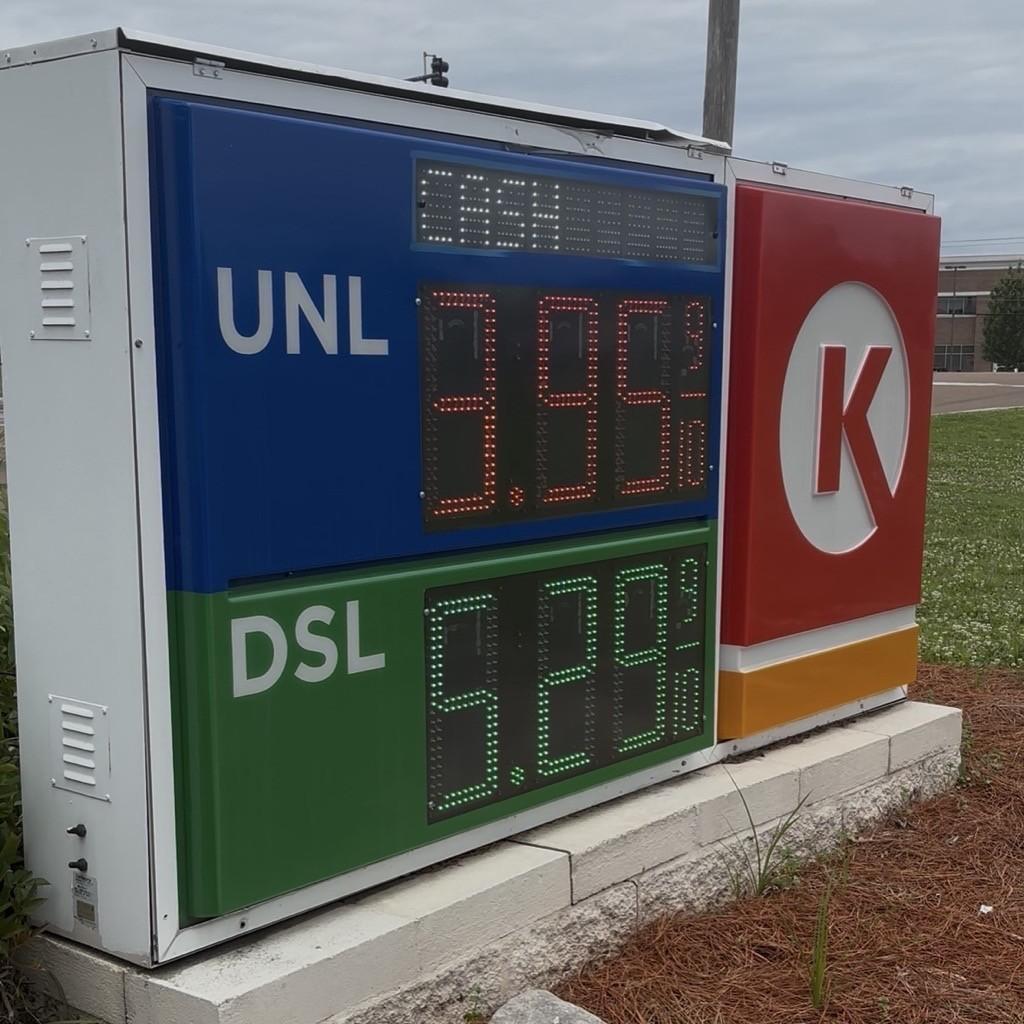
“It used to cost me $40 to fill up maybe, now it's $60 for sure. And I don't live in Jackson, I live in Clinton,” Davenport said. “So my life is a journey. I'm always like commuting everywhere constantly.”
Davenport said she has started couponing more often and is more mindful of avoiding food waste.
“We should coupon anyway,” said Davenport. “But I have to be more conscious of the way I spend and not waste food. I have to get my family unit to be on board planning for the week or plan for them. Now I spend at least $250 every time I go to the grocery store.”
Economic experts say the pressure reaches far beyond household changes. In March, AAA spokesperson Don Redman said seasonal shifts and global conflicts are pushing crude oil prices upward. Oil rose from $67 to $100 earlier this year, and he said residents should expect elevated prices to continue through the summer.
“Start looking at ways of saving and maybe commuting to work again,” said Redman. “These higher prices will be with us for the remainder of the summer. Because even if there was a peace treaty signed, it would still take a good four weeks for everything to work out in the system to really start seeing significant downward movement in those prices.”
Redman added that although the United States does not import oil directly from the Middle East, global markets still feel disruptions.
“Everybody else in the world who is getting their oil from that part of the world, go out into the open market,” said Redman. “It’s called a futures market for crude oil energy. They’re all competing. That’s what driving that price up. These commodities are sold on an open market, that’s why the prices are higher, and that’s why we’re paying more at the pump.”
The rising cost of essentials is also reshaping personal routines. Bruce Case, pastor at St. Luke's United Methodist in Fondren, said he and his wife adjusted their budget but continue helping their daughter who recently moved to Atlanta.
“With the increase in prices. We're trying to help her out as much as she can or when she can, and so we notice it there,” said Case. “And I mean, we might go out just a little bit less often or splurge just a little less often. So that's the way it's impacting us right now. Not terribly right now, but you know if it got worse then we would probably do less.”
Case said he encourages his congregation to support one another and seek help when needed.
“Don’t try to survive all by yourself. This is a time when you should lean on communities,” said Case. “Not every church truly wants to be in the community and help out, but many do in Mississippi. If you see these people don't care, don't let that discourage you, just find another church. There are people who care, and Mississippi is full of people that are generous. So just find community.”
Younger residents are feeling the shift as well. Domnic Hines, a recent Jackson State University graduate, said the cost of basic groceries has been surprising.
“Nobody can actually be able to have a nice, decent lifestyle because they worried about how much it's going to cost to get groceries,” said Hines. “Simple stuff like bread and water. I’m coming out spending $70 and I only got seven items.”
Small businesses are navigating the increase too. Jeff Washington, owner of Sweet Taste’N in Fondren, said food prices have gone up, though he has avoided major price changes of his own.
“We don't have a lot food that we could waste,” said Washington. “I tell people all the time when you coming to that establishment, please take that into consideration. You know sometimes you might have to cut back on the servings.”
Cassandra Mobely, chief operating officer at the Mississippi Food Network, said rising prices are touching every income level.
“The increase in fuel prices, increase in grocery prices are affecting all Mississippians,” said Mobely. “Everyone at every income level is being affected by this. The dollar just doesn't go as far as it did.”
Despite the challenges, many residents say they remain hopeful but wish relief would come soon.