


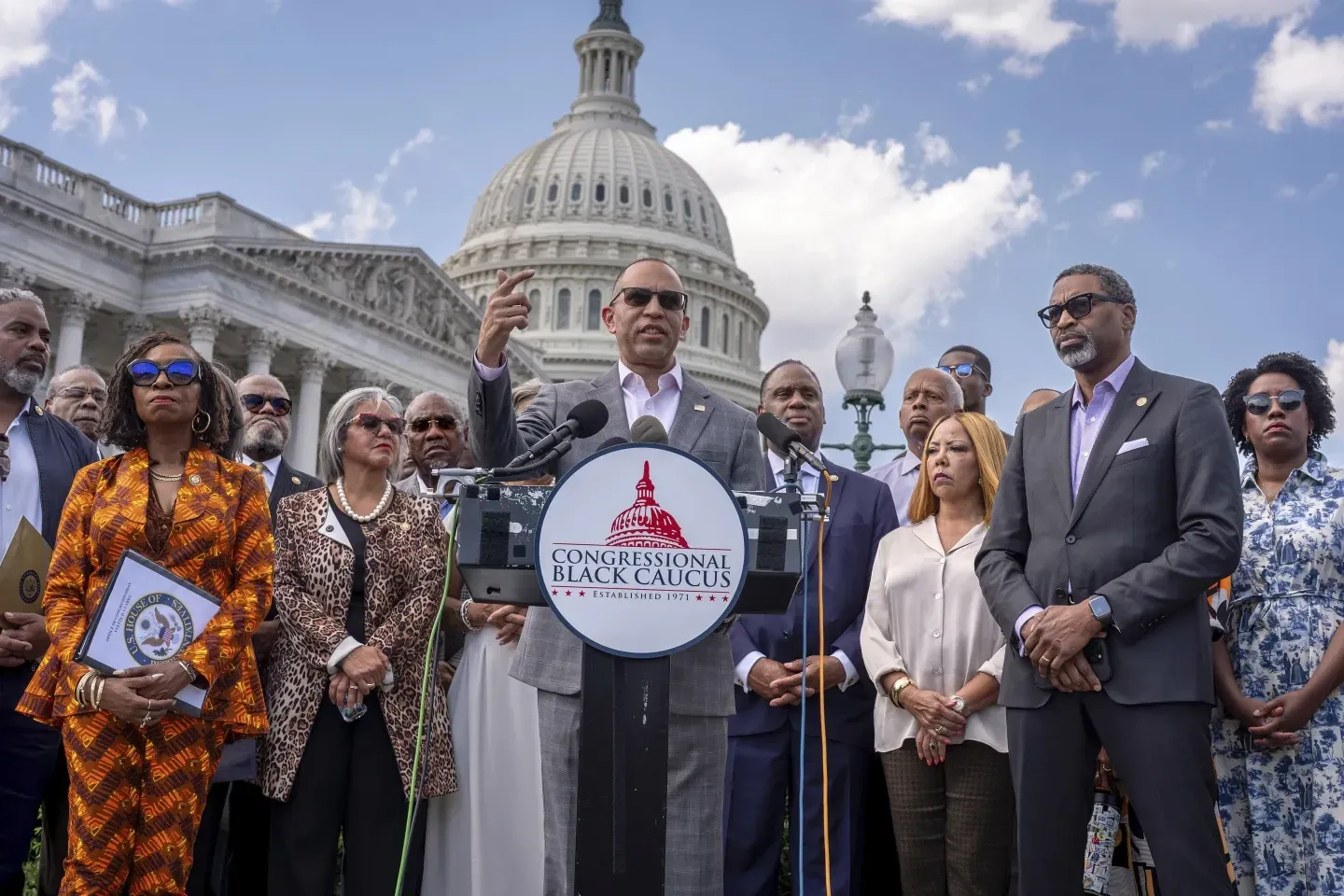
Black college athletes are at the center of a growing political fight over redistricting in Mississippi. NAACP President Derrick Johnson is now responding directly to criticism that the organization’s proposed athletic boycott goes too far.
The debate began after Johnson released a statement urging prospective Division One athletes to delay commitments to schools in states moving forward with new voting maps following a recent United States Supreme Court ruling on race and redistricting. The NAACP argues that the maps weaken Black voting strength and that athletes have the leverage to force change.
In that initial statement, Johnson said, “The NAACP will not watch the same institutions that depend on Black athletic prowess to fill their stadiums and their bank accounts remain silent while their states strip Black communities of their voice. Out of Bounds is our answer. We are naming the contradiction, and we are calling on Black athletes, families, fans, and consumers to act on it.”
The call for a boycott quickly drew pushback from political leaders and sports advocates who say the strategy places too much pressure on young recruits. Critics argue that delaying commitments could jeopardize scholarships and Name, Image and Likeness earnings for high school athletes.
Republican Secretary of State candidate Shuwaski Young said, “I think it is wrong, and I think we should not put students in that particular position. It does affect a generational wealth opportunity, especially since Name, Image and Likeness is now paying college students at a rate unlike ever been seen before.”
As criticism intensified, Johnson addressed those concerns again during a protest in Jackson on Wednesday. He rejected the idea that the NAACP is using teenagers as political tools.
“Our young, talented athletes should be respected as much on the court as they generate profit for our state institutions. They should be respected to be a part of the decision making process around policy and policymakers. You cannot have it both ways. You cannot try to exploit for profit on the court or the football field, and exclude in terms of one’s representation or vote.”
Mississippi has seen athletic pressure influence policy before. In 2020, the NCAA threatened to bar the state’s universities from postseason play unless lawmakers removed the Confederate emblem from the state flag. The Legislature approved a new design weeks later.
It remains unclear how long the proposed boycott could last. Governor Tate Reeves has declined to call a special session on redistricting, making Mississippi a central focus of the NAACP’s effort. Other targeted states have already passed new maps or begun the process.